Ramalina calicaris var. japonica
Hue
iNaturalist· cc-by-nc
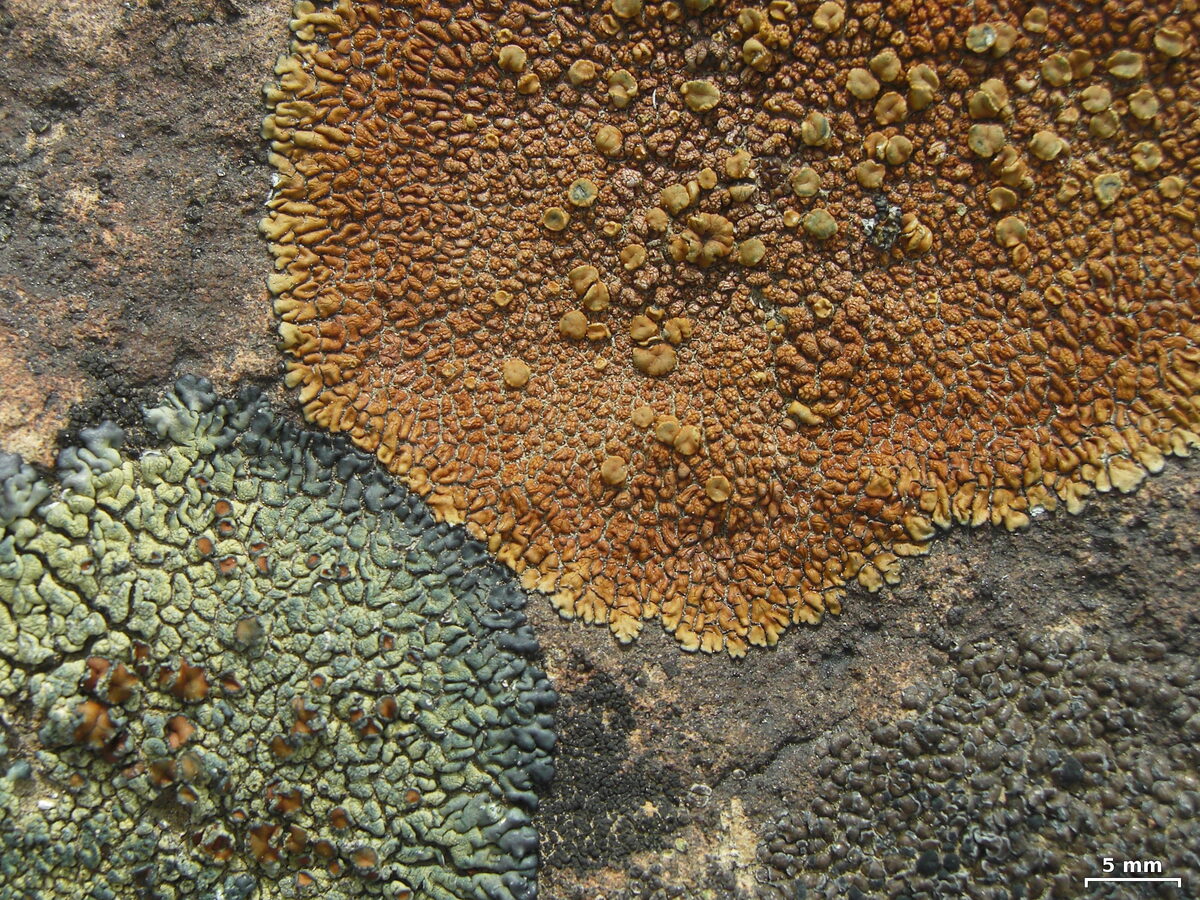
(c) Daniel Suárez, some rights reserved (CC BY-NC), uploaded by Daniel Suárez
iNaturalist· cc-by-sa
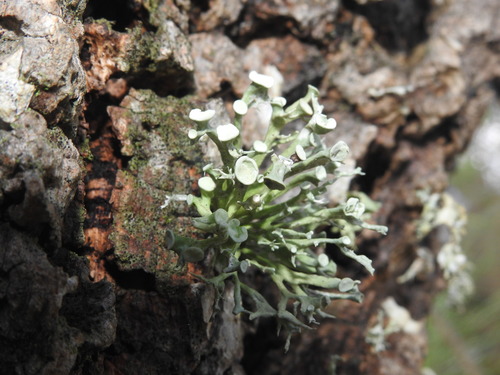
(c) Tony Rebelo, some rights reserved (CC BY-SA), uploaded by Tony Rebelo
iNaturalist· cc-by
(c) Andre Hosper, some rights reserved (CC BY), uploaded by Andre Hosper
Summary
Source: WikipediaRamalina calicaris is a species of fruticose, bark-dwelling lichen-forming fungus in the family Ramalinaceae. The lichen forms tufted to hanging, greenish-grey shrubby growth anchored by a holdfast at the base, with branches that are often distinctly channelled and strap-shaped, typically 2–3 mm wide and reaching 15–20 cm in length. Its reproductive structures are frequently produced, appearing as pale pink-ochre discs borne at the tips or margins of the branches, often on bends of angled branches with short spur-like projections. The species grows primarily on the branches and twigs of trees and shrubs with nutrient-rich bark, particularly in coastal settings and humid forests. Chemically, the cortex contains usnic acid, while the medulla may contain compounds of the sekikaic acid complex or lack additional substances. The species occurs across Europe (where it is most frequent in western districts), North Africa, Macaronesia, and parts of Asia including China, India, and Thailand. The taxonomy of R. calicaris has been complicated by historical confusion over which specimens should be considered the original type material, leading to ongoing nomenclatural debates about the proper application of the name. Linnaeus's original Lichen calicaris encompassed both rock-dwelling and bark-dwelling material, but subsequent lectotypification fixed the name to a rock-dwelling specimen corresponding to Ramalina siliquosa, conflicting with long-established usage for the bark-dwelling species. Several taxa historically described as infraspecific forms of R. calicaris are now recognised as distinct species, including Ramalina farinacea, Ramalina fastigiata, and Ramalina fraxinea. The species is commonly fertile and has been shown (in at least one Asian variety) to be sensitive to nitrogen pollution.
Description
A lichen in the Ramalinaceae family found in tropical regions.
This description is brief — help expand it
Edible Uses
Used as a flavouring.
Distribution
It is a tropical plant.
Where It Grows
Asia, China,
References (1)
- Liu, B et al, 2014, Aromatic lichen resources in Ghuizhou Province, China. Med. Aromat Plants 3:146