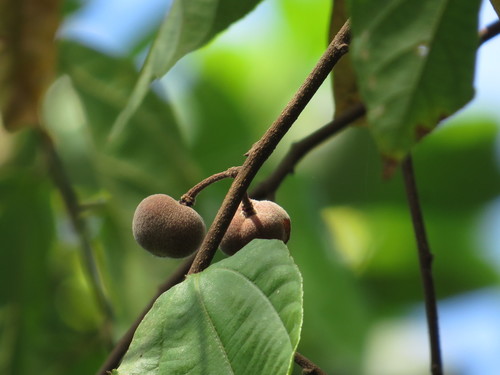
Sterculia oblonga
Mast.
Yellow Sterculia
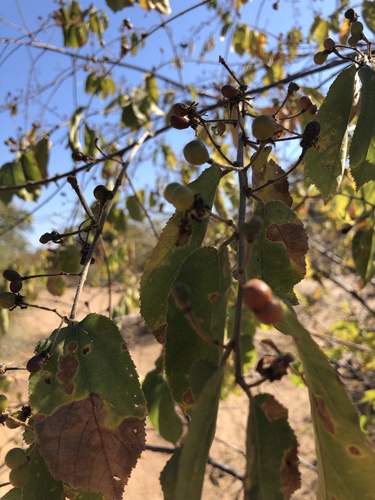
iNaturalist· cc-by-nc
(c) lenisutcliffe, some rights reserved (CC BY-NC)
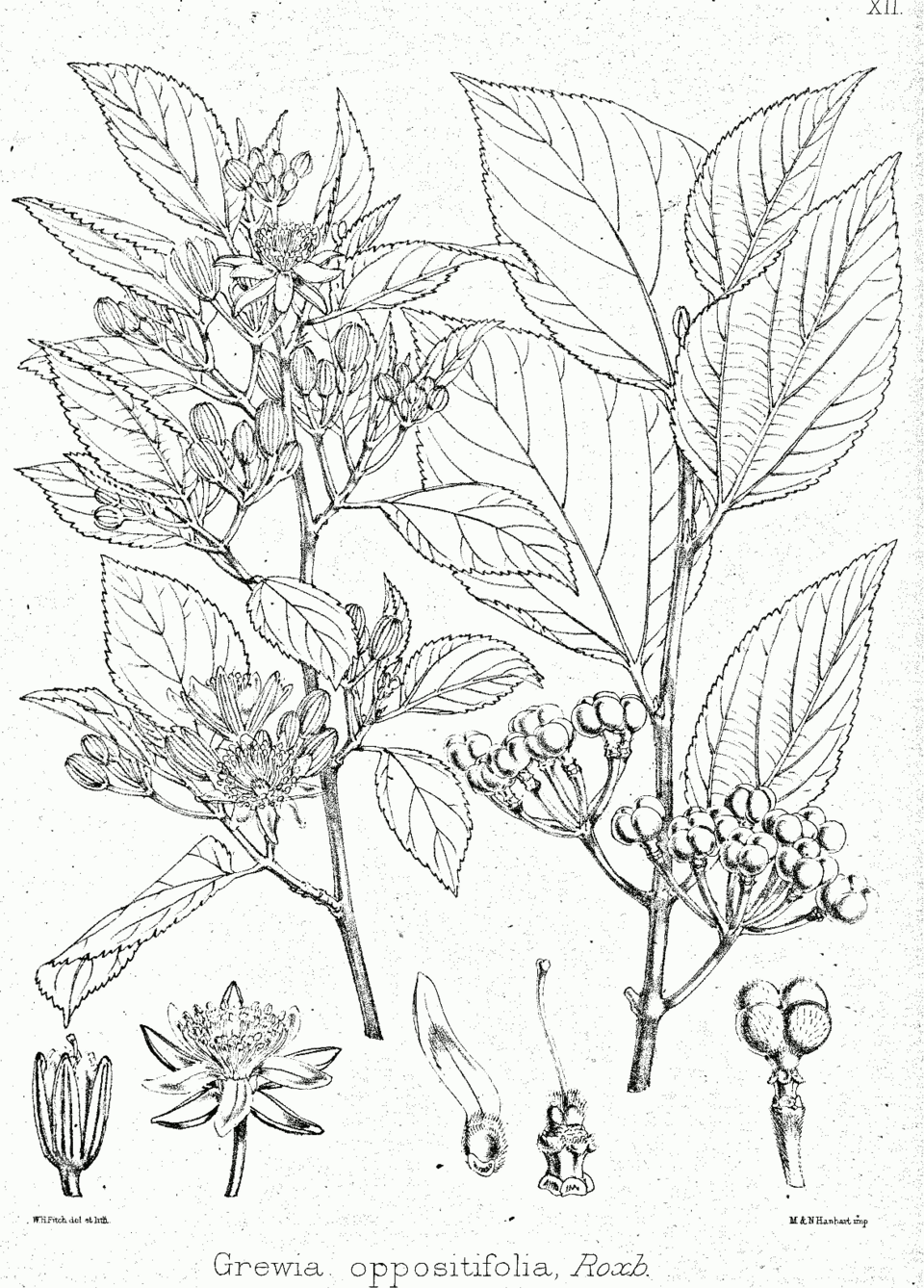
iNaturalist· cc-by-nc
(c) lenisutcliffe, some rights reserved (CC BY-NC)
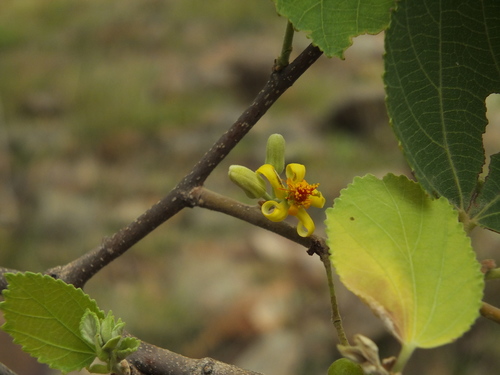
iNaturalist· cc-by-nc
(c) lenisutcliffe, some rights reserved (CC BY-NC)
Summary
Source: WikipediaSterculia oblonga is a species of tropical rainforest tree in the family Malvaceae. It is commonly known as the yellow sterculia. It is native to West and Central Africa and is exploited commercially for its timber. The species is threatened by habitat loss and over-exploitation.
Description
A tree. It grows 35 m tall. The trunk is 1 m across. The trunk is 15 m tall and can have small buttresses. The bark is smooth and grey. The leaves are alternate and simple and 12 cm long by 7 cm wide. They are wavy along the edge. The flowers are yellow to brown and hairy. The fruit are yellow to brown hairy follicles. They are 15 cm long by 7-10 cm wide. They are woody. The fruit splits open to reveal several seeds. There are 20 black seeds in a yellow layer. They have a thin yellow covering or aril.
Edible Uses
The seeds are roasted and eaten whole, or roasted, ground, and cooked with other foods as a condiment or spice.
Traditional Uses
The seeds are roasted and eaten. They can be roasted, ground and cooked with other foods.
This uses section is brief — help expand it
Medicinal Uses
A mixture of the pulped leaves and oil is applied to the chest of children as a dressing to cure chest complaints. A bark decoction is drunk as a cure for acute stomach-ache.
Distribution
It is a tropical plant. It grows in semi-deciduous forest. It grows in lowland rainforest. It grows between 600-1,000 m above sea level. It grows best on fertile, well-drained soil.
Where It Grows
Africa, Benin, Cameroon, Central Africa, Central African Republic, CAR, Congo DR, Congo R, Côte d'Ivoire, Equatorial Guinea, Gabon, Ghana, Ivory Coast, Liberia, Nigeria, Sierra Leone, Togo, West Africa,
Cultivation
It can be grown by seeds. They are best planted in shade and germinate in about 12 days.
Propagation
Seed - best sown as soon as it is ripe. Germination usually begins 8 - 15 days after sowing, but the germination rate can be low. In the nursery, the seedlings need to be kept in the shade. When they are 25 - 30 cm tall they can be planted out under the forest canopy cover or in forests paths. It is recommended to refrain from planting in the full sun. A physical dormancy caused by the hard seed coat of the mature seeds of many species in this genus can be overcome by scarifying the seed. This is carried out by cutting away or abrading some of the seed coat to allow the ingress of water, though great care must be taken not to damage the embryo. The aril surrounding the seed should also be removed - this is easiest when it has been softened through soaking in water. The seeds germinate optimally at temperatures between 20 - 30°c. They can be sown in a nursery seedbed or in containers. A germination rate of about 95%, occurring within about 2 weeks can be expected if the seed has been properly treated.
Other Uses
The fibrous bark of young trees is used as bark cloth for partitioning huts. The heartwood is a creamy white to a light yellow-brown with white veins; it is not clearly demarcated from the white sapwood. The texture is medium; the grain straight or interlocked; there is an unpleasant odour from green wood that disappears upon seasoning. The wood is moderately hard; moderately heavy; not very durable, being susceptible to fungi, dry wood borers and termites. It seasons slowly, with a high risk of checking and distortion; once dry it is poorly to moderately stable in service. It saws well, with moderate blunting effects on saw teeth; it works well with machine tools, but is more difficult with hand tools; it finishes with difficulty, and a filler is needed; staining and polishing are satisfactory; nailing and screwing properties are good; gluing is correct. The wood is used for boat building, railway ties, flooring, beams, planks and furniture. It is also suitable for construction, veneer, plywood, vehicle bodies, handles, sporting goods, toys, agricultural implements, hardboard and particle board.
Production
In Central African Republic plants have been recorded flowering in September.
Notes
Also put in the family Sterculiaceae.
Synonyms
Also Known As
Bi, Bongele, Bongo, Eboyo, Eyong, G'boyo, Kokoniko, Kuil, Lom, Mgwan, Nzong, Ohaa, Okoko, Oroforofo
References (16)
- Burkill, H. M., 1985, The useful plants of west tropical Africa, Vol. 5. Kew. (As Eribroma oblonga)
- Chapman, J. D. & Chapman, H. M., 2001, The Forest Flora of Taraba and Andamawa States, Nigeria. WWF & University of Canterbury. p 206
- Dalziel, 1937,
- Fern, K., 2012, Tropical Species Database http://theferns.info/tropical/
- Gallois, S., et al, 2020, Methodological priorities in assessing wild edible plant knowledge and use – a case study among the Baka in Cameroon.
Show all 16 references Hide references
- Germain, R., 1963, Flore du Congo du Rwanda et du Burundi: Sterculiaceae. vol. 10, (As Eribroma oblonga)
- Jardin, C., 1970, List of Foods Used In Africa, FAO Nutrition Information Document Series No 2.p 36
- Les Vegetaux utiles de l'Afrique tropicale francais 9:78. 1917 (Bois du Gabon) (As Eribroma oblonga)
- D. Oliver, Fl. trop. Afr. 1:216. 1868
- Oteng-Amoako, A. A. (Ed.), 2006, 100 Tropical African Timber Trees from Ghana. Forestry Research Institute of Ghana. p 228
- Peters, C. R., O'Brien, E. M., and Drummond, R.B., 1992, Edible Wild plants of Sub-saharan Africa. Kew. p 189
- Sonke, B. and Couvreur T., 2014, Tree diversity of the Dja Faunal Reserve, southeastern Cameroon. Biodiversity Data Journal 2:e1049 (As Eribroma oblonga)
- The Digital Flora of Central Africa, 2013, (Democratic Republic of Congo, Rwanda & Burundi) Botanical Garden Meise (As Eribroma oblonga)
- Vivien, J. & Faure, J.J., 1985, Abres des forets dense d'Afrique Centrale. Agence de Cooperation Culturelle et Technique. Paris. p 454 (As Eribroma oblonga)
- Vivien, J., & Faure, J.J., 1996, Fruitiers Sauvages d'Afrique. Especes du Cameroun. CTA p 347 (As Eribroma oblonga)
- World Checklist of Useful Plant Species 2020. Royal Botanic Gardens, Kew