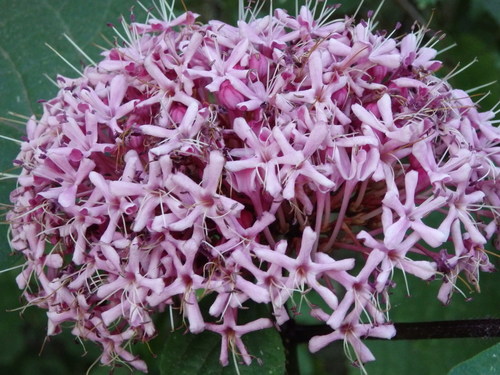
Callicarpa erioclona
Schauer
Beautyberry
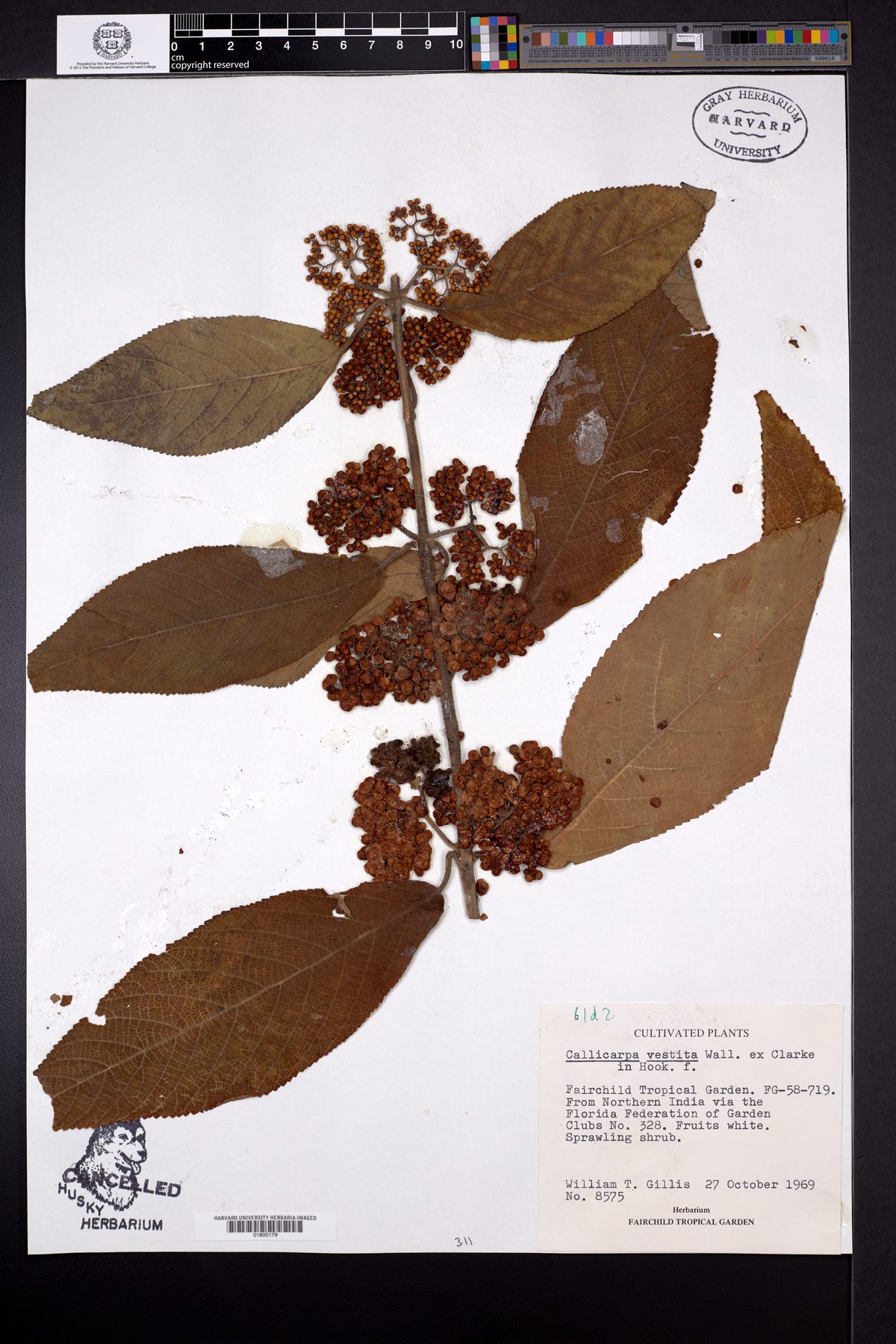
gbif· cc0
President and Fellows of Harvard College
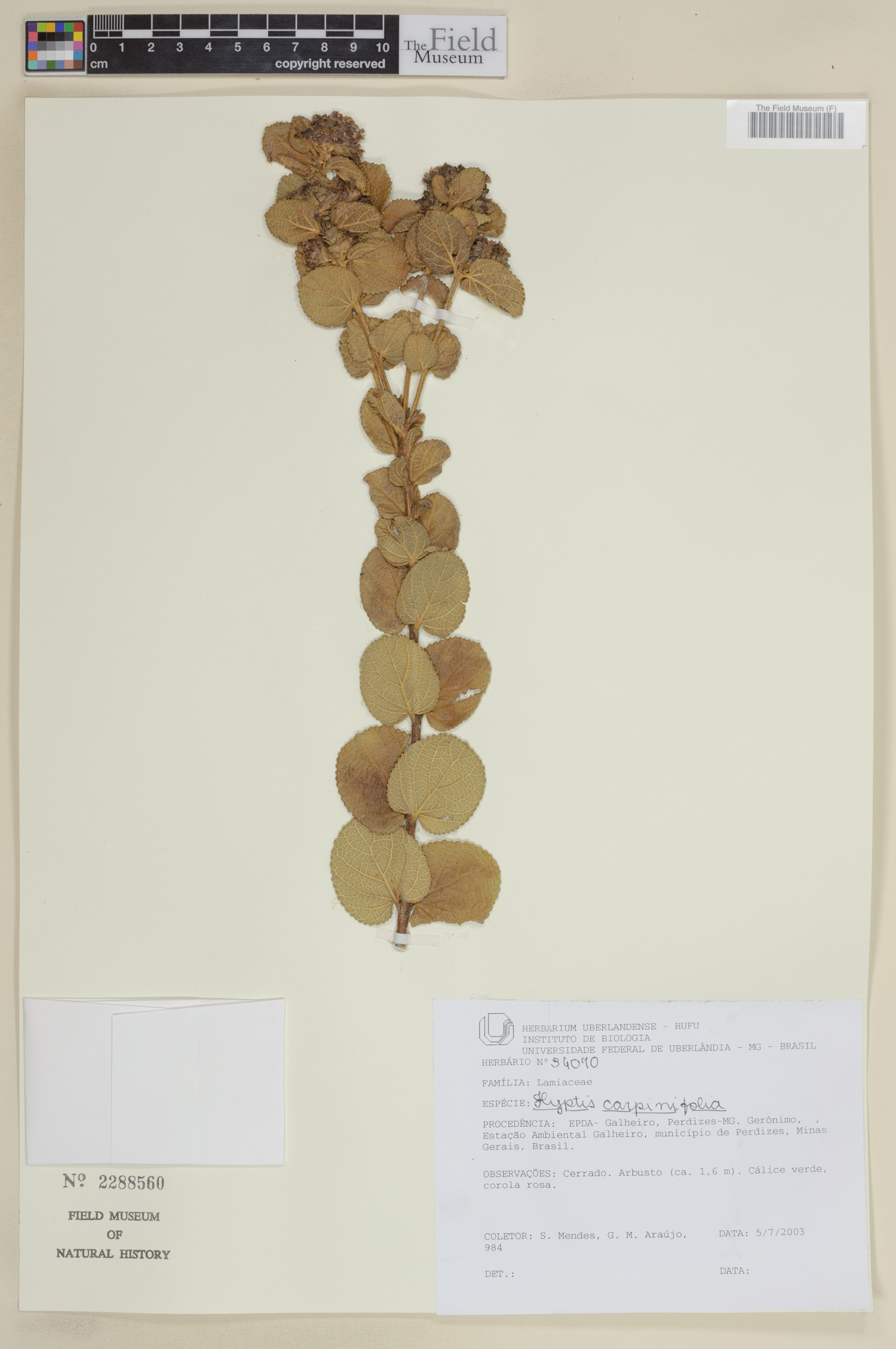
gbif· cc0
President and Fellows of Harvard College
gbif· cc0
President and Fellows of Harvard College
Summary
Source: WikipediaCallicarpa erioclona is a species of beautyberry native to Vietnam, Borneo, Sulawesi, Java, Philippines, New Guinea and the Bismarck Archipelago. It produces small berries that grow in tight clusters. The fruit is edible, but is not commercially grown or sold in markets. The flowers are light-pink to white. The leaves can be mixed with coconut oil to treat open wounds.
Description
A loose shrub. It grows 2 m tall. The twigs have brown hairs. The leaves are oblong to oval and 13-24 cm long by 5-10 cm wide. The fruit are small berries that grow in tight clusters. The fruit are 3-4 mm across.
Edible Uses
The fruit are edible, though not commonly used.
Medicinal Uses
The leaves are used as a wash to treat skin conditions such as pruritis. Mixed with coconut oil, the leaves are used to treat wounds.
Known Hazards
The leaves are used as a fish poison.
Distribution
It is a tropical plant.
Where It Grows
Asia, Indonesia, Pacific, Papua New Guinea, PNG, Philippines, SE Asia, Vietnam,
Cultivation
Species in this genus generally require a sunny position or light dappled shade. Prefers a highly fertile well-drained loamy soil. Requires cross-pollination for good fruit production. Plants in this genus are notably resistant to honey fungus.
Propagation
Seed - sow in a nursery seedbed and only just cover the seed. Germination usually takes place within 1 - 3 months at 18°c. When large enough to handle, prick the seedlings out into individual pots and grow them on until large enough to plant out Cuttings of half-ripe wood 10cm long in a frame. High percentage. Cuttings of mature wood of the current season's growth with a heel.
Other Information
The fruit are not commonly used.
Synonyms
Also Known As
Alo-loy, Kagong, Palis, Salingarau, Tambalabasi, Tigau, Tubang-dalag
References (1)
- Reis, S. V. and Lipp, F. L., 1982, New Plant Sources for Drugs and Foods from the New York Botanical Garden herbarium. Harvard. p 250