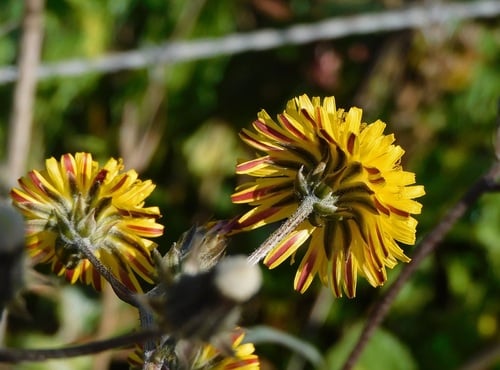
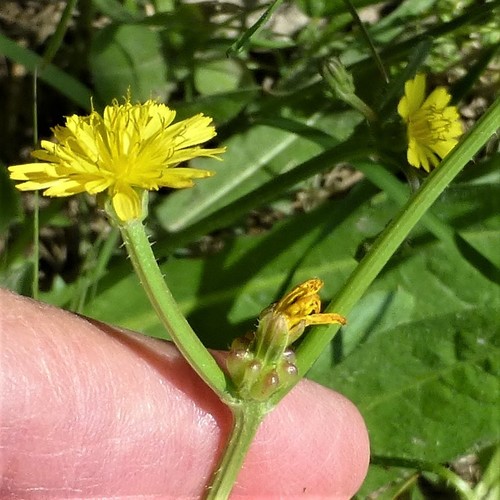
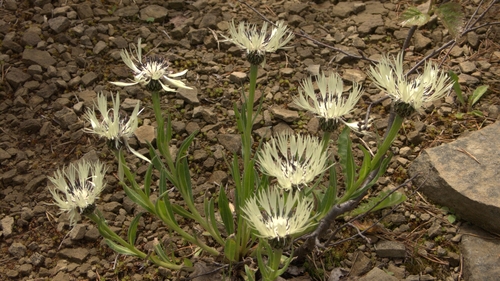
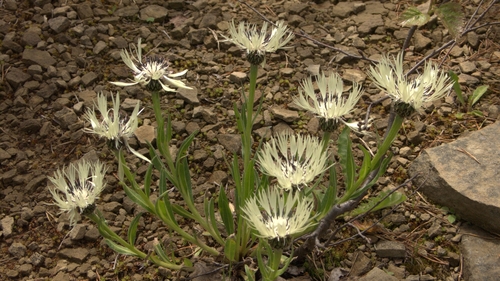
Chondrilla chondrilloides
(Ard.) Karst.
iNaturalist· cc-by-nc
(c) amsteindl, some rights reserved (CC BY-NC), uploaded by amsteindl
iNaturalist· cc-by-nc
(c) amsteindl, some rights reserved (CC BY-NC)
Summary
Chondrilla chondrilloides is a perennial reaching 0.3 m tall with hermaphroditic flowers pollinated by insects. It grows in light sandy and medium loamy well-drained soils, preferring basic or very alkaline pH levels. It requires full sun and tolerates dry or moist conditions.
Description
A herb. It keeps growing from year to year. It grows 30 cm tall. The leaves in a ring at the base are narrowly oval. They are 2-7 cm long by 3-9 mm wide. There are a few leaves on the stems. There are 1-5 flowering stems.
Edible Uses
The leaves can be eaten raw or cooked.
Traditional Uses
The leaves are eaten raw or cooked.
This uses section is brief — help expand it
Medicinal Uses
No medicinal uses are known for this plant.
Distribution
It is a temperate plant.
Where It Grows
Africa, Alps, Austria, Egypt, Europe, France, Germany, Italy, Liechtenstein, Mediterranean, Middle East, North Africa, Romania, Slovenia, Switzerland, Yemen,
Propagation
Sow seed in early spring in a greenhouse, barely covering it. When seedlings are large enough to handle, prick them out into individual pots and grow on under glass for at least their first winter. Plant out into permanent positions in late spring or early summer, after the last expected frosts.
Other Uses
No other uses are known for this plant.
Synonyms
Also Known As
Prodiščna hrustavka
References (2)
- Hedrick, U.P., 1919, (Ed.), Sturtevant's edible plants of the world. p 187 (As Chondrilla prenanthoides)
- Plants for a Future database, The Field, Penpol, Lostwithiel, Cornwall, PL22 0NG, UK. http://www.scs.leeds.ac.uk/pfaf/