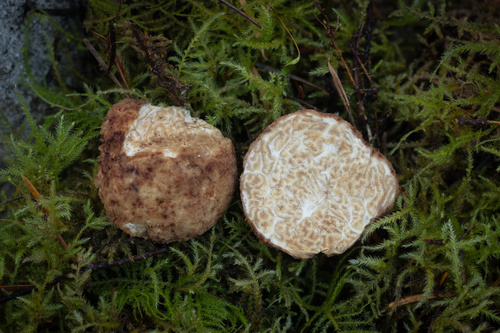
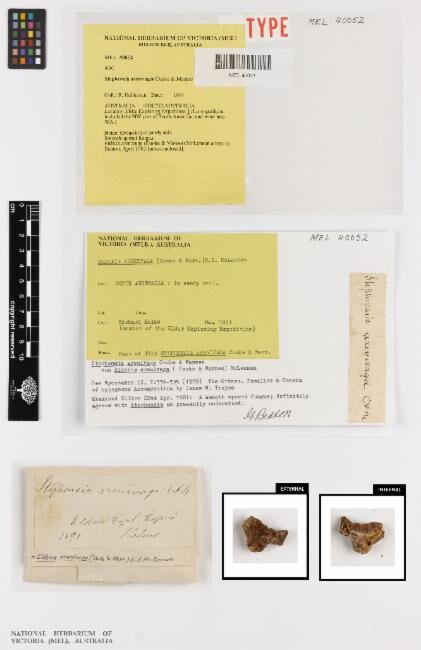
Choiromyces aboriginum
Trappe
Desert truffle
wikimedia· cc-by
Wikimedia Commons - Deutsche Gesellschaft für Mykologie
Summary
Source: WikipediaChoiromyces aboriginum is a species of truffle-like fungi in genus Choiromyces, which is part of the Tuberaceae family. It is found in several regions in Australia, where it has been used as a food and as a source of water.
Description
A mushroom. A fungus which forms fruiting bodies just under the ground. It can be 10 cm long. It tapers towards the base. It is soft to the touch and will break up easily into pieces.
Edible Uses
In Australia, it has been used as traditional native food and has also been used as a source of water. The fruiting bodies were eaten raw or cooked and Kalotas reported one experience, as follows: "They were cooked in hot sand and ashes for over an hour, and then eaten. They had a rather soft consistency (a texture akin to that of soft, camembert-like cheese) and a bland taste. Cooked specimens left for 24 hours and then reheated developed a flavour like that of baked cheese."
Traditional Uses
The fruiting body is cooked and eaten.
This uses section is brief — help expand it
Distribution
It is a tropical plant. It grows in woodland and shrubland. It grows on sandplains. It can grow in arid places.
Where It Grows
Australia*,
Also Known As
Witita
References (5)
- Boa, E. R., Wild edible fungi and their importance to people. FAO Non Wood Forest Products Booklet 17
- Goddard, C. & Kalotas A. (Eds.), Punu, 2002, Yankunytjatjara plant use. Jukurrpa books. p 87
- Latz, P.K., 1996, Bushfires and Bushtucker: Aboriginal plant use in Central Australia. IAD Press Alice Springs p 146
- Latz, P & Wightman, G., 1995, Desert Bush Tucker Identikit. Common Native Food Plants of Central Australia. Parks & Wild Commission Northern territory. p 62
- Smith, N. M., 1991, Ethnobotanical Field Notes from the Northern Territory, Australia, J. Adelaide Bot. Gard. 14(1): 1-65