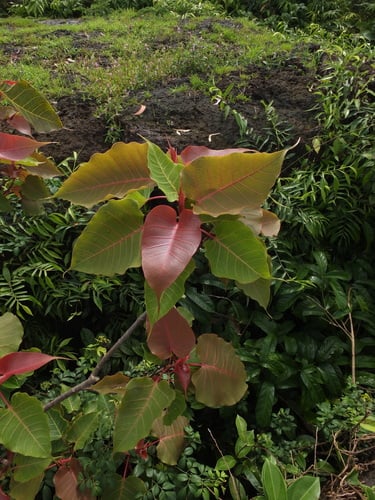
Ficus lapathifolia
(Liebm.) Miq.
Alamo, Higo
iNaturalist· cc-by-nc
(c) Luis Humberto Vicente-Rivera, some rights reserved (CC BY-NC)
gbif· cc-by-nc
Rapid Reference Collection (RRC) | Field Museum of Natural History - Keller Science Action Center
gbif· cc-by-nc
Rapid Reference Collection (RRC) | Field Museum of Natural History - Keller Science Action Center
Summary
Source: WikipediaFicus lapathifolia is a species of plant in the family Moraceae. It is endemic to Mexico.
Description
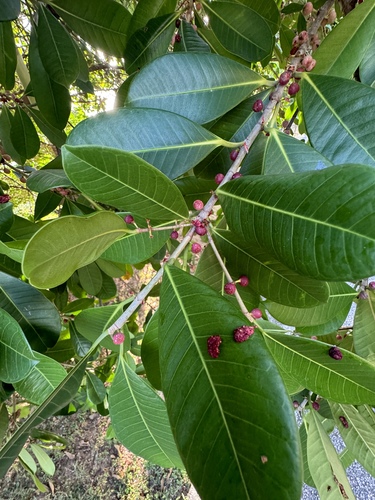
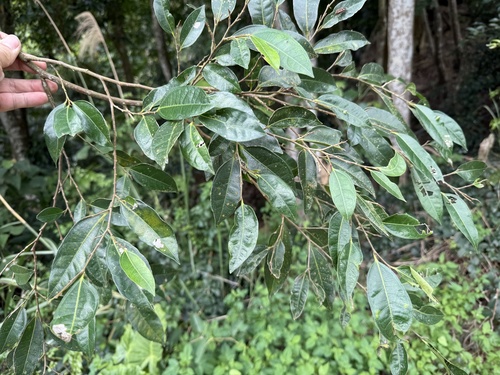
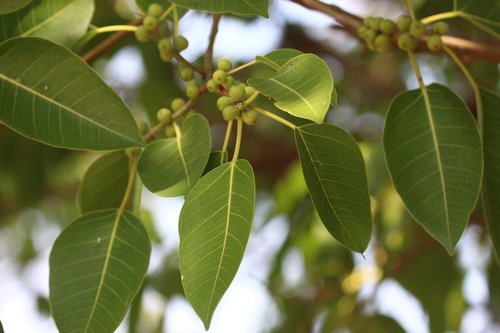
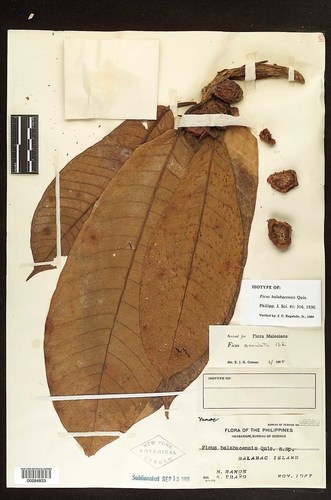
A fig. It is a medium sized tree. It can be 25 m tall. It probably always starts attached to other plants and becomes a strangler fig. It can have interlocking trunks or flying buttresses. The leaves are alternate and broadly oblong. They are 10-25 cm long. The leaves are hairy underneath.
Edible Uses
The fruit are eaten.
Distribution
It is a tropical plant. It grows in forests.
Where It Grows
Belize, Central America, Costa Rica, Guatemala, Mexico, North America,
Cultivation
Fig trees have a unique form of fertilization, each species relying on a single, highly specialized species of wasp that is itself totaly dependant upon that fig species in order to breed. The trees produce three types of flower; male, a long-styled female and a short-styled female flower, often called the gall flower. All three types of flower are contained within the structure we usually think of as the fruit. The female fig wasp enters a fig and lays its eggs on the short styled female flowers while pollinating the long styled female flowers. Wingless male fig wasps emerge first, inseminate the emerging females and then bore exit tunnels out of the fig for the winged females. Females emerge, collect pollen from the male flowers and fly off in search of figs whose female flowers are receptive. In order to support a population of its pollinator, individuals of a Ficus spp. must flower asynchronously. A population must exceed a critical minimum size to ensure that at any time of the year at least some plants have overlap of emmission and reception of fig wasps. Without this temporal overlap the short-lived pollinator wasps will go locally extinct.
Synonyms
References (1)
- Reis, S. V. and Lipp, F. L., 1982, New Plant Sources for Drugs and Foods from the New York Botanical Garden herbarium. Harvard. p 41