Chloranthus spicatus
(Thunb.) Makino
Golden millet orchid
iNaturalist· cc-by-nc
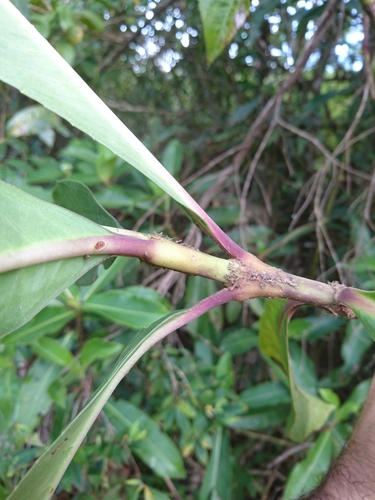
(c) 小铖/Smalltown, some rights reserved (CC BY-NC), uploaded by 小铖/Smalltown
iNaturalist· cc-by-nc
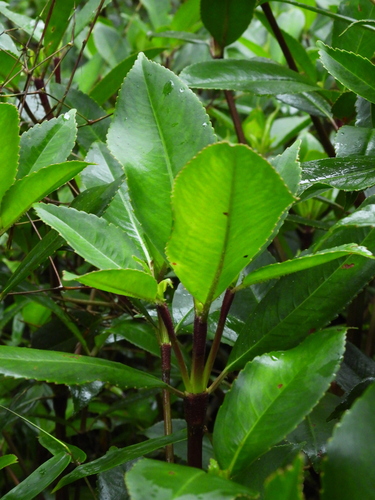
(c) 淑端, some rights reserved (CC BY-NC), uploaded by 淑端
iNaturalist· cc0
no rights reserved, uploaded by 葉子
Description
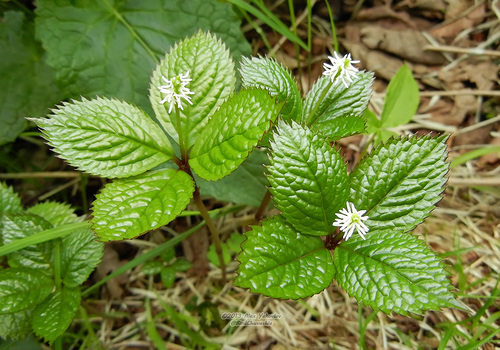
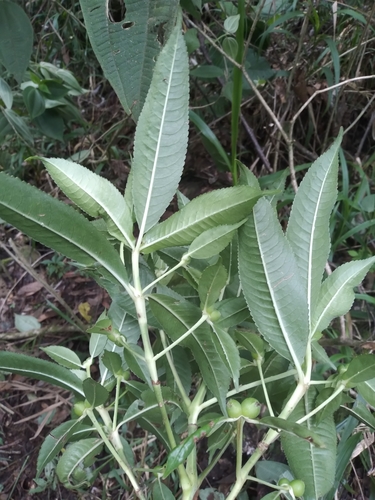
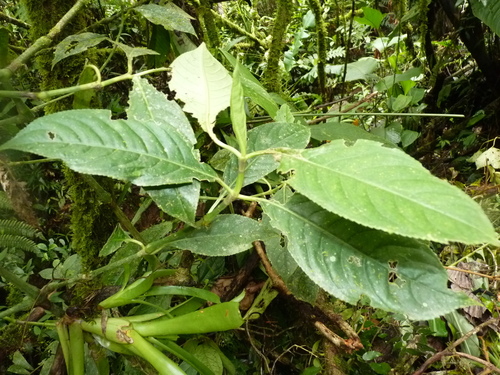
A small shrub. The leaves are opposite and have teeth around the edge. They are oval or sword shaped and taper to the tip. The leaves are fragrant. The flowers are in spikes. They are greenish white and at the ends of branches. The fruit are white berries with black spots. The small flowers look like millet and smell like cymbidiums.
Edible Uses
The flowers are used to scent tea (after removing the petals), and it has occasionally been used as a spice. The leaves are also edible.
Traditional Uses
The flowers are used to scent tea. The petals are removed. (Chu-lan-cha) It has occasionally been used as a spice.
This uses section is brief — help expand it
Medicinal Uses
The plant is used medicinally in China.
Distribution
A tropical plant. It grows in the subtropics.
Where It Grows
Asia, Britain, China, Europe, Indochina, Indonesia, Japan, Korea, Malaysia, SE Asia, Thailand, Vietnam,
Other Uses
An essential oil can be obtained from the flowers. It is a yellow to dark amber coloured viscous liquid with a delightfully soft, woody-floral odour, which is valuable for the perfume industry. The essential oil blends well with many other oils and is commercially promising. The plant spreads and canbe used as an aromatic ground cover.
Other Information
It is a popular tea. It is cultivated.
Notes
It is indigenous to Thailand.
Synonyms
Also Known As
Cha ran, Chulan, Foi-fah, Jinsulan, Pearl orchid flower
References (12)
- Bot. Mag. (Tokyo) 16:180. 1902
- Brouk, B., 1975, Plants Consumed by Man. Academic Press, London. p 3
- Burkill, I.H., 1966, A Dictionary of the Economic Products of the Malay Peninsula. Ministry of Agriculture and Cooperatives, Kuala Lumpur, Malaysia. Vol 1 (A-H) p 535 (As Chloranthus inconspicuus)
- Hedrick, U.P., 1919, (Ed.), Sturtevant's edible plants of the world. p 186 (As Chloranthus inconspicuus)
- Hu, Shiu-ying, 2005, Food Plants of China. The Chinese University Press. p 334
Show all 12 references Hide references
- McMakin, P.D., 2000, Flowering Plants of Thailand. A Field Guide. White Lotus. p 46
- PROSEA handbook Volume 13 Spices. p 275
- Seidemann J., 2005, World Spice Plants. Economic Usage, Botany, Taxonomy. Springer. p 97
- Staples, G.W. and Herbst, D.R., 2005, A tropical Garden Flora. Bishop Museum Press, Honolulu, Hawaii. p 234
- Valder, P., 1999, The Garden Plants of China. Florilegium. p 275
- Wiersema, J. H. & Leon, B., 2013, World Economic Plants. A Standard Reference CRC Press. 2nd Ed. p 170
- World Checklist of Useful Plant Species 2020. Royal Botanic Gardens, Kew