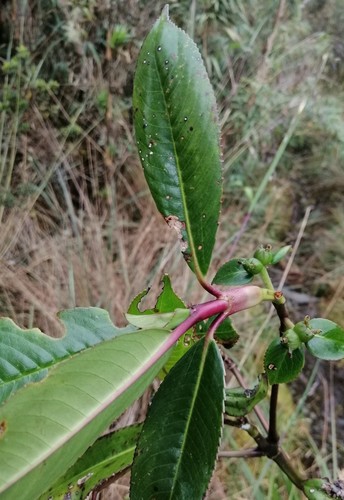
Hedyosmum mexicanum
C. Cordem.
Mexican hedyosmum
iNaturalist· cc-by
(c) Neptalí Ramírez Marcial, some rights reserved (CC BY), uploaded by Neptalí Ramírez Marcial
iNaturalist· cc-by-nc
(c) jpcahill, some rights reserved (CC BY-NC)
iNaturalist· cc-by-nc-sa
(c) Área de Colecta Botánica DIAAPROY, S.A. de C.V., some rights reserved (CC BY-NC-SA), uploaded by Área de Colecta Botánica DIAAPROY, S.A. de C.V.
Summary
Source: WikipediaHedyosmum mexicanum is a species of plant in the family Chloranthaceae. It is found in Guatemala and Mexico. It is threatened by habitat loss.
Description
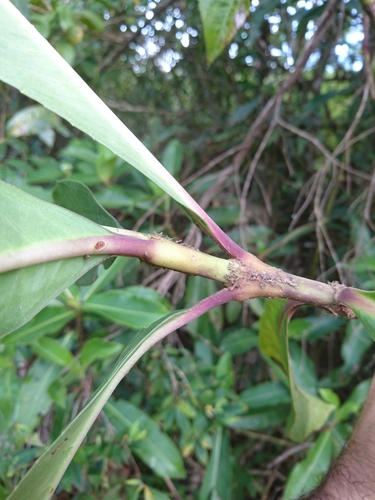
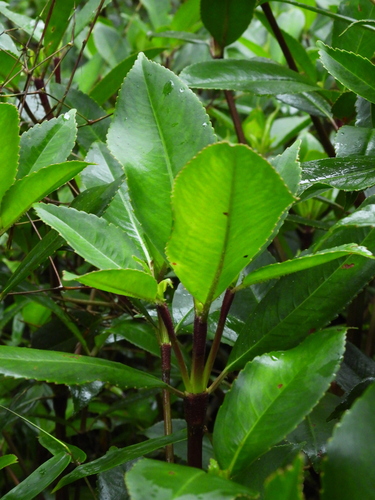
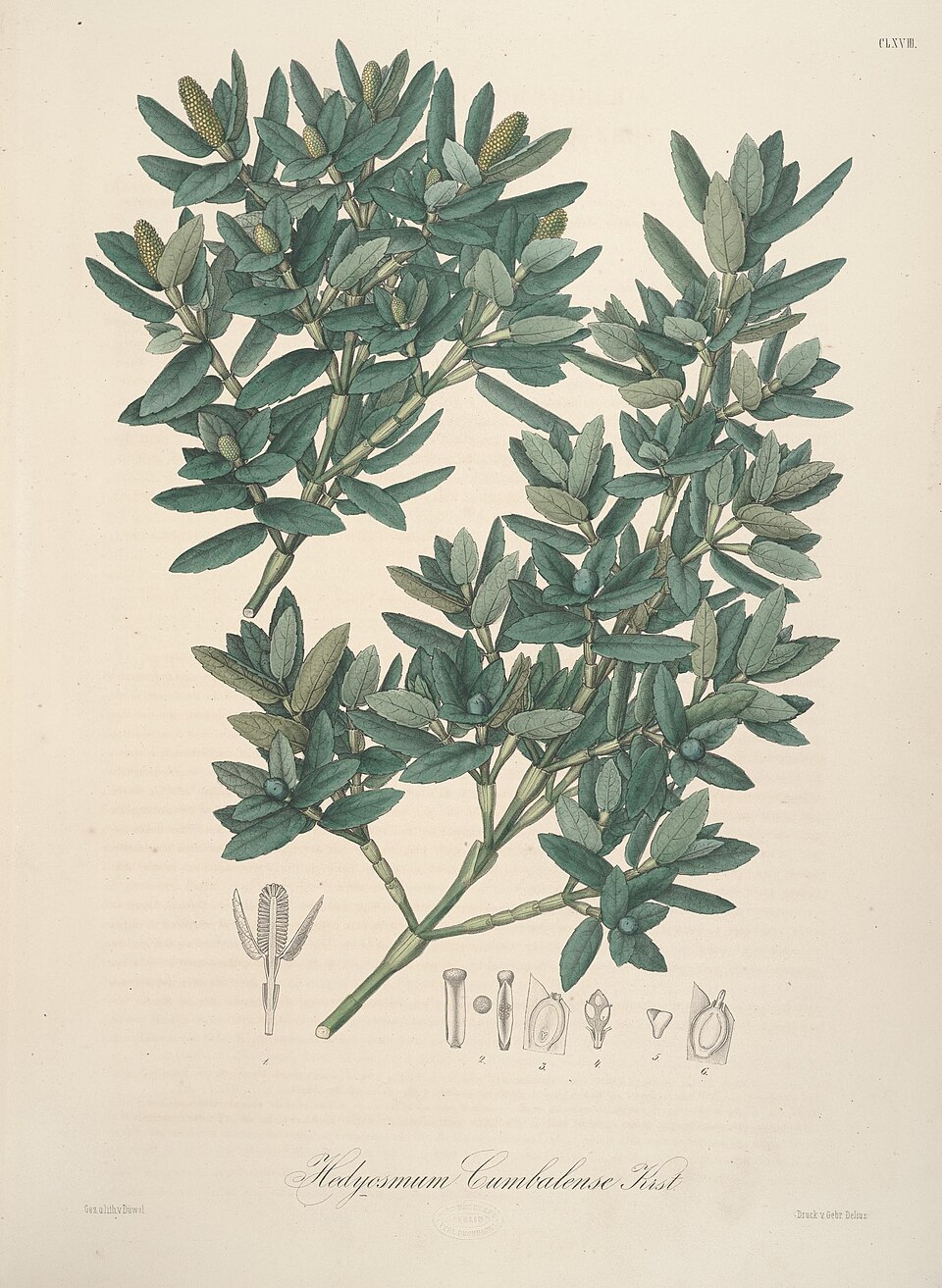
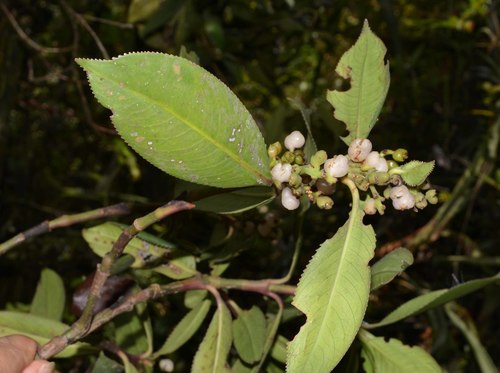
A tree. The leaves are opposite and have closely spaced teeth. The sheath at the base of the leaf has many small filaments. The flowers are in a cone like arrangement with between 100 and 350 flowers. They are green. The fruit are white or yellow and succulent and edible.
Edible Uses
Fruit - raw. The mature fruit is succulent with a sweet flavour. The whitish fruiting head is 2 - 3cm long and 1.5 - 2cm thick, or in the fresh state larger, very fleshy and juicy. Two or three leaves, placed in a cup of boiling water, is used as a substitute for tea. A substitute for coffee.
Traditional Uses
The fruit are succulent, sweet and edible. Two or three leaves in hot water make a tea drink.
This uses section is brief — help expand it
Distribution
It is a tropical plant. They grow in wet places in cool mountain regions. It grows above 2,000 m altitude.
Where It Grows
Belize, Central America, Colombia, Costa Rica, El Salvador, Guatemala, Honduras, Mexico, Nicaragua, North America, Panama, South America,
Cultivation
A plant of higher elevations in the moist tropics, where it is found at elevations from 1,100 - 2,900 metres. A dioecious species, both male and female forms need to be grown if fruit and seed are required.
Other Uses
No use is made of the wood.
Notes
There are 40-50 Hedyosmum species.
Synonyms
Also Known As
Macetero, Mazorco, Ocze, Onj, Palo de agua, Planatillo, Sandio, Sauquillo, Taba de ojolote, Te azteco, Te de monte, Te maya, Vara blanco
References (8)
- Condit, R., et al, 2011, Trees of Panama and Costa Rica. Princeton Field Guides. p 122
- Facciola, S., 1998, Cornucopia 2: a Source Book of Edible Plants. Kampong Publications, p 78
- Grandtner, M. M., 2008, World Dictionary of Trees. Wood and Forest Science Department. Laval University, Quebec, Qc Canada. (Internet database http://www.wdt.qc.ca)
- Grandtner, M. M. & Chevrette, J., 2013, Dictionary of Trees, Volume 2: South America: Nomenclature, Taxonomy and Ecology. Academic Press p 293
- Heywood, V.H., Brummitt, R.K., Culham, A., and Seberg, O. 2007, Flowering Plant Families of the World. Royal Botanical Gardens, Kew. p 98
Show all 8 references Hide references
- Kermath, B. M., et al, 2014, Food Plants in the Americas: A survey of the domesticated, cultivated and wild plants used for Human food in North, Central and South America and the Caribbean. On line draft. p 407
- Kew Plants of the World onLine
- Smith, N., Mori, S.A., et al, 2004, Flowering Plants of the Neotropics. Princeton. p 100