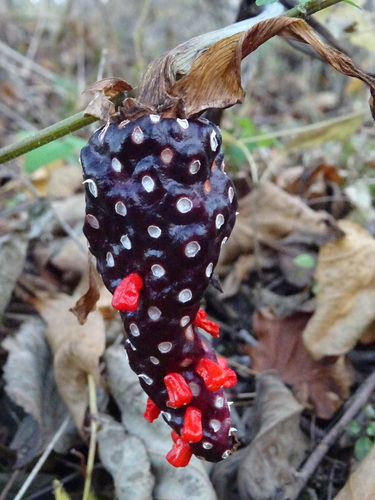
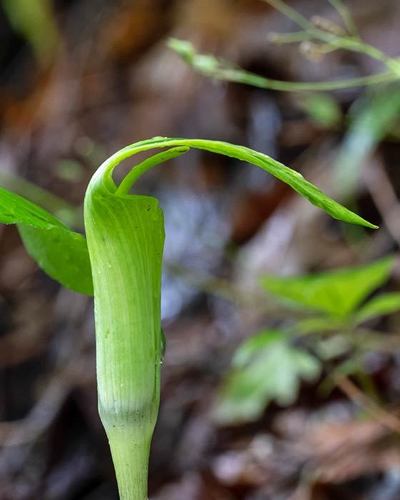
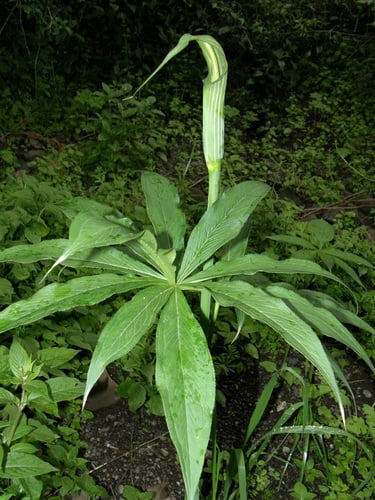
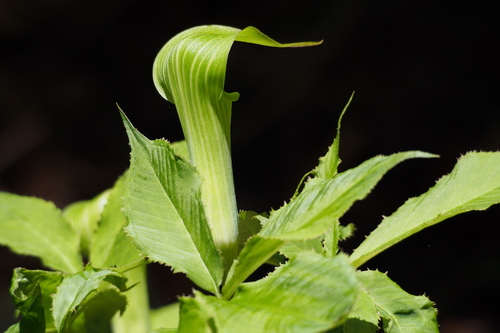
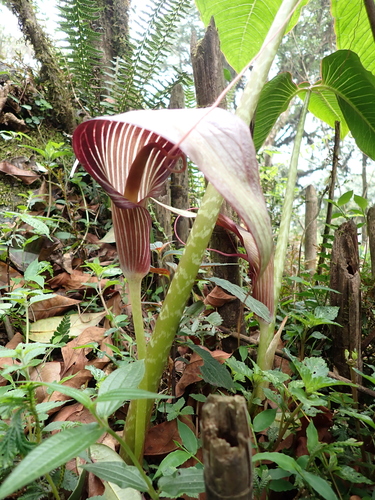
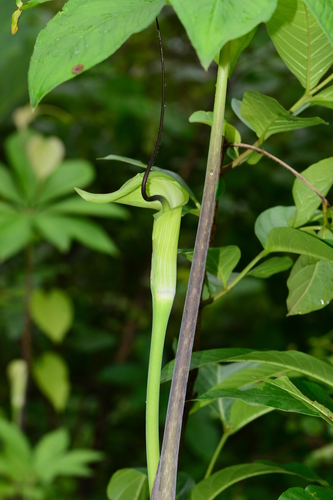
Amorphophallus prainii
Hook.f.
iNaturalist· cc-by-nc
(c) margaret888, some rights reserved (CC BY-NC)
iNaturalist· cc-by-nc-sa
(c) Smithsonian Institution, National Museum of Natural History, Department of Botany, some rights reserved (CC BY-NC-SA)
Description
A taro family herb. It grows up to 40 cm tall. It produces a single leaf from the tuber. The tuber is 25 cm across.
This description is brief — help expand it
Edible Uses
The corms and roots are edible and the plant is occasionally cultivated for this purpose.
Known Hazards
Although no specific mention has been seen for this species, it belongs to a family where most of the members contain calcium oxalate crystals. This substance is toxic fresh and, if eaten, makes the mouth, tongue and throat feel as if hundreds of small needles are digging in to them. However, calcium oxalate is easily broken down either by thoroughly cooking the plant or by fully drying it and, in either of these states, it is safe to eat the plant. People with a tendency to rheumatism, arthritis, gout, kidney stones and hyperacidity should take especial caution if including this plant in their diet. The raw juice of the tuber is combined with the extracts of other poisonous plants, such as Rauvolfia perakensis, to increase their effectiveness and to speed up their rate of absorption.
Distribution
It is a tropical plant. It grows in lowland rainforest.
Where It Grows
Asia, India, Indonesia, Laos, Malaysia, SE Asia,
Other Information
It is occasionally cultivated for its edible corms.
Synonyms
References (2)
- Mansfeld,
- Sanchez-Monge, 1991,