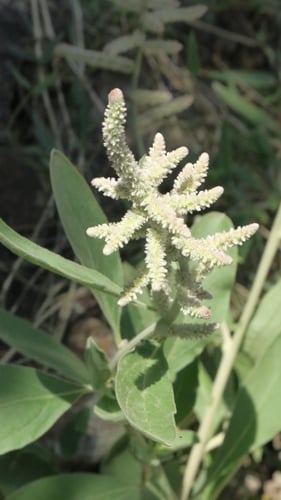
Chenopodium quinoa
Willd.
Quinoa
iNaturalist· cc-by
(c) GERMAN LEONEL SARMIENTO CRUZ, some rights reserved (CC BY), uploaded by GERMAN LEONEL SARMIENTO CRUZ
Summary
Source: WikipediaFast-growing annual reaching 1.5 m tall by 0.3 m wide with wind-pollinated hermaphroditic flowers from July to August and seeds maturing August to September. Hardy to UK zone 10, frost-tender. Tolerates light sandy, medium loamy, and heavy clay soils, thriving in well-drained and nutritionally poor conditions across mildly acid to very alkaline pH ranges. Requires full sun, tolerates drought and strong winds but not maritime exposure.
Description
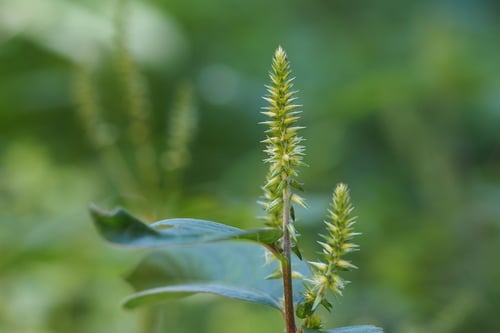
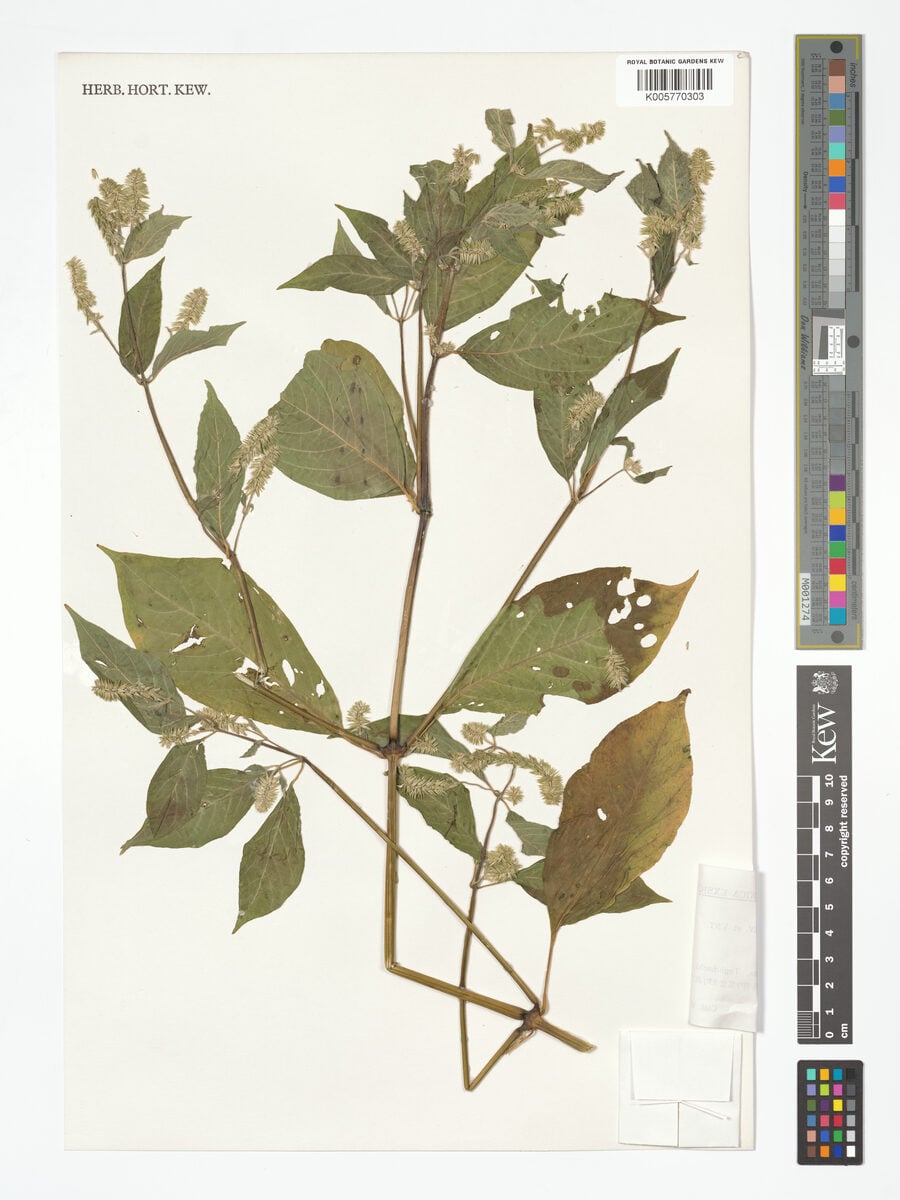
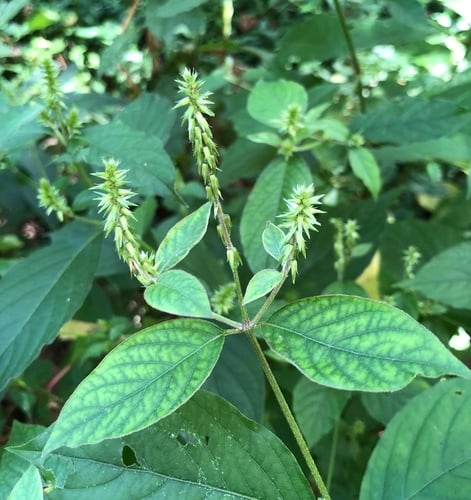
A small herb. It grows 20 cm to 3 m high. The taproot is branched. The leaves vary in shape. They are toothed and somewhat grey-green. The flowers are grouped in clusters on the stalk. The flowers are small and without stalks. They are in dense clusters at the top of the plant. The seeds are 1-2.6 mm across. They can be white, yellow, red, purple, brown or black. Plants vary a lot in colour, flowering and other ways.
Edible Uses
The seed has a pleasant, mild flavour and readily absorbs the flavours of other ingredients, making it versatile across a wide range of dishes. It can be used in all the ways rice is used, both in savoury and sweet preparations, or ground into a powder and cooked as a porridge. The seed can also be sprouted and added to salads, though many people find the sprouted form unpleasant. Before use, the seed must be thoroughly soaked and rinsed to remove the saponin coating on the seed surface. Nutritionally, quinoa seed is outstanding: it contains approximately 38% carbohydrate, 19% protein, 5% fat, and 5% sugar. The protein is rich in the amino acids lysine, methionine, and cystine, giving it a biological value comparable to milk — with 2–6% more protein and a better amino acid balance than wheat. Young leaves can be eaten raw or cooked like spinach, though large quantities of raw leaves should be avoided due to toxicity concerns.
Traditional Uses
The seed is used for soups and stews. They can be puffed or eaten as a side dish like rice. The seeds can be eaten or ground into flour. Young leaves can be cooked and eaten as a vegetable. Sprouted seeds are used in salads. The flower clusters are steamed like broccoli. They can be mixed with cheese, dipped in egg batter and fried. Many varieties contain saponins which give them a bitter taste. The outside skin is removed to get rid of these saponins.
Medicinal Uses
None known.
Known Hazards
The leaves and seeds of all members of this genus are more or less edible. However, many of the species in this genus contain saponins, though usually in quantities too small to do any harm. Although toxic, saponins are poorly absorbed by the body and most pass straight through without any problem. They are also broken down to a large extent in the cooking process. Saponins are found in many foods, such as some beans. Saponins are much more toxic to some creatures, such as fish, and hunting tribes have traditionally put large quantities of them in streams, lakes etc in order to stupefy or kill the fish. The plants also contain some oxalic acid, which in large quantities can lock up some of the nutrients in the food. However, even considering this, they are very nutritious vegetables in reasonable quantities. Cooking the plants will reduce their content of oxalic acid. People with a tendency to rheumatism, arthritis, gout, kidney stones or hyperacidity should take especial caution if including this plant in their diet since it can aggravate their condition.
Distribution
It is a tropical plant. It grows between 500 and 3,900 m altitude in the Andes. It can adapt to cold and drought. Plants grow with rainfalls between 250 mm to 1 500 mm. Once established plants can tolerate temperatures down to -5°C. The soil needs to be well drained. Some varieties are suited to acid soils with a pH of 4.5, and others to alkaline soils with a pH of 9.5. Some can tolerate salty conditions. It suits hardiness zones 8-11.
Where It Grows
Andes, Argentina, Asia, Australia, Bolivia, Britain, Canada, Central America, Chile*, Colombia, Cuba, Ecuador, Europe, France, India, Iran, Mexico, Middle East, North America, Peru, Slovenia, South America*, Spain, Sweden, Tasmania, USA, West Indies,
Cultivation
a cultivated food crop. A plant of higher elevations in the tropics, it has also been successfully grown in the temperate and subtropical zones. Plants tolerate light frosts at any stage in their development except when flowering. An easily grown plant, it requires a rich moist well-drained soil and a warm position if it is to do really well, but it also succeeds in less than optimum conditions. Tolerates a pH range from 6 to 8.5 and moderate soil salinity. Plants are quite wind resistant. Plants are drought tolerant once they are established. The plant is day-length sensitive and many varieties fail to flower properly away from equatorial regions, however those varieties coming from the south of its range in Chile are more likely to do well in Britain. Different cultivars take from 90 - 220 days from seed sowing to harvest. Yields as high as 5 tonnes per hectare have been recorded in the Andes, which compares favourably with wheat in that area. Young plants look remarkably like the common garden weed fat hen (Chenopodium album). Be careful not to weed the seedlings out in error. The seed is not attacked by birds because it has a coating of bitter tasting saponins. These saponins are very easily removed by soaking the seed overnight and then thoroughly rinsing it until there is no sign of any soapiness in the water. The seed itself is very easy to harvest by hand on a small scale and is usually ripe in August. Cut down the plants when the first ripe seeds are falling easily from the flower head, lay out the stems on a sheet in a warm dry position for a few days and then simply beat the stems against a wall or some other surface, the seed will fall out easily if it is fully ripe and then merely requires winnowing to get rid of the chaff.
Propagation
Sow seed in April directly in situ, either broadcast or in rows approximately 25 cm apart, thinning plants to around 10 cm spacing. Germination is rapid, even in fairly dry conditions. Take care not to weed out seedlings, as they closely resemble some common garden weeds.
Other Uses
Gold and green dyes can be obtained from the whole plant. The saponins rinsed from the seed during preparation can be saved and diluted with water to create a spray that deters birds and insects from growing plants. The spray remains effective for a few weeks or until washed off by rain.
Production
A life cycle varies between 120-240 days. Plants are harvested when mature then allowed to lie for 30-45 days before threshing. Yields of 400-1 200 kg per hectare occur.
Other Information
It is a cultivated food crop. It is a commercially cultivated vegetable.
Notes
There are about 100-150-250 Chenopodium species. They are mostly in temperate regions. It suits the high altitude tropics. The protein is good quality because of its amino acid balance. It has 2-6% more protein and better amino acid balance than wheat. The saponins in the skin protect it from insects. Also put in the family Chenopodiaceae.
Nutrition
| Part | Moisture | kJ | kcal | Protein | Vit A | Vit C | Iron | Zinc |
|---|---|---|---|---|---|---|---|---|
| Seeds | 12 | 1449 | 347 | 12 | — | — | 7 | — |
| Leaves | 85 | 202 | 48 | 5 | 1800 | 100 | 4 | — |
Synonyms
Also Known As
Chula, Huauzontle, Hupha, Inca rice, Inca wheat, Jupa, Kiuna, Kvinoja, Llircha, Lukhi, Mijo del peru quinia, Parca, Petty rice, Rajupa jaru, Quingua, Quinua, Quinwa, Suba, Supha, Yuyo blanco
References (40)
- Altschul, S.V.R., 1973, Drugs and Foods from Little-known Plants. Notes in Harvard University Herbaria. Harvard Univ. Press. Massachusetts. no. 876
- Barreau, A., et al, 2016, How Can We Teach Our Children if We Cannot Access the Forest? Generational Change in Mapuche Knowledge of Wild Edible Plants in Andean Temperate Ecosystems of Chile. Journal of Ethnobiology 36(2): 412–432
- Brouk, B., 1975, Plants Consumed by Man. Academic Press, London. p 36, 359
- Castillo, R. O., 1995, Plant Genetic Resources in the Andes: Impact, Conservation, and Management. Crop Science 35:355-360
- Centofanti, T. & Banuelos, G., 2019, Practical uses of Halophytic Plants as Sources of Food and Fodder. CAB International. p 333
Show all 40 references Hide references
- Cundall, P., (ed.), 2004, Gardening Australia: flora: the gardener's bible. ABC Books. p 370
- Daly, A. B., 20014, Narrating changing foodways: wild edible plant knowledge and traditional food systems in Mapuche lands of the Andean Temperate Forests, Chile. Masters Thesis Vancouver. p 45
- Dias. A. C., et al, 1955, Nutrient Content and Protein Quality of Quinua and Canihua, Edible Seed Products of the Andes Mountains. Journal of Agricultural and Food Composition 3: 531
- Etkin, N.L. (Ed.), 1994, Eating on the Wild Side, Univ. of Arizona. p 50
- Facciola, S., 1998, Cornucopia 2: a Source Book of Edible Plants. Kampong Publications, p 77 (Also as Chenopodium nuttaliae)
- Hermandez Bermejo, J.E., and Leon, J. (Eds.), 1994, Neglected Crops. 1492 from a different perspective. FAO Plant Production and Protection Series No 26. FAO, Rome. p 12, 135
- J. Wash. Acad. Sci. 8:523. 1918 (As Chenopodium nuttaliae)
- Joshi, A., et al, 2018, Halophytes of Thar Desert: Potential source of nutrition and feedstuff. International Journal of Bioassays 8.1 (2018) pp. 5674-5683
- Kays, S. J., and Dias, J. C. S., 1995, Common Names of Commercially Cultivated Vegetables of the World in 15 languages. Economic Botany, Vol. 49, No. 2, pp. 115-152
- Kew Plants of the World Online
- Kiple, K.F. & Ornelas, K.C., (eds), 2000, The Cambridge World History of Food. CUP p 1750, 1831 (Also as Chenopodium nuttaliae)
- Leon-Lobos, P., et al, 2022, Patterns of Traditional and Modern Uses of Wild Edible Native Plants of Chile: Challenges and Future Perspectives. Plants (Basel) v 11 (6) Table S1
- Macmillan, H.F. (Revised Barlow, H.S., et al), 1991, Tropical Planting and Gardening. Sixth edition. Malayan Nature Society. Kuala Lumpur. p 351
- Malezas Comestibles del Cono Sur, INTA, 2009, Buernos Aires
- Martin, F.W. & Ruberte, R.M., 1979, Edible Leaves of the Tropics. Antillian College Press, Mayaguez, Puerto Rico. p 182 (Also as Chenopodium nuttaliae)
- Menninger, E.A., 1977, Edible Nuts of the World. Horticultural Books. Florida p 147
- Miguel, E., et al, 1989, A checklist of the cultivated plants of Cuba. Kulturpflanze 37. 1989, 211-357
- Plants for a Future database, The Field, Penpol, Lostwithiel, Cornwall, PL22 0NG, UK. http://www.scs.leeds.ac.uk/pfaf/ (Also as Chenopodium nuttaliae)
- PROSEA (Plant Resources of South East Asia) handbook Volume 10 Cereals. p 79
- Purseglove, J.W., 1968, Tropical Crops Dicotyledons, Longmans. p 632 (Also as Chenopodium nuttaliae)
- Saunders, C.F., 1948, Edible and Useful Wild Plants. Dover. New York. p 53
- Simmonds,N.W., 1979, Quinoa and relatives, in Simmonds N.W.,(ed), Crop Plant Evolution. Longmans. London. p 29 (Also as Chenopodium nuttaliae)
- Small, E., 2009, Top 100 Food Plants. The world's most important culinary crops. NRC Research Press. p 449
- Smith, N., Mori, S.A., et al, 2004, Flowering Plants of the Neotropics. Princeton. p 98
- Sp. pl. 1(2):1301. 1798
- Tapia, M. E., The role of under-utilised plant species with regard to increased food security and improved health of poor poeople, in mountain regions. IIAP-PNUD/Peru
- Tindall, H.D., 1983, Vegetables in the tropics. Macmillan p. 78
- Torre, de la L., et al, 2008, Enciclopedia de las Plantas Útiles del Ecuador. Herbario QCA. Pontificia Universidad Católica del Ecuador. p 157
- Ulian, T., et al, 2020, Unlocking plant resources to support food security and promote sustainable agriculture. Plants, People, Planet. 2020;2:421–445.
- Universidad Nacional de Lujan. http://www.unlu.edu.ar\~argenfood
- USDA, ARS, National Genetic Resources Program. Germplasm Resources Information Network - (GRIN). [Online Database] National Germplasm Resources Laboratory, Beltsville, Maryland. Available: www.ars-grin.gov/cgi-bin/npgs/html/econ.pl (10 April 2000)
- van Wyk, B., 2005, Food Plants of the World. An illustrated guide. Timber press. p 130
- Villagran, C., et al, 1999, La Tradicion Altiplanica: Estudio Etnobotanico en Los Andes de Iquique, Primera Region, Chile. Chungara, volumen 31 No. 1 pp 81-186
- Wiersema, J. H. & Leon, B., 2013, World Economic Plants. A Standard Reference CRC Press. 2nd Ed. p 168
- World Checklist of Useful Plant Species 2020. Royal Botanic Gardens, Kew