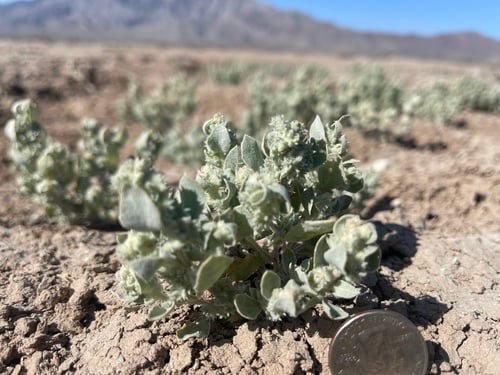
Chenopodium incanum
(S. Watson) Heller
Mealy goosefoot
iNaturalist· cc-by
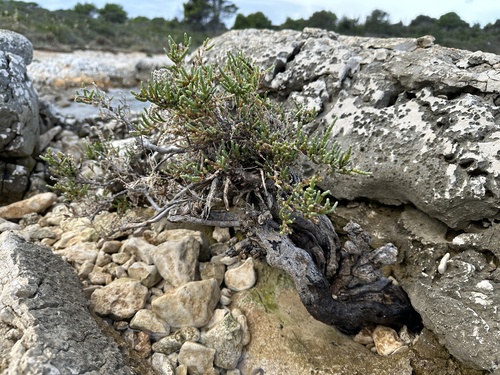
(c) Bobby McCabe, some rights reserved (CC BY), uploaded by Bobby McCabe
iNaturalist· cc-by-nc
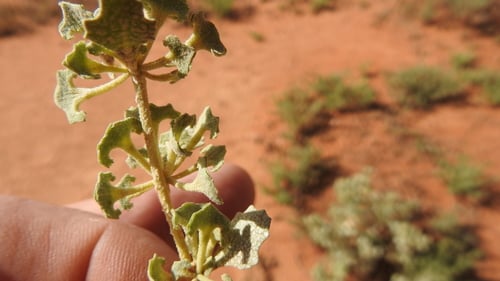
(c) Patricia, some rights reserved (CC BY-NC)
iNaturalist· cc-by-nc
(c) Patricia, some rights reserved (CC BY-NC)
Summary
Annual herb reaching 50 cm tall and 20 cm wide. Hardy to UK zone 5. Hermaphrodite, wind-pollinated. Flowers July to October; seeds ripen August to October. Grows in light sandy, medium loamy, and heavy clay soils with mildly acid to basic pH. Requires full sun and moist soil conditions.
Description
Annual herb reaching 50 cm tall and 20 cm wide. Hardy to UK zone 5. Hermaphrodite, wind-pollinated. Flowers July to October; seeds ripen August to October. Grows in light sandy, medium loamy, and heavy clay soils with mildly acid to basic pH. Requires full sun and moist soil conditions.
Edible Uses
The leaves and young shoots are cooked and eaten like spinach. Raw leaves should only be eaten in small quantities due to toxicity. Fresh leaves have a mild, slightly earthy and salty flavour; boiling softens them and reduces acridity, producing a texture somewhere between spinach and lambsquarter. Leaves from arid, nutrient-poor soils may be more acrid. The seed, about 1mm in diameter, is small and fiddly but represents the plant's true culinary strength. It can be ground into flour or cooked into a soft, nutty porridge. Toasting reduces any trace of bitterness. Seeds should be soaked overnight and rinsed thoroughly before use to remove saponins. The flavour is neutral to slightly nutty and suits both savoury and sweet dishes. Calyx fragments are removed by rubbing and winnowing before cooking.
Traditional Uses
The leaves are used as a potherb and salad green. The seeds are ground into a meal.
This uses section is brief — help expand it
Medicinal Uses
None known.
Known Hazards
Leaves contain oxalates and saponins; do not consume raw in large quantities. Boiling reduces these compounds. Seeds should be cooked to soften the seed coat and improve digestibility. Avoid excessive consumption if prone to kidney stone formation.
Distribution
It is a subtropical plant.
Where It Grows
Central America, Mexico, North America, USA,
Propagation
Sow seed in spring in situ. Most of the seed usually germinates within a few days of sowing.
Other Uses
Gold and green dyes can be obtained from the whole plant.
Notes
There are about 100-150-250 Chenopodium species. They are mostly in temperate regions. Also put in the family Chenopodiaceae.
References (2)
- Kermath, B. M., et al, 2014, Food Plants in the Americas: A survey of the domesticated, cultivated and wild plants used for Human food in North, Central and South America and the Caribbean. On line draft. p 217
- Plants for a Future database, The Field, Penpol, Lostwithiel, Cornwall, PL22 0NG, UK. http://www.scs.leeds.ac.uk/pfaf/