Ilex rotunda
Thunb.
iNaturalist· cc0
no rights reserved, uploaded by 葉子
iNaturalist· cc-by-nc
(c) wulp, some rights reserved (CC BY-NC)
iNaturalist· cc-by
(c) 呂一起(Lu i-chi), some rights reserved (CC BY)
Summary
Source: WikipediaIlex rotunda, commonly called the Kurogane holly, is an evergreen tree in the holly family (Aquifoliaceae). It is native to east Asia, where it is found in China, Japan, Korea, Taiwan, and Vietnam. Its natural habitat is in evergreen broadleaf forests, often in sunny areas such forest edges or on mountain slopes. It has spineless leathery leaves and clusters of bright-red berries. It reaches 18 m at maturity (although 20 m is also reported). The tree blooms from May to June, and the seeds become ripe from October to December. The plants are dioecious. The fruits contain flavonols. Kurogane holly was first described in 1784 by Carl Peter Thunberg, from species growing in Japan. In Japan, it is commonly planted garden and street tree. It was first introduced to gardens of the New World through collections sent by Robert Fortune. In Japan, kurogane holly is one of the hibakujumoku trees. It is also the official tree of several Japanese municipalities.
Description
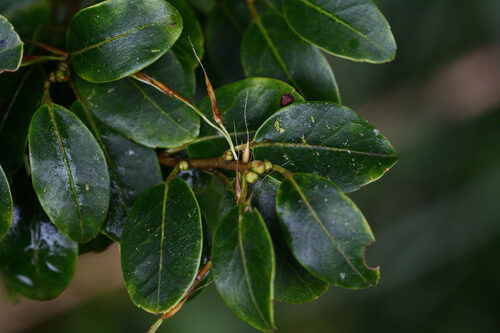
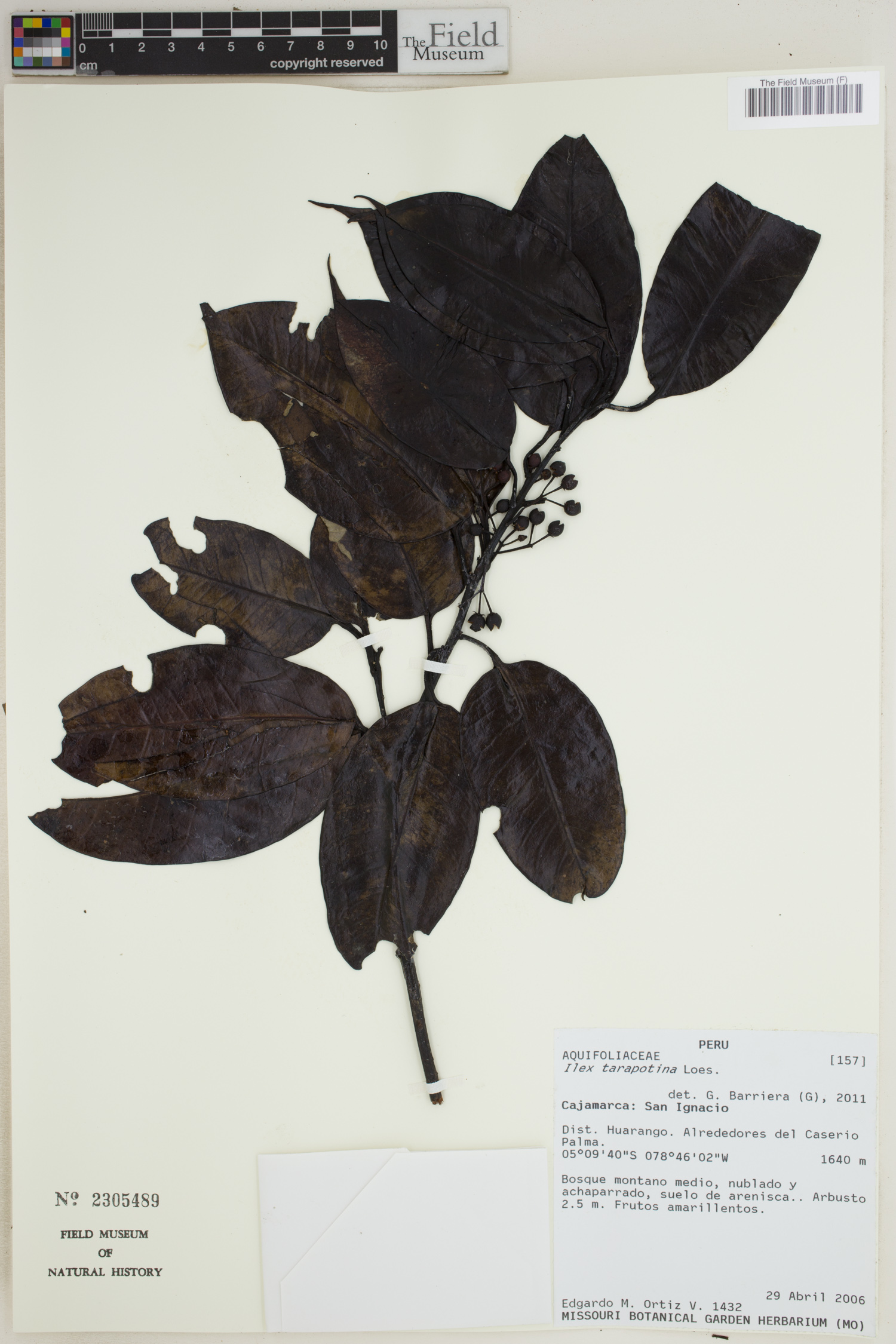
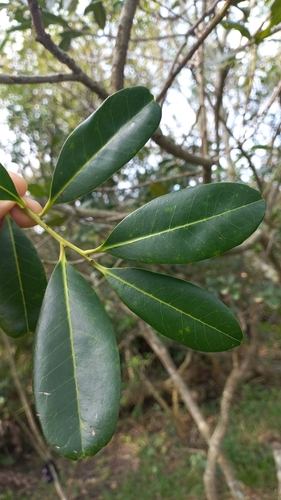
A shrub or tree. It can grow 20 m tall. The trunk can be 1 m across. The bark is dark grey. The leaves are oval and 4-9 cm long by 2-4 cm wide. Male and female flowers are separate.
Edible Uses
None known
Medicinal Uses
The stem bark is detoxicant. The plant is used in combination with other herbs for its haemostatic action.
Known Hazards
Although no specific reports of toxicity have been seen for this species, the fruits of at least some members of this genus contain saponins and are slightly toxic. They can cause vomiting, diarrhoea and stupor if eaten in quantity.
Distribution
It is a tropical plant. It grows in evergreen broad-leaved forests in southern China between 400-1,100 m above sea level. In Yunnan.
Where It Grows
Asia, China, Indochina, Japan, Korea, SE Asia, Taiwan, Vietnam,
Cultivation
Succeeds in most soils so long as they are not water-logged. This species should be hardy in many areas of Britain, especially if provenances from the northern end of its range in Japan are obtained. Resents root disturbance, especially as the plants get older. It is best to place the plants into their permanent positions as soon as possible, perhaps giving some winter protection for their first year or two. Plants are very tolerant of pruning and can be cut right back into old wood if required. Dioecious. Male and female plants must be grown if seed is required.
Propagation
Seed is best sown as soon as ripe in autumn in a cold frame, where it can take 18 months to germinate. Stored seed typically requires two winters and a summer before germinating and should be sown as soon as possible in a cold frame. Scarification followed by warm stratification and then cold stratification may speed germination. Seedlings are slow-growing; pot them up individually when large enough to handle and grow on in light shade in a cold frame for the first year. They can be planted into a nursery bed in late spring of the following year but should not remain there more than two years, as they dislike transplanting. Alternatively, grow on in pots for a second season before planting into permanent positions in late spring or early summer, with a good mulch and some winter protection for the first year outdoors. Cuttings of almost ripe wood with a heel taken in August can be rooted in a shaded cold frame; leave for 12 months before potting up. Layering in October takes 2 years.
Other Uses
None known.
Also Known As
Nhua ruoi
References (1)
- Van Sam, H. et al, 2008, Uses and Conservation of Plant Species in a National Park. A case study of Ben En, Vietnam. Economic Botany 62:574-593