Chenopodium capitatum
(L.) Asch.
Strawberry blite, Elite, Strawberry spinach, Beetberry
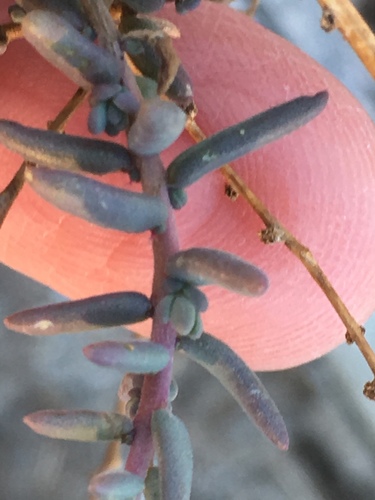
iNaturalist· cc-by-nc
(c) Lena Dietz Chiasson, some rights reserved (CC BY-NC)
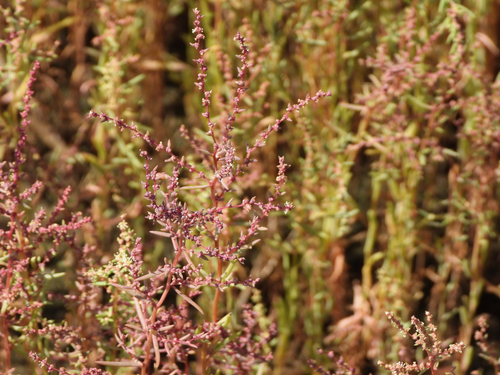
iNaturalist· cc-by-nc
(c) Lena Dietz Chiasson, some rights reserved (CC BY-NC)
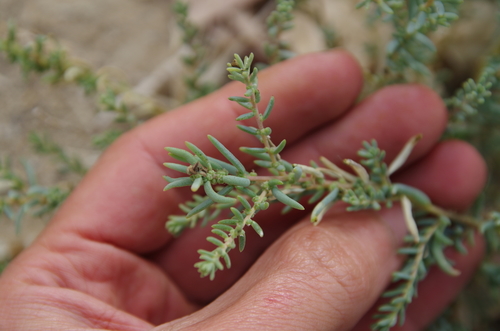
iNaturalist· cc-by-nc
(c) Lena Dietz Chiasson, some rights reserved (CC BY-NC)
Summary
Source: WikipediaAn annual herb growing 0.6 m tall with 0.4 m spread. Hardy to UK zone 4. Flowers July to August with seeds ripening August to September. Grows in light sandy, medium loamy, and heavy clay soils across mildly acidic to basic pH ranges. Requires full sun and prefers moist conditions. Wind-pollinated hermaphrodite with distinctive red seed clusters approximately 12 mm in diameter.
Description
An annual plant that looks like "fat hen" in appearance. It grows 20-40 cm high. The stems are smooth and erect. The leaves are alternate and dark-green. The flowers are in round heads without stalks. In the axils of leaves it has red fruit. They are berry-like and juicy.
Edible Uses
The leaves can be eaten raw or cooked like spinach and are a good source of vitamins C and A, though young leaves are best and quality is considered poor. Raw leaves have been used in salad mixtures but should only be eaten in small quantities. The fruit is about 12mm in diameter, has an insipid but sweet flavour, and can be added to salads raw or cooked. A red food colouring can be obtained from the fruit. The seed can be cooked, ground into a meal, and mixed with cereal flours for making bread and similar foods. It is small and fiddly, and should be soaked overnight and thoroughly rinsed before use to remove saponins.
Traditional Uses
The red fruit can be eaten. They are tasteless but nutritious. They can be boiled and seasoned. The fruit can be used as a red dye for other foods. The leaves are edible cooked. Young leaves are used in salads.
Medicinal Uses
The plant has been used as a lotion for treating black eyes and head bruises. The juice of the seeds and an infusion of the plant have been used to treat lung congestion.
Known Hazards
Leaves contain oxalates and saponins; boiling recommended for sensitive individuals or those consuming frequently. Red seed heads may discolor hands and clothing. No major toxicity concerns, but moderation advised as with other wild spinach substitutes. Those prone to kidney stones should limit high-oxalate greens. Avoid harvesting from chemically treated areas or where nitrate accumulation is possible.
Distribution
It is a temperate plant. It grows in waste ground and recently burnt clearings. It grows in wet ground in the Rocky Mountains.
Where It Grows
Alaska, Australia, Canada, Europe, New Zealand, North America, Tasmania, USA,
Cultivation
The plant self seeds easily.
Propagation
Sow seed in spring in situ. Most seed typically germinates within a few days of sowing.
Other Uses
Gold and green dyes can be obtained from the whole plant. A red dye obtained from the fruit is used in cosmetics and as a paint.
Other Information
It is cultivated.
Notes
There are about 100-150-250 Chenopodium species. They are mostly in temperate regions. Also put in the family Chenopodiaceae.
Synonyms
References (17)
- Beckstrom-Sternberg, Stephen M., and James A. Duke. "The Foodplant Database." http://probe.nalusda.gov:8300/cgi-bin/browse/foodplantdb.(ACEDB version 4.0 - data version July 1994)
- Cormack, R. G. H., 1967, Wild Flowers of Alberta. Commercial Printers Edmonton, Canada. p 79
- Facciola, S., 1998, Cornucopia 2: a Source Book of Edible Plants. Kampong Publications, p 77
- Fl. Tirolo mer. 2:180. 1857
- Hedrick, U.P., 1919, (Ed.), Sturtevant's edible plants of the world. p 184
Show all 17 references Hide references
- Heller, C. A., 1962, Wild Edible and Poisonous Plants of Alaska. Univ. of Alaska Extension Service. p 11
- Hibbert, M., 2002, The Aussie Plant Finder 2002, Florilegium. p 66
- Holloway, P. S. & Alexander, G., 1990, Ethnobotany of the Fort Yukon Region, Alaska. Economic Botany, Vol. 44, No. 2 pp. 214-225
- MacKinnon, A., et al, 2009, Edible & Medicinal Plants of Canada. Lone Pine. p 308
- Plants for a Future database, The Field, Penpol, Lostwithiel, Cornwall, PL22 0NG, UK. http://www.scs.leeds.ac.uk/pfaf/
- Porsild, A.E., 1974, Rocky Mountain Wild Flowers. Natural History Series No. 2 National Museums of Canada. p 150
- Reis, S. V. and Lipp, F. L., 1982, New Plant Sources for Drugs and Foods from the New York Botanical Garden herbarium. Harvard. p 53
- Seidemann J., 2005, World Spice Plants. Economic Usage, Botany, Taxonomy. Springer. p 96
- Self, M., 199, Phoenix Seeds catalogue. p 8
- Tozer, F., 2007, The Uses of Wild Plants. Green Man Publishing. p 65
- www.wildediblefood.com
- Zeven, A. C. & de West, J. M. J., 1982, Dictionary of cultivated plants and their regions of diversity. Wageningen. p 88