Atriplex maximowicziana
Makino
Maximowicz's saltbush, Hai bin li
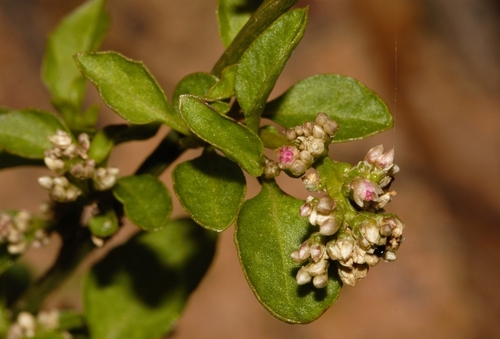
iNaturalist· cc0
no rights reserved, uploaded by 葉子
iNaturalist· cc0
no rights reserved, uploaded by 葉子
iNaturalist· cc0
no rights reserved, uploaded by 葉子
Summary
A perennial herb growing to 0.8 m tall with both male and female flowers on the same plant, wind-pollinated. Thrives in light sandy to medium loamy soils and tolerates very alkaline and saline conditions. Prefers well-drained soil and cannot grow in shade. Drought-tolerant once established.
Description
A perennial herb. It grows up to 1 m tall. The stems are erect and much branched. The leaves are oval and 2-3 cm long by 1-2 cm wide.
This description is brief — help expand it
Edible Uses
Edible Parts: Leaves Seed Edible Uses: Leaves - cooked. Seed - cooked. Used in piñole or ground into a meal and used as a thickener in making bread or mixed with flour in making bread. The small seed is about 2mm in diameter.
Medicinal Uses
None known
Known Hazards
No member of this genus contains any toxins, all have more or less edible leaves. However, if grown with artificial fertilizers, they may concentrate harmful amounts of nitrates in their leaves.
Distribution
It grows on beaches. It grows on sandy and coral rocky seashores.
Where It Grows
Asia, China, Hawaii, Japan, Pacific,
Cultivation
We have very little information on this species and do not know if it will be hardy in Britain, though it should be possible to grow it as a spring-sown annual. The following notes are based on the general needs of the genus. Succeeds in full sun in any well-drained but not too fertile soil. Most species in this genus tolerate saline and very alkaline soils.
Propagation
Seed - sow mid to late spring in situ. Germination is usually rapid.
Other Uses
None known Special Uses
Notes
There are about 100-300 Atriplex species. They have also been put in the family Chenopodiaceae.
References (2)
- Plants for a Future database, The Field, Penpol, Lostwithiel, Cornwall, PL22 0NG, UK. http://www.scs.leeds.ac.uk/pfaf/
- Zhu Gelin (Chu Ge-ling); Steven E. Clemants, CHENOPODIACEAE [Draft], Flora of China