Rosa soulieana
Crep.
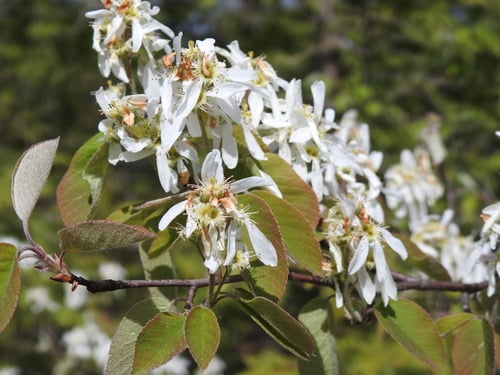
iNaturalist· cc-by-nc
(c) Andreas Taeger, some rights reserved (CC BY-NC), uploaded by Andreas Taeger
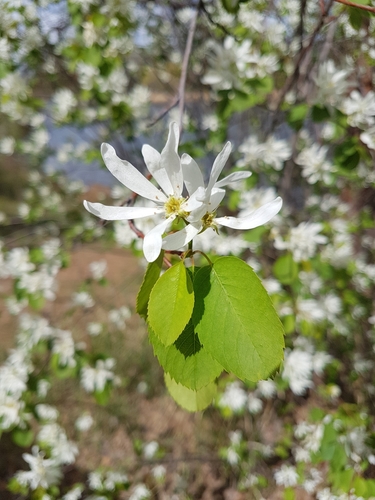
iNaturalist· cc-by-nc-sa
(c) Jinmin Li, some rights reserved (CC BY-NC-SA), uploaded by Jinmin Li
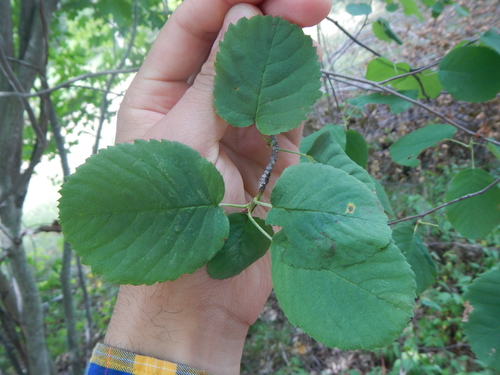
wikimedia· cc0
Wikimedia Commons - M. Smith
Summary
Source: WikipediaRosa soulieana, or Soulié's rose (川滇蔷薇 chuan dian qiang wei), is a species of flowering plant in the family Rosaceae, native to China (southern Anhui, Chongqing, Sichuan, Tibet, and Yunnan). Growing to 2.5–4 m (8–13 ft) tall by 4–8 m (13–26 ft) broad, it is an extremely vigorous, deciduous shrub with very long, spiny branches, covered in masses of small, grey-green leaflets. In summer it bears many small single white roses, each with a lax central boss of pale yellow. The flowers have a light clove scent, and are followed in autumn by orange-red hips. In cultivation it can be trained as a rambler. It is hardy, but prefers a position in full sun. The plant was collected in China by the French missionary and botanist Jean-André Soulié. who sent samples back to the Vilmorin Collection in France around 1895. A plant was then sent to Kew Gardens in England in 1895.
Description
An erect shrub. It rows 2-4 m tall. The branches are spreading. It has scattered prickles. The leaves are 3-8 cm long. There are about 7 leaflets. These are narrowly oval and 1-3 cm long by 1-2 cm wide. They can be hairy underneath. There are many flowers 3-5 cm across. The petals are yellow to white. The fruit is a hip that is orange to red but turns black to purple as it ripens. They are oval and 1 cm across.
Edible Uses
The fruit are eaten fresh, and the tender stems are eaten as a vegetable, though the plant is only occasionally used for food.
Traditional Uses
The fruit are eaten fresh. The tender stem is eaten as a vegetable.
This uses section is brief — help expand it
Distribution
It is a subtropical plant. It grows in scrub and beside streams between 2,500-3,700 m above sea level. It grows in Sichuan and Yunnan in China.
Where It Grows
Asia, China, Tibet,
Production
In Yunnan fruit are available in August and September.
Other Information
It is only occasionally eaten.
Also Known As
Xuwabala
References (4)
- Flora of China @ efloras.org Volume 9
- Ju, Y., et al, 2013, Eating from the wild: diversity of wild edible plants used by Tibetans in Shangri-la region, Yunnan, China, Journal of Ethnobiology and Ethno medicine 9:28
- Zhang, L. et al, 2013, An Ethnobotanical Study of Traditional Edible Plants Used by Naxi People in Northwestern Yunnan, China. - A Case Study in Wenhai Village. Plant Diversity and Resources. p 484
- Zhang, L., et al, 2016, Ethnobotanical study of traditional edible plants used by the Naxi people during droughts. Journal of Ethnobiology and Ethnomedicine. 12:39