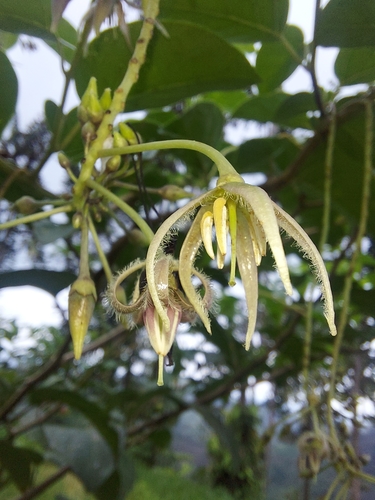
Cestrum latifolium
Lam.
Bitter greens
iNaturalist· cc-by-nc
(c) Riley Fortier, some rights reserved (CC BY-NC), uploaded by Riley Fortier
iNaturalist· cc-by-nc
(c) Riley Fortier, some rights reserved (CC BY-NC), uploaded by Riley Fortier
iNaturalist· cc-by-nc
(c) Sébastien SANT, some rights reserved (CC BY-NC), uploaded by Sébastien SANT
Description
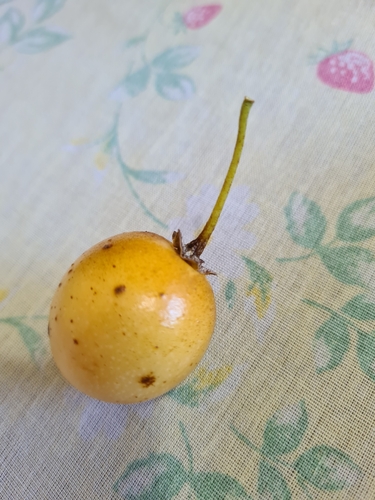
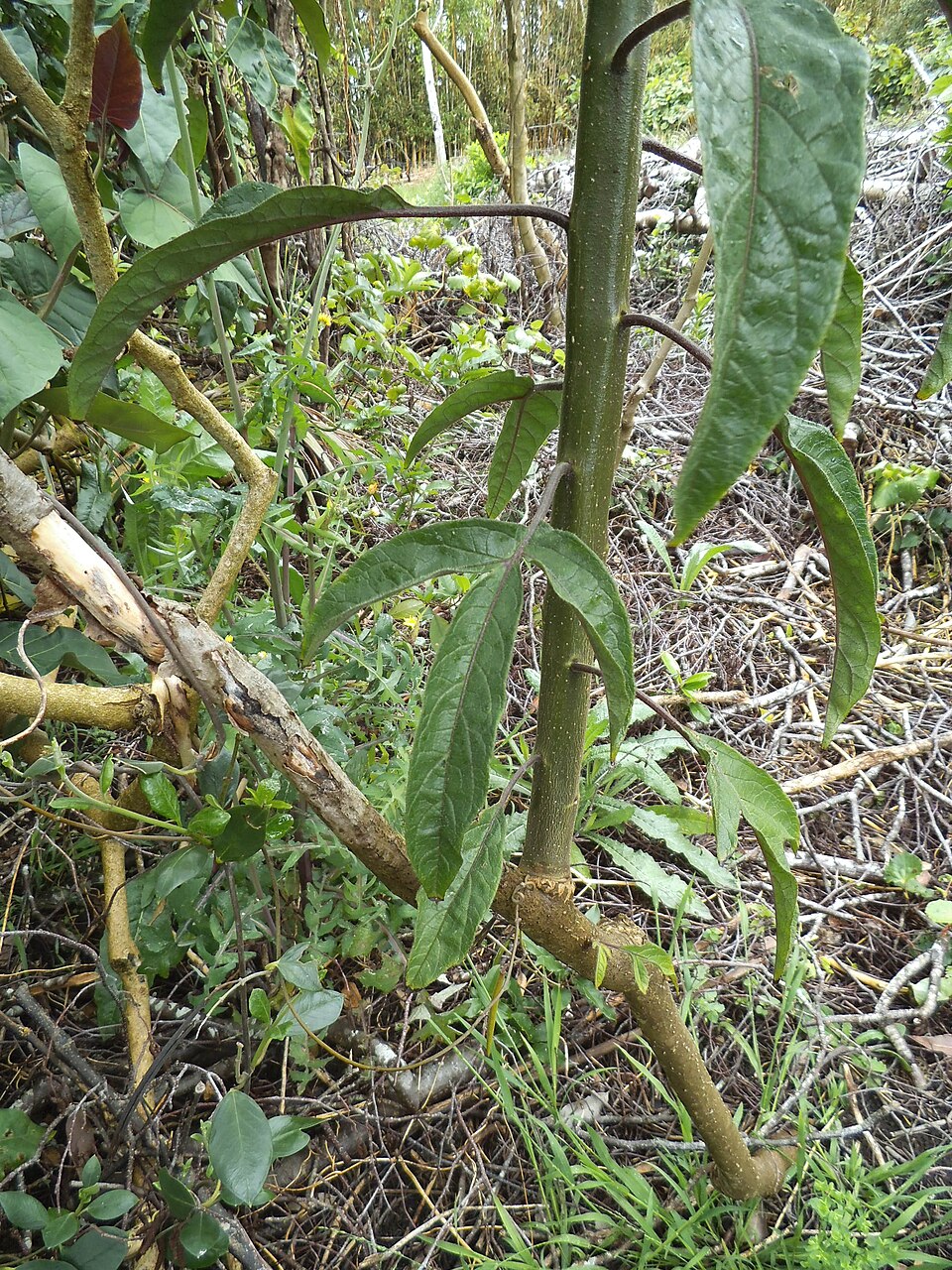
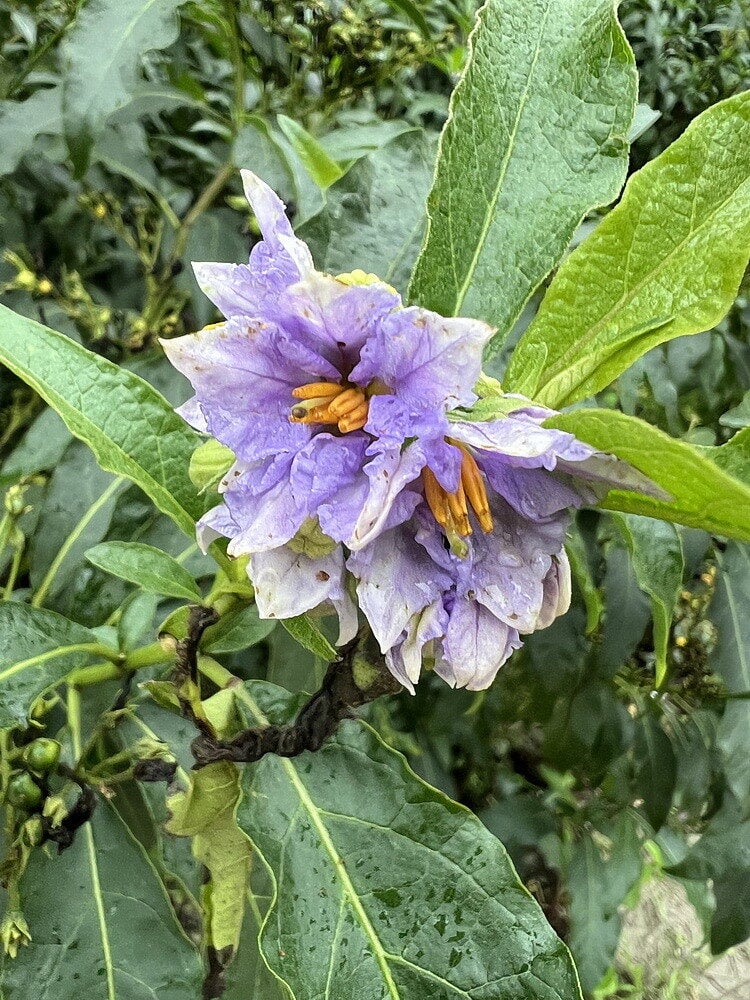
A shrub or slender tree. It grows 4 m tall. The flowers are in tufts in the axils of leaves. There are 4-12 flowers in a group. The fruit is an oval berry. It is 0.7 cm long by 0.5 cm wide. The fruit are green to dark purplish-blue. There are 3-4 seeds.
Edible Uses
The leaves and fruit are edible and sold in markets.
Traditional Uses
CAUTION: Many Cestrum are poisonous.
This uses section is brief — help expand it
Known Hazards
Many Cestrum species are poisonous; caution is advised. The fruit are used as fish poison.
Distribution
A tropical plant. It grows in coastal areas and in open savanna forest and on slopes. It grows in moist rich soil and can be in full sun or light shade.
Where It Grows
Africa, Asia, Central Africa, Central America, Congo, Guatemala, Guiana, Guianas, Guyana, Indonesia, Panama, SE Asia, South America*, Suriname, West Indies,
Cultivation
Plants can be grown from seeds or tip cuttings.
Other Information
Sold in markets.
Notes
There are about 175-200 Cestrum species. The fruit are used as fish poison.
Synonyms
Also Known As
Barriga de sapo, Bella de noche, Bita wiwiri, Cazabe, Ciruelilla, Ciruelo de monte, Clavito, Daun pahit, Ke tipen
References (7)
- Altschul, S.V.R., 1973, Drugs and Foods from Little-known Plants. Notes in Harvard University Herbaria. Harvard Univ. Press. Massachusetts. no. 4055
- Grandtner, M. M. & Chevrette, J., 2013, Dictionary of Trees, Volume 2: South America: Nomenclature, Taxonomy and Ecology. Academic Press p 121
- Jardin, C., 1970, List of Foods Used In Africa, FAO Nutrition Information Document Series No 2.p 66
- Martin, F.W. & Ruberte, R.M., 1979, Edible Leaves of the Tropics. Antillian College Press, Mayaguez, Puerto Rico. p 219
- Sukarya, D. G., (Ed.) 2013, 3,500 Plant Species of the Botanic Gardens of Indonesia. LIPI p 606
Show all 7 references Hide references
- Tabl. encycl. 2(vol. 3):5. 1794
- van Roosmalen, M.G.M., 1985, Fruits of the Guianan Flora. Utrecht Univ. & Wageningen Univ. p 416 (var. tenuifolium)