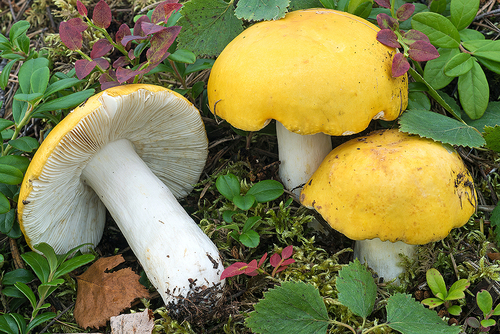
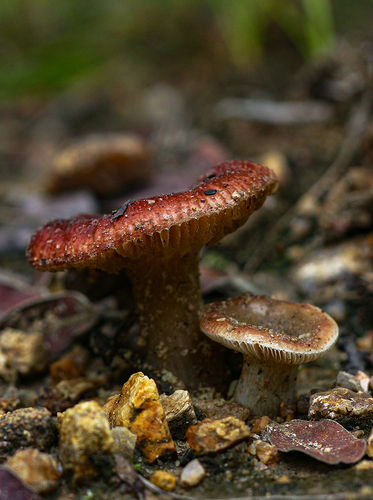
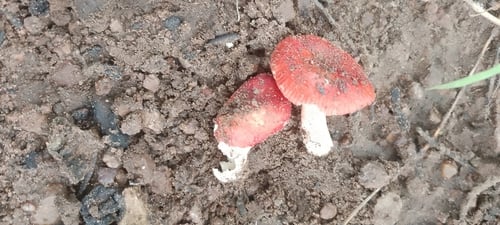
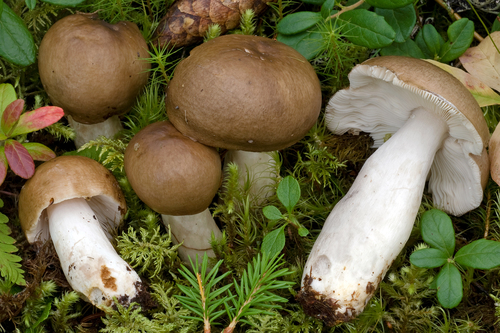
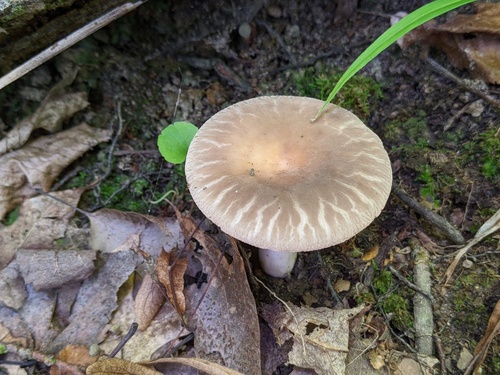
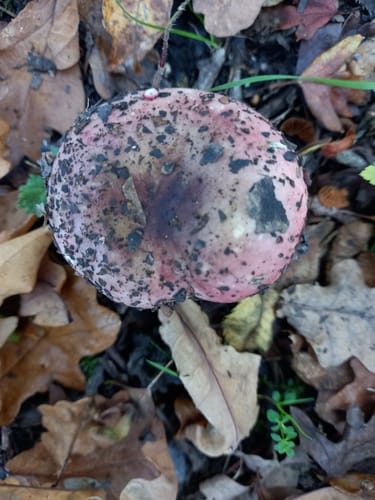
Russula mexicana
Burl.
iNaturalist· cc-by
(c) Alan Rockefeller, some rights reserved (CC BY)
iNaturalist· cc-by
(c) Alan Rockefeller, some rights reserved (CC BY), uploaded by Alan Rockefeller
Description
A mushroom of the family Russulaceae found in subtropical regions, sold in local markets.
This description is brief — help expand it
Edible Uses
The mushroom is eaten as a fungus.
Known Hazards
The main pattern of toxicity seen among Russula species to date has been gastrointestinal symptoms in those with a spicy (acrid) taste when eaten raw or undercooked; many of these are red-capped species such as R. emetica, R. sardonia and R. nobilis. The Asian species Russula subnigricans has been the cause of several fatal cases of rhabdomyolysis in Japan. Several active agents have been isolated from the species, including russuphelin A and cycloprop-2-ene carboxylic acid.
Distribution
It is a subtropical plant.
Where It Grows
Mexico, North America,
Other Information
It is sold in local markets.
References (5)
- Alonso-Aguilar, L. E., et al, 2014, The cultural significance of wild mushrooms in San Mateo Huexoyucan, Tlaxcala, Mexico. Journal of Ethnobiology and Ethnomedicine, 10:27
- Boa, E. R., 2004, Wild edible fungi and their importance to people. FAO Non Wood Forest Products Booklet 17
- Perez-Moreno, J. et al, 2008, Wild Mushroom Markets in Central Mexico and a Case Study at Ozumba. Economic Botany, 62(3), 2008, pp. 425–436
- Perez-Moreno, J., et al, 2009, Social and Biotechnological Studies of Wild Edible Mushrooms in Mexico. Acta Botanica Yunnanica Suppl. XV1: 55-61
- Santiago, F, H., et al, 2016, Traditional knowledge and use of wild mushrooms by Mixtecs or Ñuu savi, the people of the rain, from Southeastern Mexico. Journal of Ethnobiology and Ethnomedicine 12:35 p 8