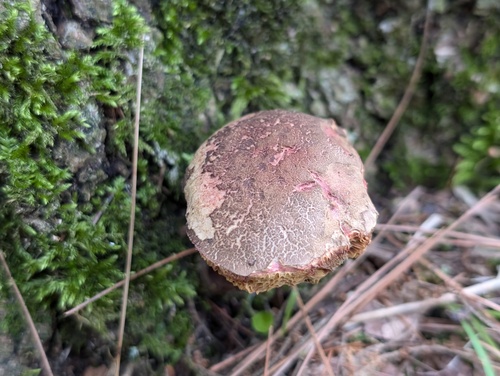
Chalciporus piperatus
(Bull. Bataille
Peppery bolete
iNaturalist· cc-by-sa
(c) Jörg Hempel, some rights reserved (CC BY-SA)
iNaturalist· cc-by-nc-sa
(c) Jackie Grant, some rights reserved (CC BY-NC-SA)
Summary
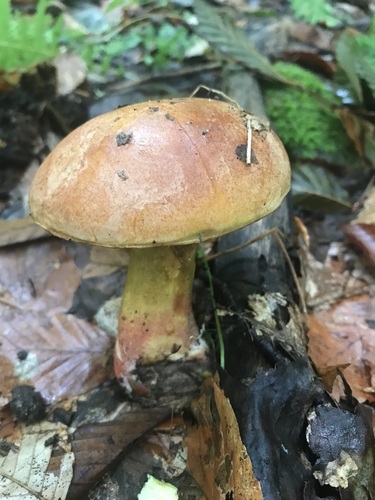
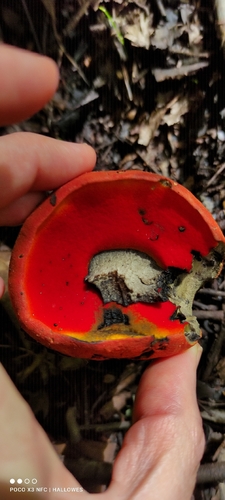
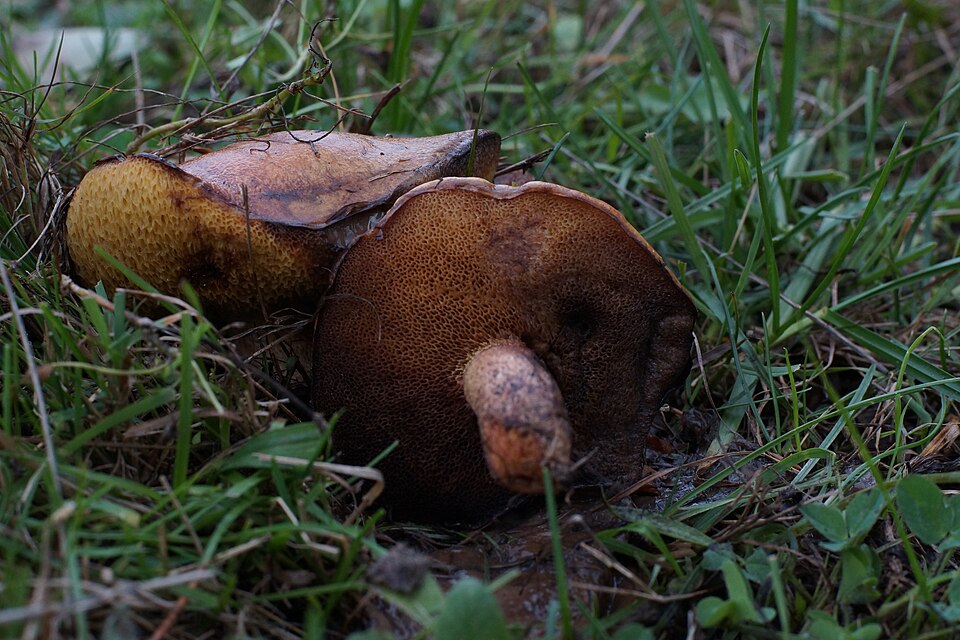
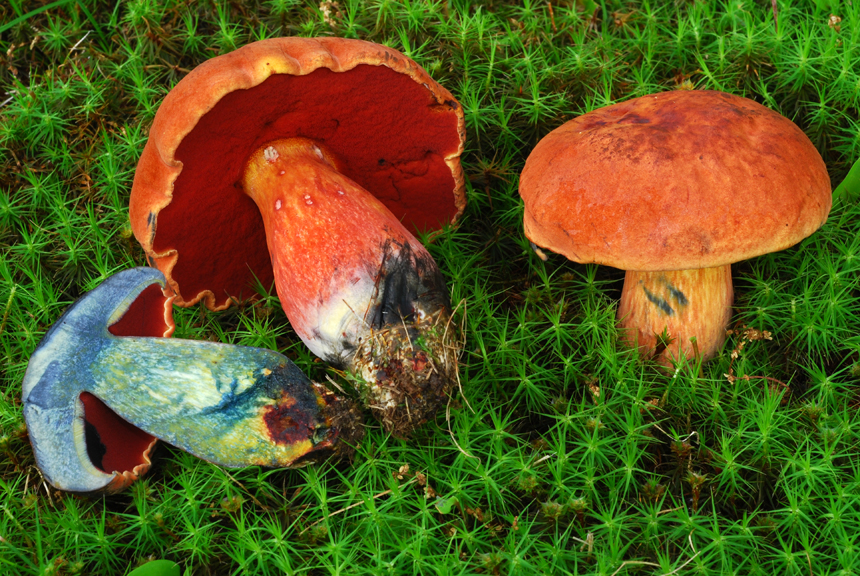
Source: WikipediaChalciporus piperatus, commonly known as the peppery bolete, is a species of fungus in the family Boletaceae. Described by Pierre Bulliard in 1790 as Boletus piperatus, it is only distantly related to other members of the genus Boletus and was reclassified as Chalciporus piperatus by Frédéric Bataille in 1908. The genus Chalciporus was an early branching lineage in the Boletaceae and appears to be related to boletes with parasitic properties. A small bolete, the fruit body has a 1.6–9 cm (5⁄8–3+1⁄2 in) orange-fawn cap with small cinnamon to brown pores underneath. The stipe is 4–9.5 cm (1+5⁄8–3+3⁄4 in) long and 0.6–1.2 cm (1⁄4–1⁄2 in). The flesh has a very peppery taste. The rare variety hypochryseus, found only in Europe, has yellow pores and tubes. The species is found in mixed woodland in Europe and North America. It has been recorded under introduced trees in Brazil, and has become naturalised in Tasmania and spread under native Nothofagus cunninghamii trees. Previously thought to be ectomycorrhizal (a symbiotic relationship that occurs between a fungus and the roots of various plant species), C. piperatus is now suspected of being parasitic on Amanita muscaria.
Description
A mushroom.
This description is brief — help expand it
Edible Uses
This mushroom contains toxins and is usually considered inedible. It has been used as a condiment in many countries, with the Italian chef Antonio Carluccio recommending it be used only to add its peppery flavour to other mushrooms. Some recommend that it be well-cooked before consumption to minimize the risk of gastric symptoms, but the peppery taste is lost with cooking, and even more so by reducing it to a powdered form. Fruit bodies can be used for mushroom dyeing; depending on the mordant used, yellow, orange, or greenish-brown dyes can be made.
Distribution
It is a temperate plant.
Where It Grows
Mexico, North America, Poland, Russia,
Synonyms
References (2)
- Boa, E. R., 2004, Wild edible fungi and their importance to people. FAO Non Wood Forest Products Booklet 17
- Kasper-Pakosz, R., et al, 2016, Wild and native plants and mushrooms sold in the open-air markets of south- eastern Poland. Journal of Ethnobiology and Ethnomedicine 12:45