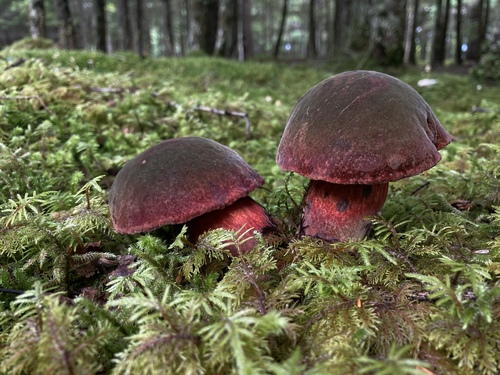
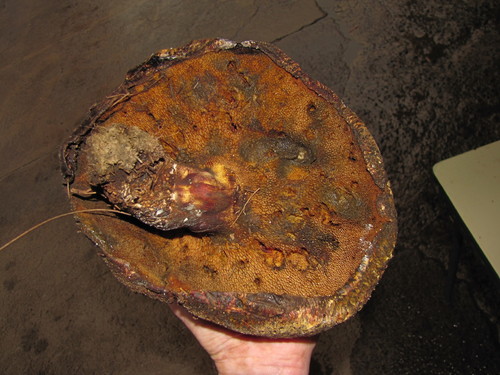
Xerocomus badius
(Fr.) Gilb.
Bay boletus, Bay-capped bolete, The bar-brown bolete
Boletaceae Edible: Fungus, Mushroom
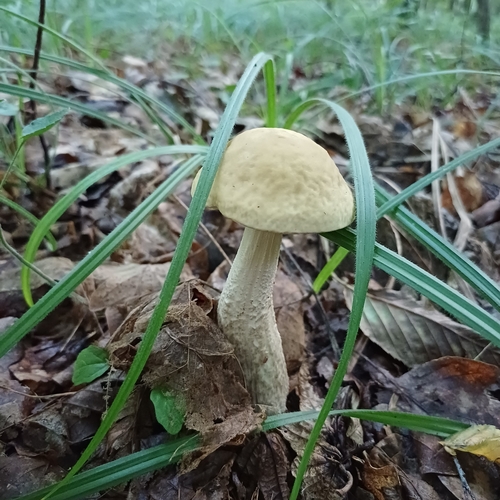
iNaturalist· cc-by-nc
(c) mareiked, some rights reserved (CC BY-NC)
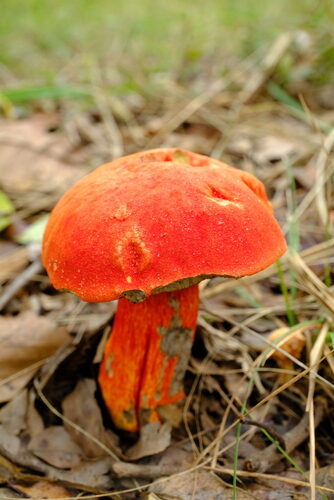
iNaturalist· cc-by-nc
(c) mareiked, some rights reserved (CC BY-NC)
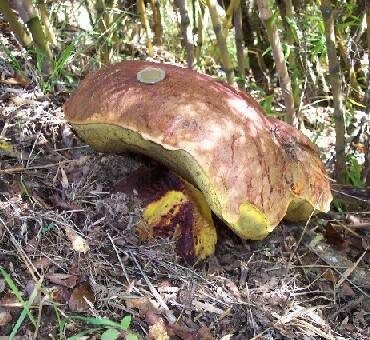
iNaturalist· cc-by-nc
(c) mareiked, some rights reserved (CC BY-NC)
Description
A fungus in the bolete family (Boletaceae) with a bay or brown cap, found in temperate regions. Now classified as Imleria badia. The fruiting body (mushroom) is the edible portion.
Edible Uses
The mushroom fruiting body is eaten.
Distribution
It is a temperate plant.
Where It Grows
Africa, Asia, Austria, Belgium, Britain, China, Czech Republic, Europe, Italy, Mediterranean, Mexico, North America, Poland, Romania, Russia, Sicily, Slovenia, South Africa, Southern Africa, Turkey, Türkiye, Ukraine,
Synonyms
Boletus badius Fr.
References (12)
- Boa, E. R., 2004, Wild edible fungi and their importance to people. FAO Non Wood Forest Products Booklet 17
- Gryzenhout, M., 2010, Mushrooms of South Africa. Pocket Guide. Struik. p 76
- Hall, I. R., et al, 2003, Edible and Poisonous Mushrooms of the World. Timber Press. p 235
- Jordan, P., 2000, The Mushroom Guide and Identifier, Hermes House, p 40
- Kalac, P. and Svoboda, L., 1999, A review of trace element concentrations in edible mushrooms. Food Chemistry 69: 273-281
Show all 12 references Hide references
- Kaufmann, B. et al, 1999, The Great Encyclopedia of Mushrooms. Konemann. p 26
- Lentini, F. and Venza, F., 2007, Wild food plants of popular use in Sicily. J Ethnobiol Ethnomedicine. 3: 15 (As Boletus badius)
- Mabey, R., 1973, Food for Free. A Guide to the edible wild plants of Britain, Collins. p 50
- Pace, G., 1998, Mushrooms of the world. Firefly books. p 198
- Schunko, C., et al, 2010, Organic farmers use of wild food plants and fungi in a hilly area in Styria (Austria). Journal of Ethnobiology and Ethnomedicine 6:17
- Szanto, Zs et al, 2007, Current Radioactivity Content of Wild Edible Mushrooms. Journal of Radioanalytical and Nuclear Chemistry, Vol. 273, No. 1: 167–170
- www.plantnames.unimelb.edu.au