Ledebouria revoluta
(L.f.) Jessop
South Indian squill
iNaturalist· cc-by-sa
(c) Eugene Hahndiek, some rights reserved (CC BY-SA), uploaded by Eugene Hahndiek
iNaturalist· cc-by-nc
(c) Jan-Hendrik Keet, some rights reserved (CC BY-NC), uploaded by Jan-Hendrik Keet
iNaturalist· cc-by-nc
(c) Sharon Louw, some rights reserved (CC BY-NC), uploaded by Sharon Louw
Summary
Source: WikipediaLedebouria revoluta, the south Indian squill, is a flowering plant species in the genus Ledebouria found in Southern Africa and India.
Description
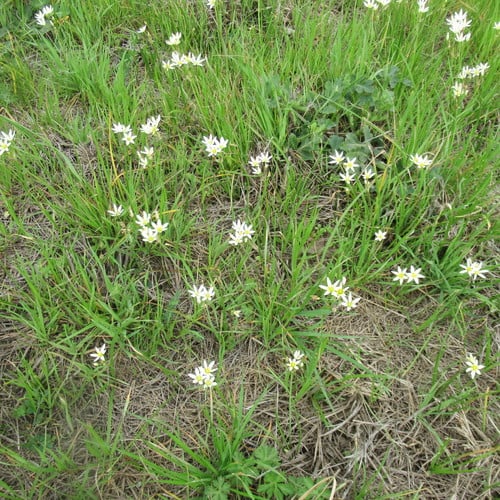
A herb. It is a bulb plant. The bulbs are 2.5-7.5 cm long. It grows 20 cm tall. The leaves are narrowly sword shaped. There are 4-8 leaves that can be 15 cm long by 3 cm wide. The flowering shoots can be 3-25 cm long and the flowers are greenish to pink or purple.
Edible Uses
The bulbs are eaten and are a significant occasional food in Mozambique.
Distribution
It is a subtropical plant.
Where It Grows
Africa, Asia, Botswana, East Africa, India, Mozambique, South Africa, Southern Africa,
Other Information
It is a significant occasional food in Mozambique.
Notes
Also put in the family Hyacinthaceae.
Nutrition
| Part | Moisture | kJ | kcal | Protein | Vit A | Vit C | Iron | Zinc |
|---|---|---|---|---|---|---|---|---|
| Bulb | 77.3 | 333 | 80 | 1.7 | — | 9.4 | 0.8 | 1 |
Synonyms
Also Known As
Lissungunha
References (5)
- Albano, et al, 1998, (As Scilla hyacinthina)
- Kiran, K. C., et al, 2019, Diversity and Seasonal Availability of Potential Wild Edible Plants from Vidarbha Region of Maharashtra State, India. Int.J.Curr.Microbiol.App.Sci (2019) 8(2): 1434-1446 (As Scilla hyacinthina)
- Ruiters-Welcome, A. K., 2019, Food plants of southern Africa. Ph.D. thesis. Univ. of Johannesburg p 65
- Wehmeyer, A. S, 1986, Edible Wild Plants of Southern Africa. Data on the Nutrient Contents of over 300 species
- Welcome, A. K. & Van Wyk, B.-E., 2019, An inventory and analysis of the food plants of southern Africa. South African Journal of Botany 122 (2019) 136–179