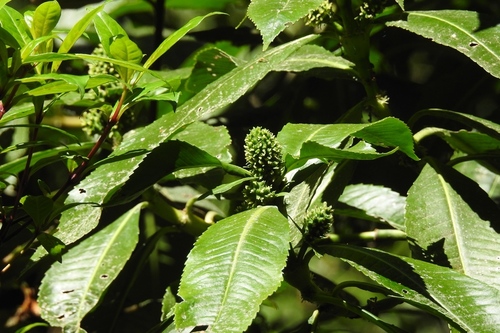
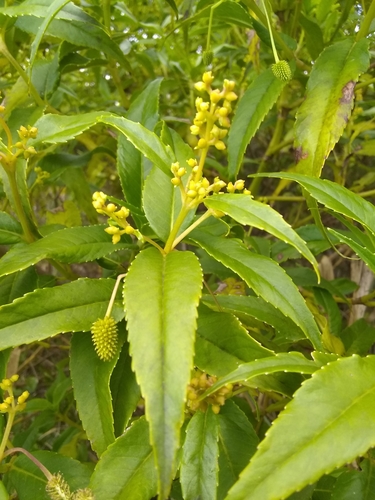
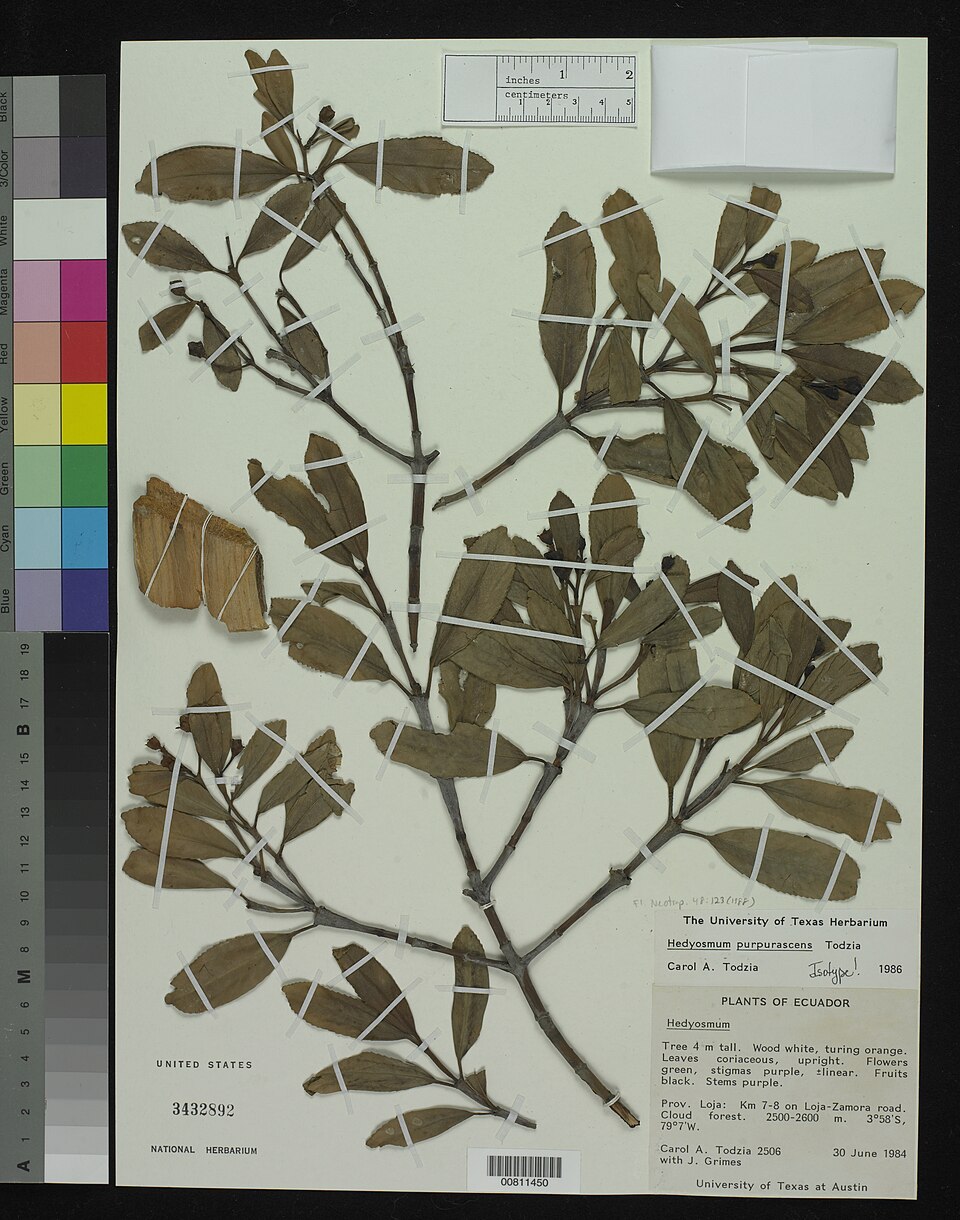
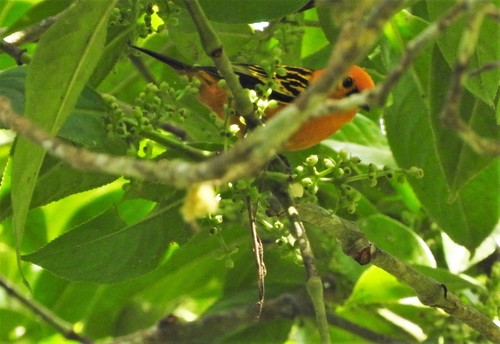
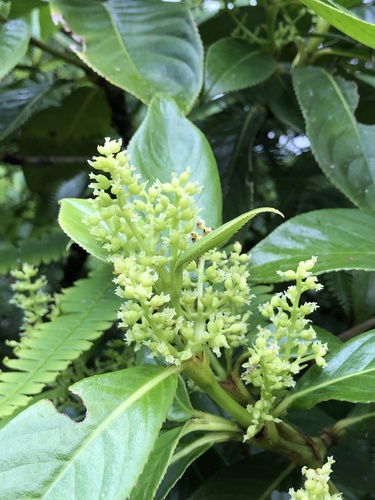
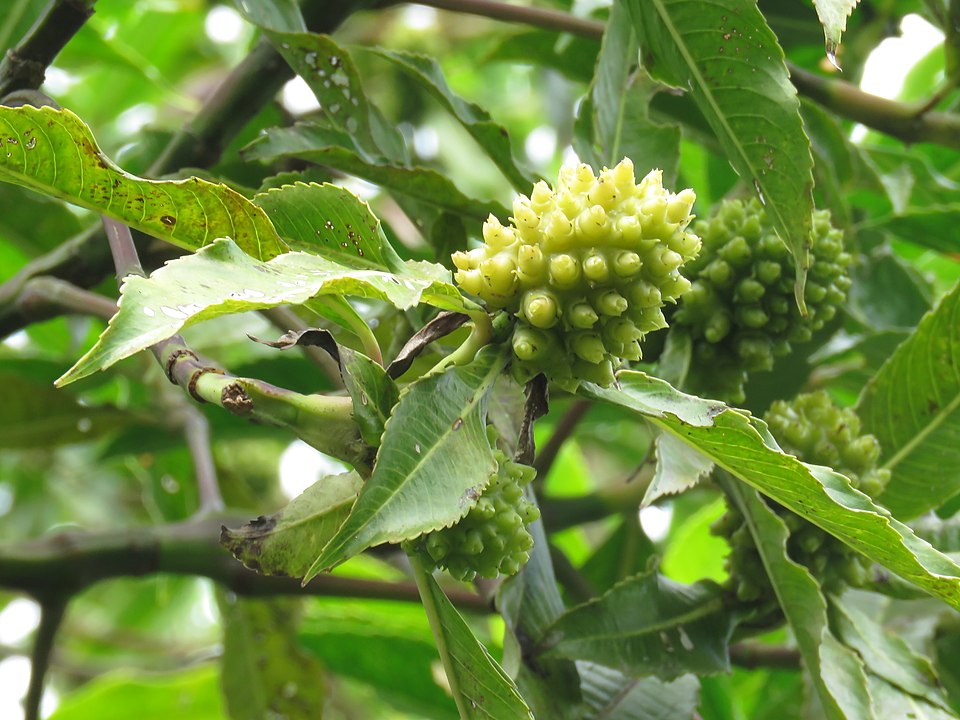
Hedyosmum brasiliense
Mart.
Cavatinga, Vatinga
iNaturalist· cc-by-nc
(c) Thiago RBM, some rights reserved (CC BY-NC), uploaded by Thiago RBM
iNaturalist· cc-by
(c) Victor Farjalla Pontes, some rights reserved (CC BY)
Description
A tropical shrub growing 1-3 m tall with aromatic foliage and edible fruit. The leaves have a peppermint-like taste.
This description is brief — help expand it
Edible Uses
The leaves are used as a spice or flavouring, and the fruit is also eaten.
Traditional Uses
The leaves are used as a spice. They have a peppermint-like taste.
This uses section is brief — help expand it
Medicinal Uses
The plant (part not specified) is analeptic, aromatic and febrifuge. It is recommended in the treatment of migraine and also to deal with afflictions of the ovaries. It is also used to treat athlete's foot. The leaves are aphrodisiac, diuretic, stomachic, sudorific and tonic.
Distribution
It is a tropical plant.
Where It Grows
Brazil, South America,
Cultivation
Succeeds in full sun to moderate shade. Tolerant of poorly drained soils. Young plants have a moderate rate of growth. A dioecious species, both male and female forms need to be grown if seed is required.
Propagation
The seed is tiny. It can be separated from the fruits, or the partially decomposed fruit can be sown. It is best sown as soon as it is ripe in a partially shaded position in a nursery seedbed. A germination rate of more than 50% can be expected, with the seed sprouting within 35 - 45 days.
Other Uses
The wood is light in weight, with poor resistance to insect attack. Of poor quality and small dimensions, it is only used for items such as light boxes.
Synonyms
References (2)
- Seidemann J., 2005, World Spice Plants. Economic Usage, Botany, Taxonomy. Springer. p 173
- www.colecionandofrutas.org