Cecropia peltata
L.
Trumpet tree, Cecropia
iNaturalist· cc-by-nc-sa
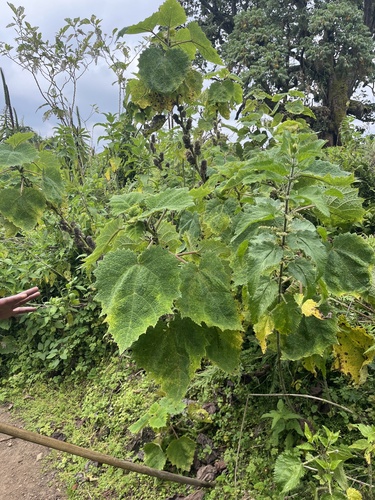
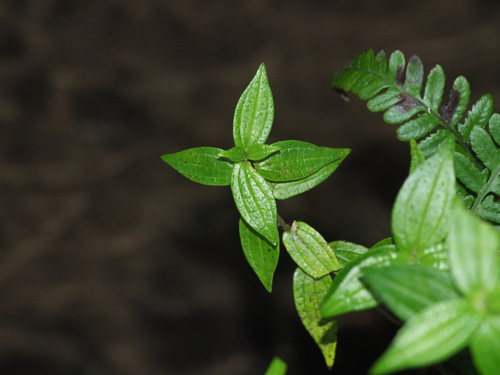
(c) Reinaldo Aguilar, some rights reserved (CC BY-NC-SA)
iNaturalist· cc-by
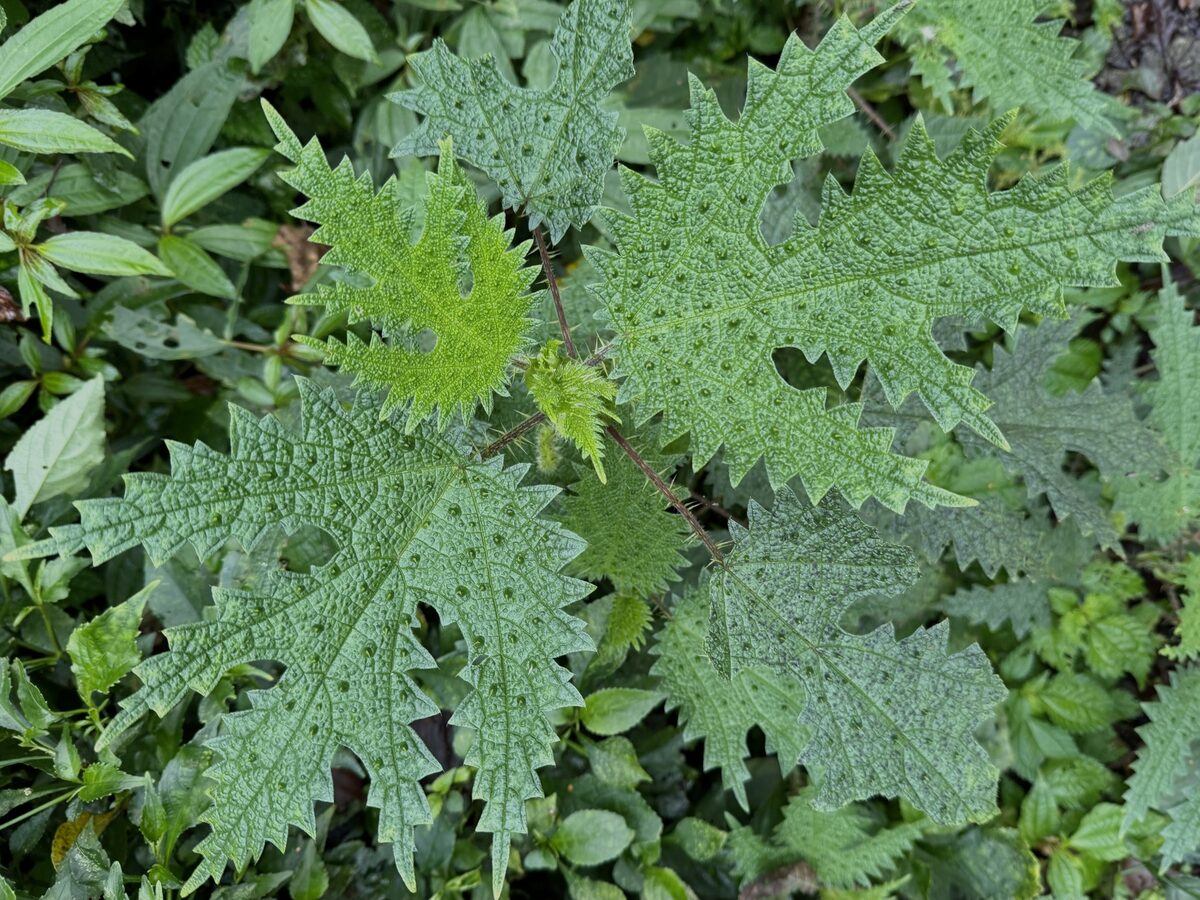
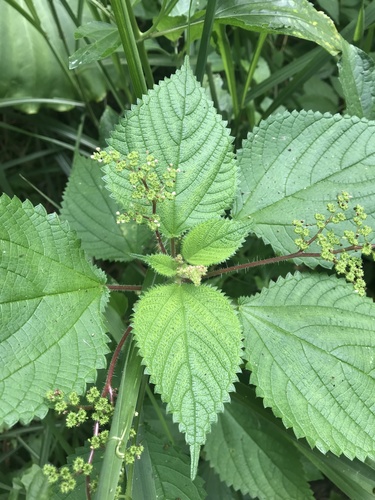
(c) Millie Basden, some rights reserved (CC BY)
iNaturalist· cc-by
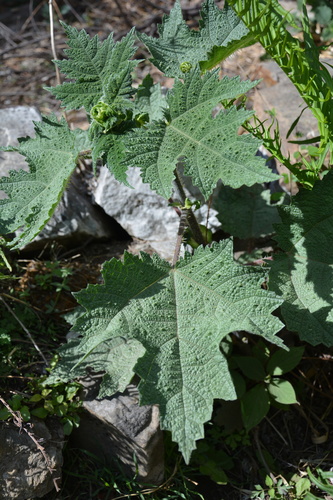
(c) Millie Basden, some rights reserved (CC BY)
Summary
Source: WikipediaCecropia peltata is a fast-growing tree in the genus Cecropia. Common names include trumpet tree, trumpet-bush, bacano, bois canon and snakewood. It is listed as one of the world's 100 worst invasive alien species.
Description
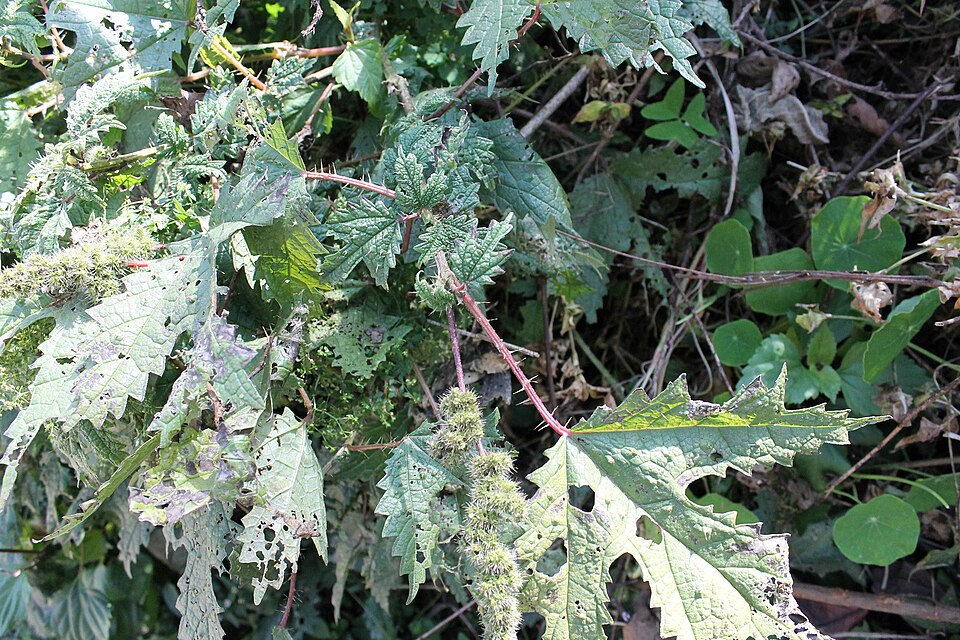
A medium sized evergreen tree. It can grow 15-20 m high. The trunk can be 50 cm across. The trunk and branches are hollow. The leaves are large and have 7-9 lobes arranged like fingers on a hand. The leaves have lobes which are shield shaped. The leaves are downy underneath and shiny on top. The leaves can be 60 cm across. The flowers are pale yellow and showy. They are in fingered clusters on long stems. They are sweet and edible. The fruit is cylindrical, hollow with soft sweet flesh. They are 12 cm long. They are edible. There are many small seeds.
Edible Uses
The fruit is eaten raw and has a sweet, jelly-like flesh; each finger-shaped fruit is 10–12 cm long. Young buds are occasionally eaten as a pot herb, though it is not specified whether these are flower or leaf buds. Young leaves and flowers are used in broth.
Traditional Uses
The fruit is eaten fresh. The young pods are cooked as a potherb. The young buds are cooked and eaten. The young leaves and flowers are used in broth.
Medicinal Uses
The bark and leaves are anticoagulant, anti-inflammatory, antitumour, astringent, cardiotonic, diuretic, hypotensive, and vasodilatory. A decoction of the young leaves is used to treat liver ailments and dropsy. A tea or decoction of the dried leaves or inner stem bark is taken to treat hypertension, Bright's disease, blennorrhagia, albuminuria, kidney infections, heart conditions, and nervous diseases, and to promote good kidney function. A tea of the dried leaves is also used for back pain. An infusion of the leaves is sometimes injected vaginally after childbirth. A hot poultice of the young shoots is applied to ulcers, abscesses, wounds, cuts, and bush sores. The dried leaves are smoked to relieve asthma. The plant's juice is applied as a caustic to remove warts, while the sap is used to treat fresh cuts. A decoction of the inner bark is used for dysentery.
Known Hazards
The branches and leaf petioles of Cecropia species are often hollow and can harbour stinging ants. The trees attract the ants by means of producing a honey-like sap and the ants respond by working to keep the tree free of leaf-eating pests - which can include humans.
Distribution
A tropical plant. It is native to tropical America. It has moderate drought and cold tolerance. In Costa Rica it grows from sea level to 1,200 m altitude. It is best with a humus-rich, well-drained soil. It suits hardiness zones 10-12.
Where It Grows
Africa, Antilles, Argentina, Asia, Australia, Barbados, Belize, Brazil, Caribbean, Central America*, Colombia, Costa Rica, Cuba, Dominican Republic, Ecuador, El Salvador, Ghana, Guadeloupe, Guatemala, French Guiana, Guianas, Guyana, Haiti, Honduras, Indonesia, Jamaica, Madagascar, Malaysia, Martinique, Mexico, Nicaragua, North America, Pacific, Panama, Paraguay, Peru, Philippines, Puerto Rico, Sao Tome and Principe, SE Asia, Singapore, South America, St. Kitts and Nevis, Suriname, Taiwan, Trinidad & Tobago, Venezuela, West Africa, West Indies, Winward Is.,
Cultivation
A plant of moister regions of the tropics, in Puerto Rico it is found at low to medium elevations in areas where the mean annual rainfall can range from 990 - 3,990mm or more. The mean annual temperatures can range from 12 - 24c. Succeeds in any well-drained soil in a very sunny position or in light shade. Succeeds in poor and eroded soils. The tree has been introduced into many areas outside its native range. The seeds are spread by fruit-eating bats and birds, these germinate freely if in a sunny position and can invade native habitats. It has proved to be invasive in some areas. A fast-growing but short-lived tree, rarely living longer than 20 years. The tree casts only a light shade, allowing other plants to be grown right up to its base. Cecropia trees, actively colonizing a formerly primary forest region after a devastating storm, have been observed to reach 22cm in diameter and 13 metres in height less than 3.5 years after germination. The trees grow rapidly, like weeds, and thrive best in cut-over or abandoned land. Plants grow back quickly if cut. Flowers intermittently all year round. Plants are dioecious, both male and female forms must be grown if seed is required.
Propagation
Sow seed in a sunny seedbed as soon as it is ripe; germination usually begins within 25–40 days, though germination rates are low. Pot seedlings into individual containers when they reach 5–6 cm tall. Greenwood cuttings can also be taken in a frame.
Other Uses
The hollow branches and leaf petioles can be cut and used as blow tubes or trumpets. Among the Uaupe Indians of the Amazon, hollow stems are crafted into a percussion instrument called the 'Ambooba': a trunk 10–12 cm in diameter is cut to about 1.2 metres, its internal partitions removed and the inside smoothed with fire, the lower end is sealed with compacted leaves, and two holes near the upper end form a handle. The performer holds this instrument by the handle and beats the lower end on the ground in time with dancing. A fibre obtained from the inner bark of young branches is reported to be very tough and is used for sacks, strong ropes, and cordage. A crude rubber can be made from latex obtained from the trunk. The spongy wood ignites readily and can be used as friction sticks to start a fire. The rough-textured leaves are used traditionally as sandpaper to smooth the surfaces of calabash fruit shells (Crescentia cujete) being fashioned into containers. The wood is whitish when freshly cut, becoming pale brown on exposure; sapwood and heartwood are not differentiated. The grain is straight or fairly straight, the texture coarse, the surface fairly lustrous, and there is no distinctive odour or taste. The wood is very light and soft, yet tough and strong for its weight, though perishable. Seasoned wood saws and machines easily, though surfaces tend to tear and fuzz during shaping and turning; it planes and sands well, nails readily, holds screws well, but is difficult to finish with varnish or lacquer. It is used for boxes, crates, paper pulp, matches, and is combined with cement to make insulation board. The lightest grade should serve as a substitute for moderately heavy grades of balsa. The trunk can be used as a water trough, and the soft, resilient root wood, which resists splitting, has been used to make tool handles. As a pioneer species, it is one of the first trees to colonise disturbed ground, growing rapidly and providing cover that allows less hardy plant species to establish. It is well suited to the early stages of land reclamation or reforestation, tolerating poor, eroded soils and full tropical sun. Its shallow root system and light shade avoid competition with deeper-rooted young trees growing beneath it, while it contributes organic matter and shade as it matures. The tree also produces flowers and fruit continuously, providing staple food for many bird and mammal species.
Production
It grows rapidly.
Notes
There are 61-75 Cecropia species. They grow in tropical America. Also put in the family Cecropiaceae.
Synonyms
Also Known As
Boesipapaja, Congo pump, Guaromo, Guarumbo, Snake wood, Soro-soro, Trumpetwood, Wanasoro, Yagrumo
References (26)
- Arora, R. K., 2014, Diversity in Underutilized Plant Species - An Asia-Pacific Perspective. Bioversity International. p 62
- Barwick, M., 2004, Tropical and Subtropical Trees. A Worldwide Encyclopedic Guide. Thames and Hudson p 101
- Bodkin, F., 1991, Encyclopedia Botanica. Cornstalk publishing, p 230
- Burkill, I.H., 1966, A Dictionary of the Economic Products of the Malay Peninsula. Ministry of Agriculture and Cooperatives, Kuala Lumpur, Malaysia. Vol 1 (A-H) p 505
- Condit, R., et al, 2011, Trees of Panama and Costa Rica. Princeton Field Guides. p 456
Show all 26 references Hide references
- Cundall, P., (ed.), 2004, Gardening Australia: flora: the gardener's bible. ABC Books. p 347
- Ekman Herbarium records Haiti
- Etherington, K., & Imwold, D., (Eds), 2001, Botanica's Trees & Shrubs. The illustrated A-Z of over 8500 trees and shrubs. Random House, Australia. p 194
- Facciola, S., 1998, Cornucopia 2: a Source Book of Edible Plants. Kampong Publications, p 75
- Grandtner, M. M. & Chevrette, J., 2013, Dictionary of Trees, Volume 2: South America: Nomenclature, Taxonomy and Ecology. Academic Press p 113
- Hedrick, U.P., 1919, (Ed.), Sturtevant's edible plants of the world. p 177
- Hellmuth, N. M., 2013, Maya Ethnobotany. Complete Inventory of plants. Associacion FLAAR Mesoamerica. Thirteenth edition. p 25
- Kew Plants of the World Online
- Kiple, K.F. & Ornelas, K.C., (eds), 2000, The Cambridge World History of Food. CUP p 1872
- Llamas, K.A., 2003, Tropical Flowering Plants. Timber Press. p 170
- Lugod, G.C. and de Padua L.S., 1979, Wild Food Plants in the Philippines. Vol. 1. Univ. of Philippines Los Banos. p 53
- Martin, F.W. & Ruberte, R.M., 1979, Edible Leaves of the Tropics. Antillian College Press, Mayaguez, Puerto Rico. p 205
- Plants of Haiti Smithsonian Institute http://botany.si.edu/antilles/West Indies
- Recher, P, 2001, Fruit Spirit Botanical Gardens Plant Index. www.nrg.com.au/~recher/ seedlist.html p 1
- Schuler, S., (Ed.), 1977, Simon & Schuster's Guide to Trees. Simon & Schuster. No. 91
- Segura, S., et al, 2018, The edible fruit species in Mexico. Genet Resour Crop Evol (2018) 65:1767–1793
- Seidemann J., 2005, World Spice Plants. Economic Usage, Botany, Taxonomy. Springer. p 89
- Sukarya, D. G., (Ed.) 2013, 3,500 Plant Species of the Botanic Gardens of Indonesia. LIPI p 187
- Syst. nat. ed. 10, 2:1286. 1759
- van Roosmalen, M.G.M., 1985, Fruits of the Guianan Flora. Utrecht Univ. & Wageningen Univ. p 300
- World Checklist of Useful Plant Species 2020. Royal Botanic Gardens, Kew