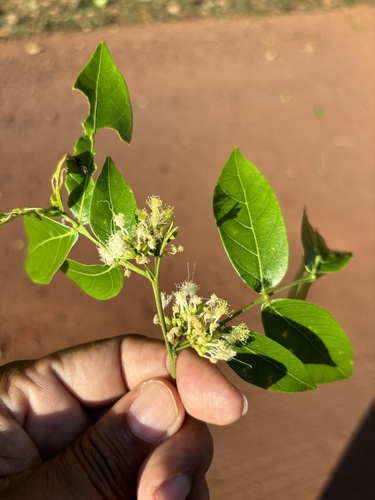
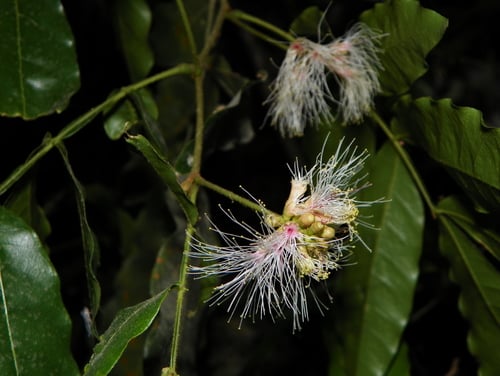
Faidherbia albida
(Delile) A. Chev.
White-thorn, Apple ring acacia
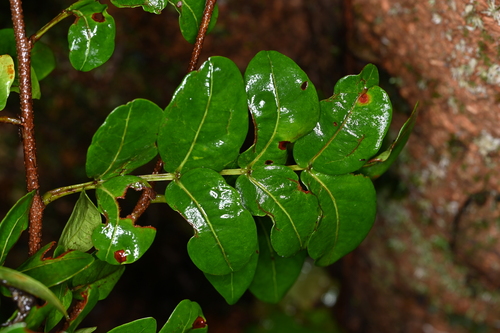
iNaturalist· cc-by-nc
(c) Shamgar Brook, some rights reserved (CC BY-NC), uploaded by Shamgar Brook
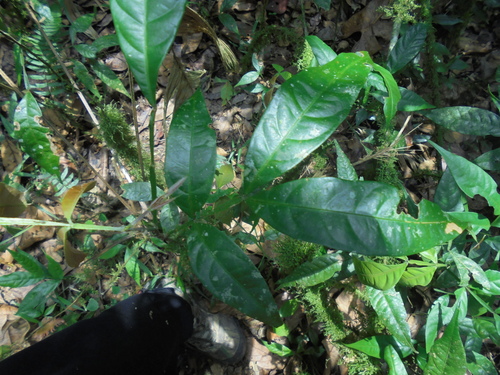
iNaturalist· cc-by-nc
(c) maritzasouthafrica, some rights reserved (CC BY-NC), uploaded by maritzasouthafrica
iNaturalist· cc-by-nc
(c) Troos van der Merwe, some rights reserved (CC BY-NC), uploaded by Troos van der Merwe
Summary
Source: WikipediaFaidherbia albida is a fast-growing deciduous tree reaching 25 m tall and 35 m wide. Hardy to UK zone 10, it produces flowers pollinated by butterflies and insects and is self-fertile. The tree fixes nitrogen and attracts wildlife. It thrives in light sandy and medium loamy well-drained soils across mildly acid, neutral, and basic pH ranges, and tolerates saline soils. It requires full sun, prefers dry to moist conditions, and handles drought well.
Description
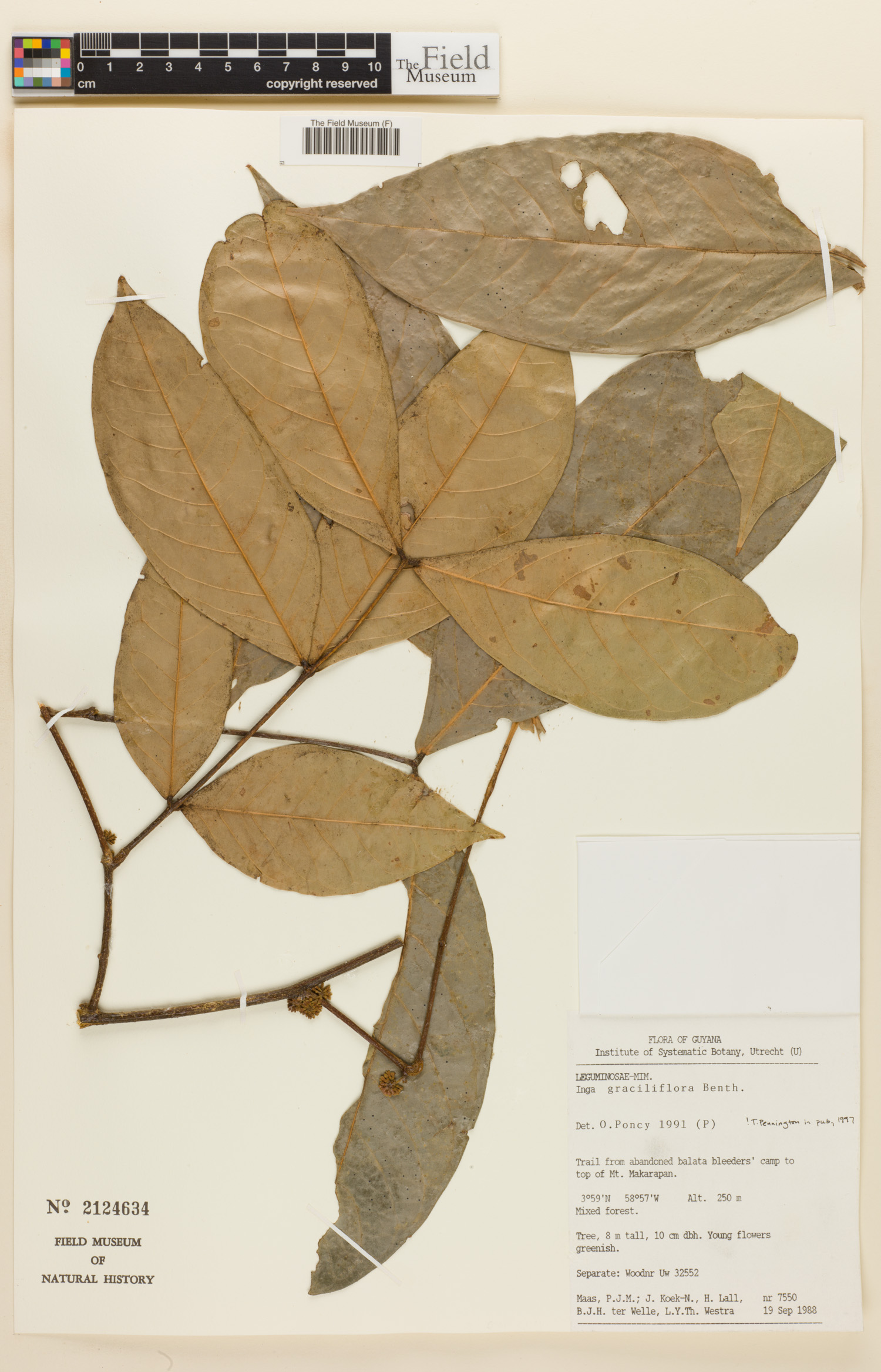
A very large spreading tree. It grows up to 20-31 m tall. The trunk can be 1 m across. The trunk is light grey. The leaves are fine and drooping. The leaves can be light green or blue-green. The twigs are white and smooth. It has thorns which are straight and 4 cm long. They are white at the base and brown at the tips. They occur in pairs. Each leaf has 4-8 side branches although there can be 2-12 branches. These carry 6-23 pairs of small oblong leaflets. The leaf stalk does not have glands. It is leafless during the rainy season and has leaves during the dry season. The flowers are long cream spikes. The pods are large - about 10 cm long by 2.5 cm wide. They are red brown and twisted or almost curled into a ring. The pods do not burst open. The pods contain several hard shiny seeds. These are edible after processing. The seeds are 9-11 mm long by 6-8 mm wide.
Edible Uses
The seeds are eaten by local people, particularly during the dry season and in times of food shortage. A gum arabic known as 'Gomme de Senegal' is obtained from the stems.
Traditional Uses
The seeds are boiled, then re-boiled and the skins removed then eaten in times of food scarcity. This is done to remove toxic components. The pods are sometimes eaten. The pods are used for flavouring. Caution: The seeds can contain hydrogen cyanide and would need to be cooked.
Medicinal Uses
Use of the bark and roots by local peoples is widespread. Both are astringent and febrifuge, and are used internally or externally to treat respiratory infections, digestive disorders, haemorrhages, malaria, and other fevers. The bark is also used to clean teeth, as it is believed to contain fluorine, and an extract from it is used to treat toothache.
Known Hazards
None mentioned.
Distribution
A tropical plant. It mostly grows on river banks and river flats and can grow on sandy soils. It can be damaged by frost. It grows in dry savannah but prefers damp sites and river banks. In southern Africa it grows between 40-1,070 m altitude. It grows in areas with an annual rainfall between 20-1,800 mm. It can grow in arid places.
Where It Grows
Africa, Algeria, Angola, Asia, Benin, Botswana, Burkina Faso, Cameroon, Cape Verde, Central Africa, Central African Republic, CAR, Chad, Congo DR, Côte d'Ivoire, Cyprus, East Africa, Egypt, Eritrea, Eswatini, Ethiopia, Gambia, Ghana, Guinea, Guinée, Guinea-Bissau, India, Iran, Israel, Ivory Coast, Kenya, Lebanon, Libya, Malawi, Mali, Mauritania, Mediterranean, Middle East, Morocco, Mozambique, Namibia, Niger, Nigeria, North Africa, Oman, Pakistan, Palestine, Peru, Sahel, Sao Tome and Principe, Saudi Arabia, Senegal, Somalia, South Africa, Southern Africa, South America, South Sudan, Sudan, Swaziland, Syria, Taiwan, Tanzania, Togo, Uganda, West Africa, Western Sahara, Yemen, Zambia, Zimbabwe,
Cultivation
Plants can be grown from seeds. The seeds are put in boiling water and soaked overnight then planted. It can be cut back and will re-grow.
Propagation
Seed germinates best, especially after storage, when pre-soaked in warm water for 24 hours before sowing. Germination rates of 40–60% can be expected within 6–30 days. Mechanical scarification before sowing is reported to yield 95% germination within 8 days. Sowing in nursery beds or containers is preferable to direct seeding, which often has a high failure rate. Seedlings quickly develop a deep taproot and should be planted out as soon as possible — normally when 3–4 months old. Seed should be removed from pods immediately upon ripening, as it is quickly invaded by Bruchid beetle larvae. When kept free of insects in simple closed containers, seed can be stored successfully for several years. Promising vegetative propagation methods include cuttings, grafting, and multiplication by root fragments.
Other Uses
White acacia is a strong soil improver and stabilizer. Its spreading root system protects soil along watercourse banks, and root bacteria fix atmospheric nitrogen. The tree sheds its leaves during the rainy season, boosting soil nutrients for new-season crops while reducing competition for sunlight with crops and protecting them from birds until harvest. It is commonly intercropped with annual crops, especially pearl millet and groundnuts; recorded yield increases for millet grown under this tree's canopy range from 50–150%. Results for sorghum, cotton, groundnut, and maize are variable. The tree is also maintained on farms to shade coffee and provide dry-season shade. It has been recommended as an alternative to Leucaena leucocephala when integrated with maize. The bark contains 20–28% tannins. Wood ash from the burnt wood is used as a potash source in soap-making. The heartwood is pale and creamy, the sapwood slightly paler. The wood is hard and of medium weight; when green it is susceptible to staining fungi and pinhole borer, so it is left to soak for several months to reduce sap content and minimise attack by fungi, borers, and termites. Even with careful seasoning, boards tend to spring and twist one or two hours after sawing. The wood works fairly easily by hand but is difficult to finish smoothly, and care is needed when nailing, bolting, and joining. It is used to make utensils, handicrafts, canoes, furniture, boxes, drums, and oil presses. The wood is an excellent fuel with a calorific value estimated at 19,741 kJ/kg of dry wood, and produces high-quality charcoal at yields as low as 17%.
Production
Trees grow quickly. They can be 7 m high in 3 years. It develops its first fruit after 2-15 years. A large tree can yield a ton of pods.
Other Information
A famine food.
Notes
There are about 1,350 Acacia species. Over 1,000 occur in Australia. Also as Mimosaceae.
Nutrition
| Part | Moisture | kJ | kcal | Protein | Vit A | Vit C | Iron | Zinc |
|---|---|---|---|---|---|---|---|---|
| Seeds (detoxify) | 6.5 | 1437 | 344 | 24.8 | — | — | 6.8 | 2.6 |
| Leaves | — | — | — | — | — | — | — | — |
| Pods - young | — | — | — | — | — | — | — | — |
Synonyms
Also Known As
Afrar, Ana tree, Anaboom, Apple ring acacia, Apple-ring thorn-tree, Betam-pale, Bioepi, Biongomo, Borassam-o, Borassanhe, Bubirique, Buladanelhe, Bule, Burle-danedjo, Busseu-uliba, Butchampele, Cad, Camude, Camudo, Djue, Ferida-branco, Gawo, Gozanga, Herero, Icuti, Karau, M'suango, Marrone, Msangu, Msangumsangu, Mucesi, Munga-nunsyi, Munga, Musanga, Musenga, Mutsangu, Nsangu, Omue, Pau-ferida, Po-de-ferida-branco, Sipana-brabu, Sipina, Soango, Umpumbu, Ussimpulo, Winter thorn
References (41)
- Abbiw, D.K., 1990, Useful Plants of Ghana. West African uses of wild and cultivated plants. Intermediate Technology Publications and the Royal Botanic Gardens, Kew. p 46 (As Acacia albida)
- Asfaw, Z. and Tadesse, M., 2001, Prospects for Sustainable Use and Development of Wild Food Plants in Ethiopia. Economic Botany, Vol. 55, No. 1, pp. 47-62 (As Acacia albida)
- Ballal, M. E., et al, 2014, Ethno-botany of Natural Forests of Nuba Mountains, South Kordofan State, Sudan. Journal of Forest Poducts & Industries. 3(1):13-19
- Bekele-Tesemma A., Birnie, A., & Tengnas, B., 1993, Useful Trees and Shrubs for Ethiopia. Regional Soil Conservation Unit. Technical Handbook No 5. p 38 (As Acacia albida)
- Bunderson, W. T. et al, 2002, Common Agroforestry Species in Malawi. Malawi Agroforestry Extension Project, Pubication No. 46, Lilongwe. p 18
Show all 41 references Hide references
- Burkill, H. M., 1985, The useful plants of west tropical Africa, Vol. 3. Kew.
- Descr. Egypte, Hist. nat. 142, t. 52, fig. 3. 1813 ("1812") (As Acacia albida)
- Ethiopia: Famine Food Field Guide. http://www.africa.upenn.edu/faminefood/category1.htm (As Acacia albida)
- Flora of Pakistan. www.eFloras.org (As Acacia albida)
- Food Composition Tables for use in Africa FAO http://www.fao.org/infoods/directory No. 850 (As Acacia albida)
- Flora Zambesiaca. http://apps.kew.org/efloras (As Acacia albida)
- Fowler, D. G., 2007, Zambian Plants: Their Vernacular Names and Uses. Kew. p 35
- Grivetti, L. E., 1980, Agricultural development: present and potential role of edible wild plants. Part 2: Sub-Saharan Africa, Report to the Department of State Agency for International Development. p 71 (As Acacia albida)
- Hepper, E.N., 1993, Illustrated Encyclopedia of Bible Plants, IVP, England. p 63, 64, (As Acacia albida)
- ILDIS Legumes of the World http:www;ildis.org/Legume/Web
- Jardin, C., 1970, List of Foods Used In Africa, FAO Nutrition Information Document Series No 2.p 24, 50 (As Acacia albida)
- Joffe, P., 2007, Creative Gardening with Indigenous Plants. A South African Guide. Briza. p 131
- Kew Plants of the World Online
- Mannheimer, C. A. & Curtis. B.A. (eds), 2009, Le Roux and Muller's Field Guide to the Trees and Shrubs of Namibia. Windhoek: Macmillan Education Namibia. p 122
- Martin, F.W. & Ruberte, R.M., 1979, Edible Leaves of the Tropics. Antillian College Press, Mayaguez, Puerto Rico. p 197 (As Acacia albida)
- Mbuya, L.P., Msanga, H.P., Ruffo, C.K., Birnie, A & Tengnas, B., 1994, Useful Trees and Shrubs for Tanzania. Regional Soil Conservation Unit. Technical Handbook No 6. p 46 (As Acacia albida)
- Menninger, E.A., 1977, Edible Nuts of the World. Horticultural Books. Florida p 88 (As Acacia albida)
- Mortimer, (As Acacia albida)
- Mutie, F. M., et al, 2023, Important Medicinal and Food Taxa (Orders and Families) in Kenya, Based on Three Quantitative Approaches. Plants 2023, 12, 1145
- Nassif, F., & Tanji, A., 2013, Gathered food plants in Morocco: The long forgotten species in Ethnobotanical Research. Life Science Leaflets 3:17-54
- Palgrave, K.C., 1996, Trees of Southern Africa. Struik Publishers. p 229 (As Acacia albida)
- Palmer, E and Pitman, N., 1972, Trees of Southern Africa. Vol. 2. A.A. Balkema, Cape Town p 741 (As Acacia albida)
- Palmer & Pitman, 1972,
- Peters, C. R., O'Brien, E. M., and Drummond, R.B., 1992, Edible Wild plants of Sub-saharan Africa. Kew. p 129
- Roodt, V., 1998, Trees & Shrubs of the Okavango Delta. Medicinal Uses and Nutritional value. The Shell Field Guide Series: Part 1. Shell Botswana. p 195
- Royal Botanic Gardens, Kew (1999). Survey of Economic Plants for Arid and Semi-Arid Lands (SEPASAL) database. Published on the Internet; http://www.rbgkew.org.uk/ceb/sepasal/internet [Accessed 28th April 2011]
- Ruiters-Welcome, A. K., 2019, Food plants of southern Africa. Ph.D. thesis. Univ. of Johannesburg p 58
- Scudder, 1971, (As Acacia albida)
- van Wyk, Ben-Erik, 2019, The diversity and multiple uses of southern African legumes. Australian Systematic Botany, 2019, 32, 519–546
- Venter, F & J., 2009, Making the most of Indigenous Trees. Briza. p 156
- Wehmeyer, A. S, 1986, Edible Wild Plants of Southern Africa. Data on the Nutrient Contents of over 300 species (As Acacia albida)
- Welcome, A. K. & Van Wyk, B.-E., 2019, An inventory and analysis of the food plants of southern Africa. South African Journal of Botany 122 (2019) 136–179
- Williamson, J., 2005, Useful Plants of Malawi. 3rd. Edition. Mdadzi Book Trust. p 9 (As Faidherbia albida)
- World Checklist of Useful Plant Species 2020. Royal Botanic Gardens, Kew
- www.worldagroforestrycentre.org/treedb/
- www.zimbabweflora.co.zw 2011