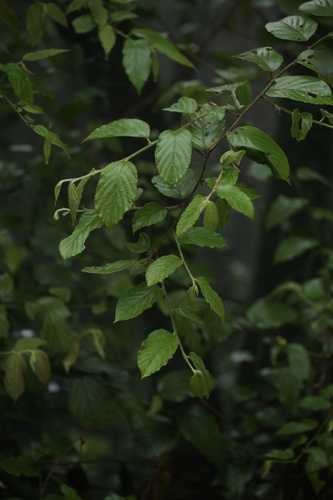
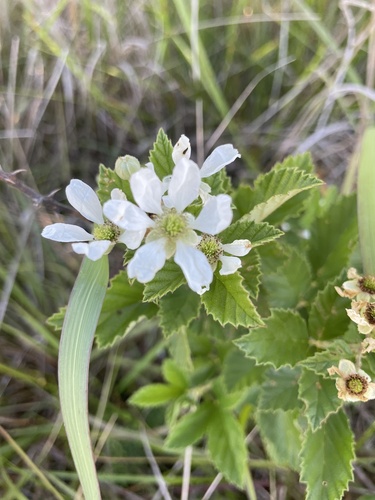
Comarum palustre
L.
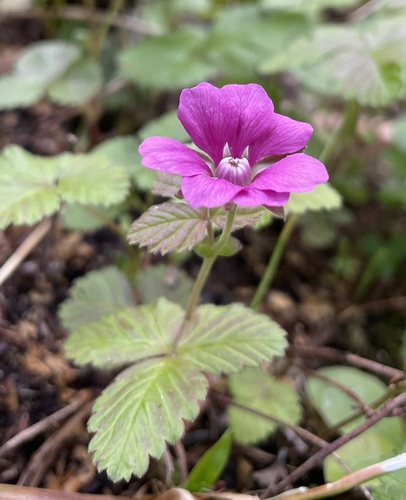
Marsh five-finger
iNaturalist· cc-by-sa
(c) Ivar Leidus, some rights reserved (CC BY-SA)
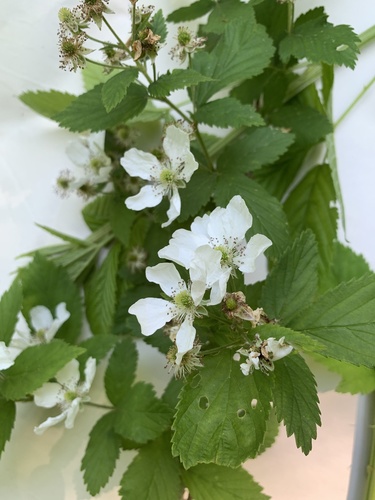
iNaturalist· cc-by-nc-sa
(c) Bas Kers (NL), some rights reserved (CC BY-NC-SA)
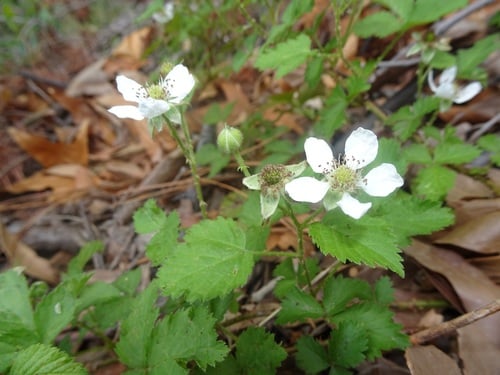
iNaturalist· cc-by-sa
(c) Krzysztof Ziarnek, some rights reserved (CC BY-SA)
Summary
Source: WikipediaComarum palustre (syn. Potentilla palustris), known by the common name marsh cinquefoil, also purple marshlocks and swamp cinquefoil, is a waterside rhizomatous subshrub. It has a circumboreal distribution, occurring throughout cool temperate Asia, Europe, and North America, particularly in northern regions. It is most commonly found on lake shores, marshy riversides and stream margins, often partly submerged with foliage floating. It is a parent of some Fragaria–Comarum hybrids, ornamental plants produced by crossing with strawberries.
Description
A herb. It keeps growing from year to year. It grows 20-30 cm tall. It has a branched rhizome. It is long, dark brown and woody. The leaves near the ground are 6-16 cm long. The leaves on the stems have 5-7 leaflets with one at the end.
Edible Uses
The leaves are dried and brewed as tea; the fruit and flowers are used to make drinks.
Traditional Uses
The leaves have been dried and used as tea.
This uses section is brief — help expand it
Distribution
It is a cool temperate plant. It grows in wet places.
Where It Grows
Alaska, Asia, Canada, China, Europe, Japan, Korea, Luxembourg, Mongolia, North America, Russia,
Synonyms
Also Known As
Pingayunleget, Pingayunelgen
References (5)
- Ager, T. A. & Ager, L. P., 1980, Ethnobotany of the eskimos of Nelson Island, Alaska. Arctic Anthropology Vol 17. No. 1 pp 26-48 (As Potentilla palustris (L.) Scop.)
- Flora of China. www.eFloras.org Volume 9
- Jernigan, K. (Ed.), 2012, A Guide to the Ethnobotany of the Yukon-Kuskokwim Region. Draft. (As Potentilla palustris)
- Kermath, B. M., et al, 2014, Food Plants in the Americas: A survey of the domesticated, cultivated and wild plants used for Human food in North, Central and South America and the Caribbean. On line draft. p 255
- Urgamal, M., Oyuntsetseg, B., Nyambayar, D. & Dulamsuren, Ch. 2014. Conspectus of the vascular plants of Mongolia. (Editors: Sanchir, Ch. & Jamsran, Ts.). Ulaanbaatar, Mongolia. “Admon“ Press. 334pp. (p. 143-158).