Berberis lycium
Royle
Indian Lycium, Indian barberry
iNaturalist· cc-by-nc
(c) Azan Khan, some rights reserved (CC BY-NC), uploaded by Azan Khan
iNaturalist· cc-by-nc
(c) Azan Khan, some rights reserved (CC BY-NC)
iNaturalist· cc-by-nc
(c) Azan Khan, some rights reserved (CC BY-NC)
Summary
Source: WikipediaBerberis lycium, called the Indian lycium, Indian barberry, or boxthorn barberry, is a species of flowering plant in the family Berberidaceae. It is native to mountain slopes of the northwestern part of the Indian Subcontinent. A widespread species, its fruit, called kasmal, is edible and is eaten fresh, cooked, and preserved.
Description
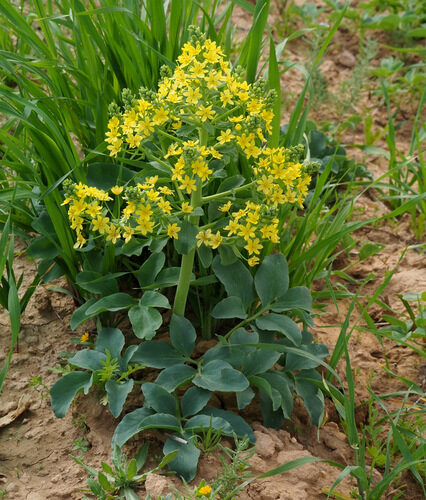
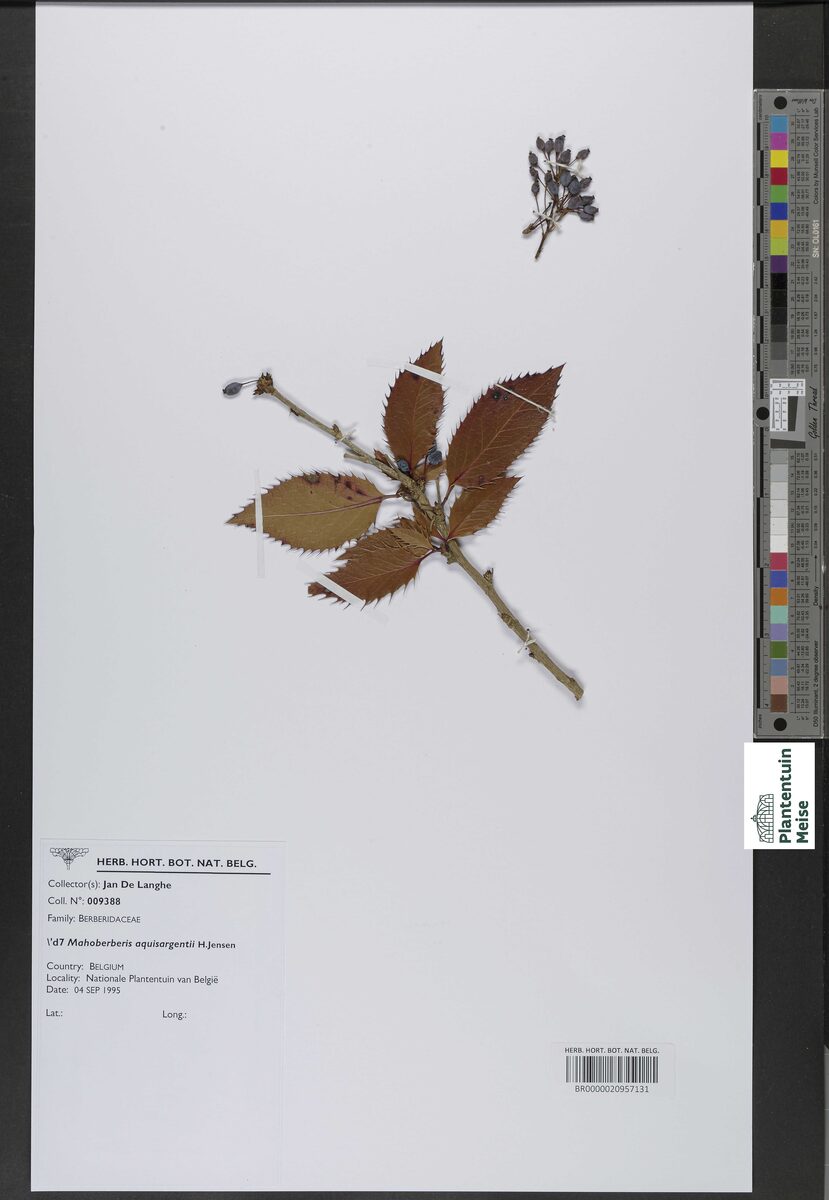
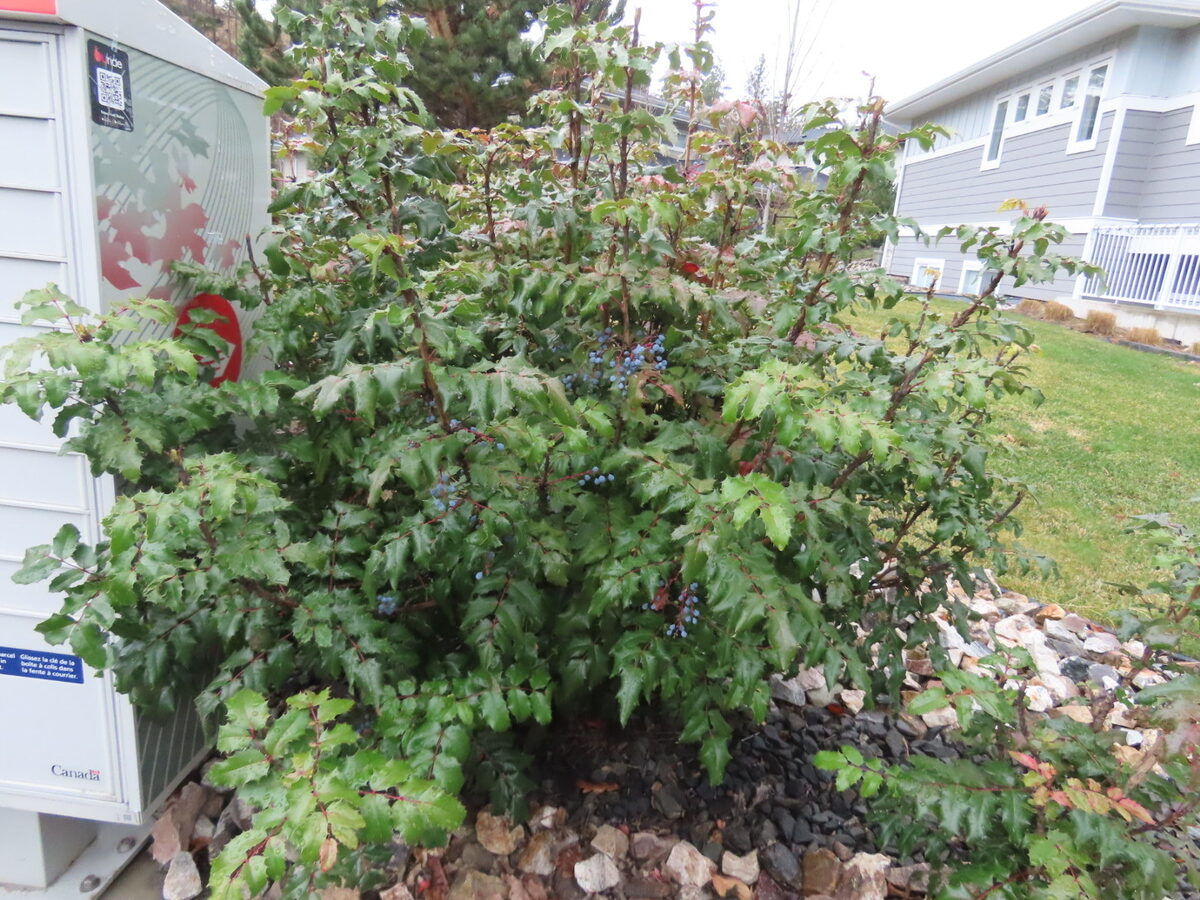
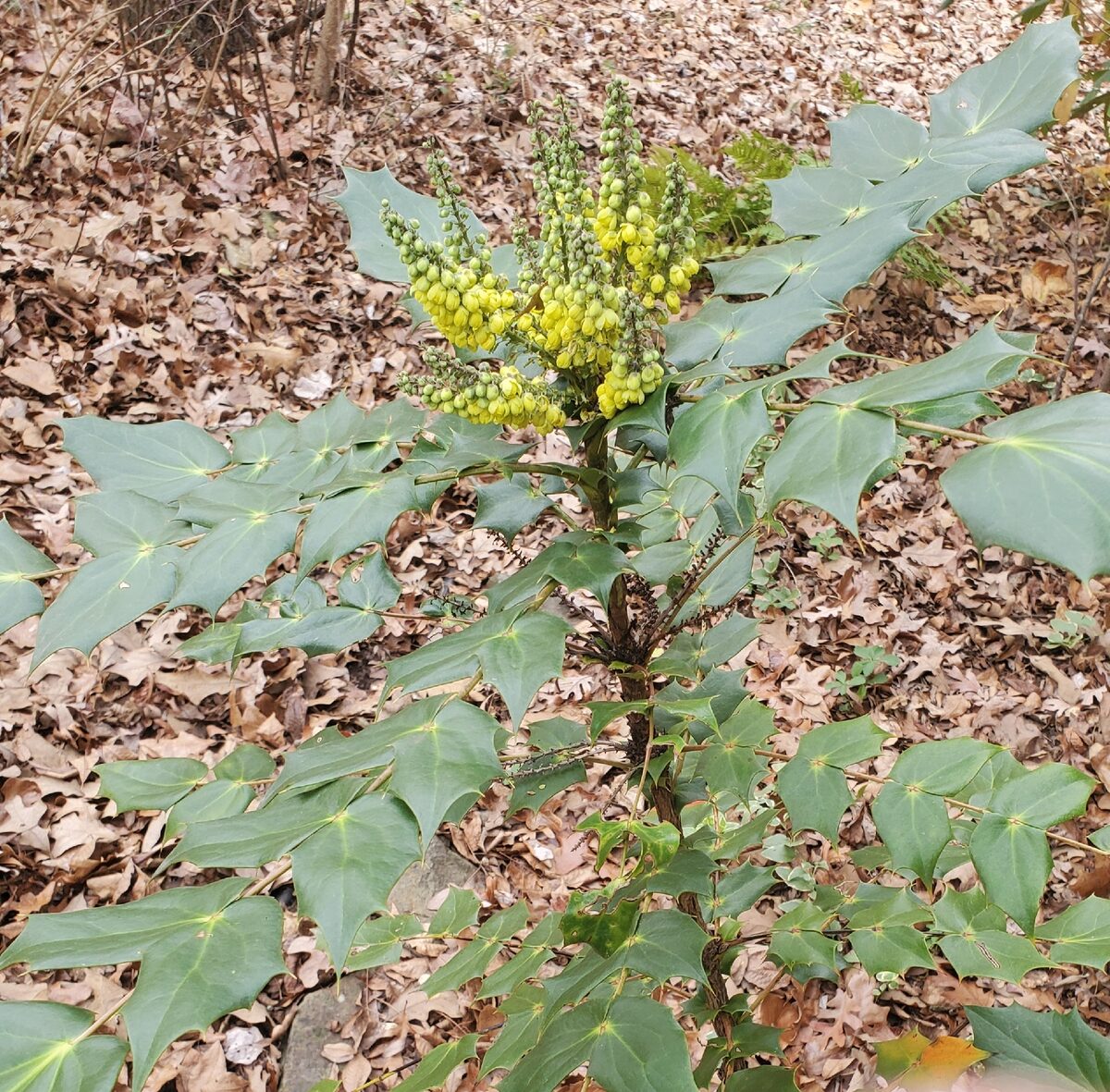
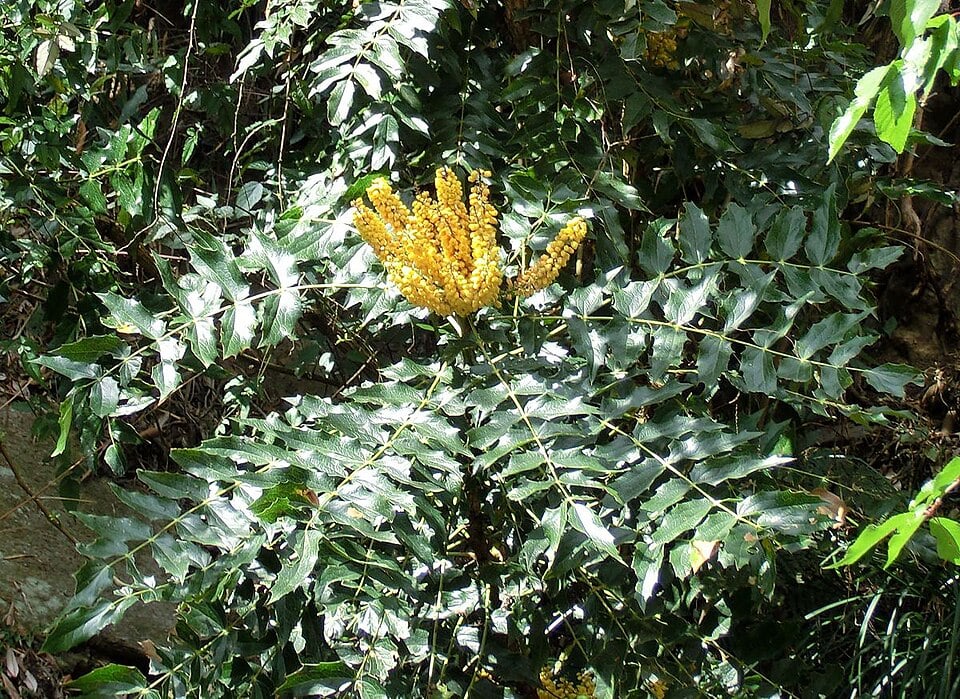
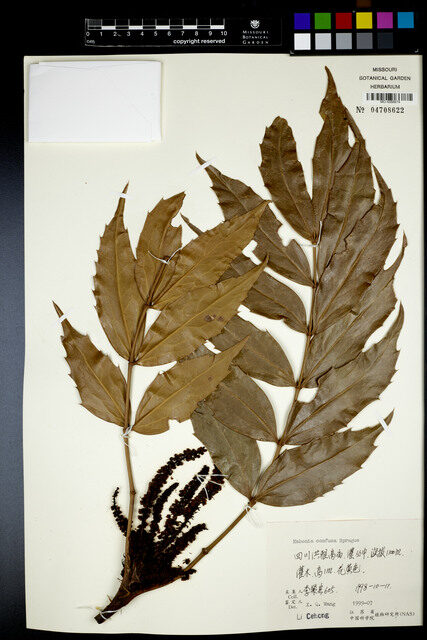
A deciduous shrub. It grows 3 m tall. The stems are slender. There are short spines 25 mm long on the stems. The leaves are oblong or sword shaped and 5 cm long. They are grey-green. Sometimes they have teeth. The flowers are golden yellow. There can be 20 flowers in a cluster. The fruit are black berries with a grey bloom.
Edible Uses
Edible Parts: Fruit Leaves Shoots Edible Uses: Tea Fruit - raw or cooked and made into preserves. Fairly juicy with a nice slightly acid flavour. The fruits are about 8mm long. Leaves and young shoots - cooked. Leaves are a tea substitute.
Traditional Uses
The ripe fruit are eaten raw. They are also used in preserves. The young shoots and leaves are used as a vegetable and for a tea-like drink. The flowers are chewed.
Medicinal Uses
Antibacterial Aperient Cancer Carminative Dysentery Febrifuge Ophthalmic The roots are aperient, carminative, febrifuge and ophthalmic. They are used in the treatment of eye complaints, menorrhagia, chronic diarrhoea and piles. The leaves have been used in the treatment of jaundice. Berberine, universally present in rhizomes of Berberis species, has marked antibacterial effects. Since it is not appreciably absorbed by the body, it is used orally in the treatment of various enteric infections, especially bacterial dysentery. It should not be used with Glycyrrhiza species (Liquorice) because this nullifies the effects of the berberine. Berberine has also shown antitumour activity.
Known Hazards
Do not use with Glycyrrhiza species (Liquorice) as this negates the berberine's therapeutic effects.
Distribution
It is a temperate plant. It grows in cold desert in north India. In the Himalayas it grows between 1,400-3,200 m altitude. It suits hardiness zones 6-9.
Where It Grows
Asia, Australia, China, Europe, Himalayas*, India, Nepal, NW India, Pakistan,
Cultivation
Prefers a warm moist loamy soil and light shade but it is by no means fastidious, succeeding in thin, dry and shallow soils. Grows well in heavy clay soils. A fairly hardy plant but it suffers some damage in severe winters. Hybridizes freely with other members of this genus. Plants can be pruned back quite severely, they resprout well from the base.
Propagation
Seed - best sown as soon as it is ripe in a cold frame, when it should germinate in late winter or early spring. Seed from over-ripe fruit will take longer to germinate, whilst stored seed may require cold stratification and should be sown in a cold frame as early in the year as possible. The seedlings are subject to damping off, so should be kept well ventilated. When the seedlings are large enough to handle, prick them out into individual pots and grow them on in a cold frame. If growth is sufficient, it can be possible to plant them out into their permanent positions in the autumn, but generally it is best to leave them in the cold frame for the winter and plant them out in late spring or early summer of the following year. Cuttings of half-ripe wood, July/August in a frame. Cuttings of mature wood of the current season's growth, preferably with a heel, October/November in a frame.
Other Uses
Dye A yellow dye is obtained from the root. Special Uses Food Forest
Other Information
Fruit are sold in local markets.
Notes
There are about 450-500 Berberis species.
Also Known As
Chatroi, Daruhaldi, Kamashal, Kambel, Karai, Kashmal, Kasmal, Kerai, Khemru, Kingor, Kirmora, Kshamal, Kwarey, Lees, Rasaut, Simlu, Sumro, Sunble, Zarch, Zia largay, Zialarge
References (38)
- Abbasi, A. M., Khan, M & Zafar, M., 2013, Ethno-medicinal assessment of some selected wild edible fruits and vegetables of Lesser-Himalayas, Pakistan. Pak. J. Bot. 45 (SI):215-222
- Agarwal, R. & Chandra, V., 2019, Diversity of wild edible plants in the Mandal-Chopta forest, Uttarakhand. Journal of Medicinal Plants Studies 2019; 7(1): 89-92
- Ajaib, M., et al, 2015, Ethnobotanical Study of Some Plants of Darguti, Tehsel Khuiratta, Azad Jammu and Kashmir. Int. J. Biol. Res., 3(2): 101-107
- Ambasta S.P. (Ed.), 2000, The Useful Plants of India. CSIR India. p 71
- Amjad, M. S., et al, 2015, Ethnobotanical inventory and folk uses of indigenous plants from Pir Nasoora National Park, Azad Jammu and Kashmir. Asian Pac J Trop Biomed 2015; 5(3): 234-241
Show all 38 references Hide references
- Ballabh, B., et al, 2007, Raw edible plants of cold desert Ladakh. Indian Journal of Traditional Knowledge. 6(1) pp 182-184
- Barkatullah & Ibrar, M., 2011, Plants profile of Malakand Pass Hills, District Malakand, Pakistan. African Journal of Biotechnology Vol. 10(73) pp. 16521-16535
- Bhatia, H., et al, 2018, Traditionally used wild edible plants of district Udhampur, J&K, India. Journal of Ethnobiology and Ethnomedicine (2018) 14:73
- Bhattarai, S and Chaudary, R. P., 2009, Wild Edible Plants Used by the People of Manang District, Central Nepal. Ecology of Food and Nutrition, 48:1-20
- Bircher, A. G. & Bircher, W. H., 2000, Encyclopedia of Fruit Trees and Edible Flowering Plants in Egypt and the Subtropics. AUC Press. p 57
- Chaudhury, R.H.N., et al, 1980, Ethnobotanical Uses of Herbaria - 2. J. Econ, Tax Bot Vol 1 p 164
- Dobriyal, M. J. R. & Dobriyal, R., 2014, Non Wood Forest Produce an Option for Ethnic Food and Nutritional Security in India. Int. J. of Usuf. Mngt. 15(1):17-37
- Etherington, K., & Imwold, D., (Eds), 2001, Botanica's Trees & Shrubs. The illustrated A-Z of over 8500 trees and shrubs. Random House, Australia. p 125
- Facciola, S., 1998, Cornucopia 2: a Source Book of Edible Plants. Kampong Publications, p 48
- Farooq, S., et al, 2012, Ethnobotanical Studies of the Flora of Tehsil Birmal in South Waziristan Agency, Pakistan. Pak. J. Weed Sci. Res. 18(3): 277-291
- Flora of Pakistan.
- Gautam, R. S., et al, 2020, Wild Edible Fruits of Nepal. Int. J. Appl. Sci. Biotechnol. Vol 8(3): 289-304
- Gautam, R. S., et al, 2022, Ethnobotanical Review of Wild Edible Plants of Nepal. Journal of Natural History Museum Volume 32, 2021-22 p 108
- Haj, F., et al, 2012, Species Diversity and Ethno Botanical Classes of the Flora of Allai Valley District Battagram Pakistan. International Journal of Plant Research 2012, 2(4): 111-123
- Hamayun, M., Ethnobotanical Studies of some Useful Shrubs and Trees of District Buner, NWFP, Pakistan
- Hedrick, U.P., 1919, (Ed.), Sturtevant's edible plants of the world. p 98
- Khalid, N., et al, 2023, Wild food plants gathered by four cultural groups in North Waziristan, Pakistan. Genet Resour Crop Evol. 70:1243–1276
- Khan, A. H., et al, 2023, Traditional foraging for ecological transition? Wild food ethnobotany among three ethnic groups in the highlands of the eastern Hindukush, North Pakistan. Journal of Ethnobiology and Ethnomedicine 19:9
- Khan, D. & Shaukat, S.S., 2006, The Fruits of Pakistan: Diversity, Distribution, Trends of Production and Use. Int. J. Biol. Biotech., 3(3):463-499
- Khan, M. & Hussain, S., 2014, Diversity of wild edible plants and flowering phenology of district Poonch (J & K) in the northwest Himalaya. Indian Journal of Sci, Res. 9(1): 032-038
- Khan, W., et al, Ethnomedicinal plants of Kakul Hills, District Abbottabad, KPK, Pakistan.
- Kumar, P. D., et al, 2015, Ethnobotanical Knowledge and Usage of Wild Plants in Theog Forest Division, Himachal Pradesh, North Western Himalaya. The Journal of Ethnobiology and Traditional Medicine. Photon 124(2015) 922-935
- Masoodi, H. U. R. & Sundriyal, R. C., 2020, Richness of non-timber forest products in Himalayan communities—diversity, distribution, use pattern and conservation status. Journal of Ethnobiology and Ethnomedicine 16:56
- Negi, P. S. & Subramani, S. P., 2015, Wild Edible Plant Genetic Resources for Sustainable Food Security and Livelihood of Kinnaur District, Himachal Pradesh, India, International Journal of Conservation Science. 6 (4): 657-668
- Plants for a Future database, The Field, Penpol, Lostwithiel, Cornwall, PL22 0NG, UK. http://www.scs.leeds.ac.uk/pfaf/
- Rana, D., et al, 2019, Ethnobotanical knowledge among the semi-pastoral Gujjar tribe in the high altitude (Adhwari’s) of Churah subdivision, district Chamba, Western Himalaya. Journal of Ethnobiology and Ethnomedicine (2019) 15:10
- Rashid, A., Anand, V.K. & Serwar, J., 2008, Less Known Wild Plants Used by the Gujjar Tribe of District Rajouri, Jammu and Kashmir State. International Journal of Botany 4(2):219-244
- Sharma, P., et al, 2013, Wild edibles of Murari Devi and surrounding areas in Mandi district of Himachal Pradesh, India. International Journal of Biodiversity and Conservation. Vol. 5(9), pp. 580-592, September 2013
- Sher, Z., Hussain, F., & Ibrar, M., 2014, Traditional knowledge on plant resources of Ashezai and Salarzai Valleys, District Buner, Pakistan. African Journal of Plant Science. Vol. 8(1), pp. 42-53, January 2014
- Thakur, D., et al, 2017, Why they eat, what they eat: patterns of wild edible plants consumption in a tribal area of Western Himalaya. Journal of Ethnobiology and Ethnomedicine (2017) 13:70
- Tiwari, J. K., et al, 2010, Some Promising Wild Edible Plants of Srinagar and its Adjacent Area in Alaknanda Valley of Garhwal Himalaya, India. Journal of American Science 6(4) p 167ff
- Trans. Linn. Soc. London 17:94; Ill. bot. Himal. Mts. 1(2):64. 1834
- Upreti, K., et al, 2010, Diversity and Distribution of Wild Edible Fruit Plants of Uttarakhand. Bioversity Potentials of the Himalaya. p 162