Hohenbuehelia petaloides
(Bull. ex Fr.) Schulzer
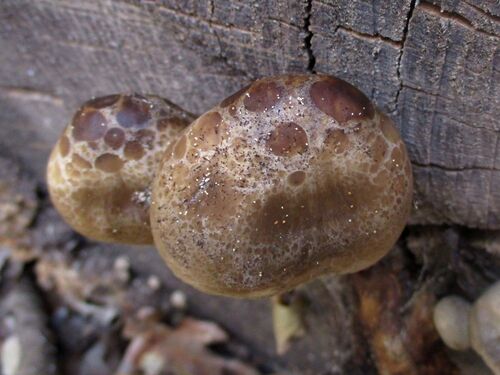
iNaturalist· cc-by-nc
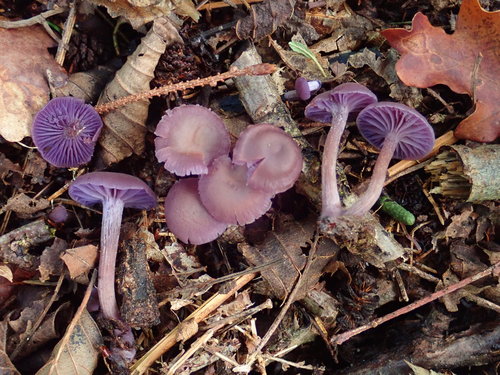
(c) Christian Schwarz, some rights reserved (CC BY-NC), uploaded by Christian Schwarz
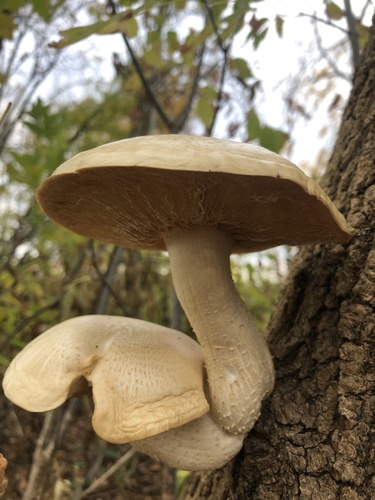
iNaturalist· cc-by-nc-sa
(c) Jared McRae, some rights reserved (CC BY-NC-SA), uploaded by Jared McRae
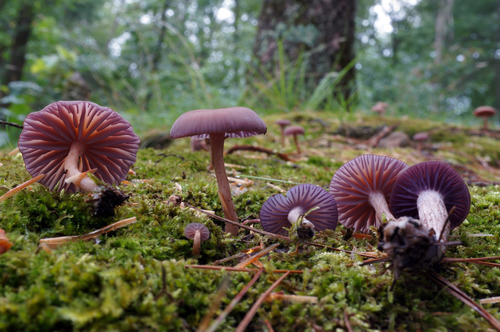
iNaturalist· cc-by-nc
(c) Kyle Jones, some rights reserved (CC BY-NC), uploaded by Kyle Jones
Summary
Source: WikipediaHohenbuehelia petaloides, commonly known as the leaflike oyster or the shoehorn oyster mushroom, is a species of agaric fungus belonging to the family Pleurotaceae. The fruit bodies have pale to brown funnel-shaped caps with decurrent gills. The species has a cosmopolitan distribution and is found near the decaying wood it feeds on. It is reputedly edible but not choice.
Description
A mushroom.
This description is brief — help expand it
Edible Uses
The species is considered edible, although the tough texture may not be appealing.
Distribution
It is a subtropical plant.
Where It Grows
Asia, Bhutan, China, Himalayas, Hong Kong, Mexico, North America,
Synonyms
Also Known As
Jitsu shamu
References (4)
- Boa, E. R., 2004, Wild edible fungi and their importance to people. FAO Non Wood Forest Products Booklet 17
- Mukhia, P.K., et al, 2013, Wild plants as Non Wood Forest Products used by the rural community of Dagana, a southern foothill district of Bhutan, SAARC Journal, 27 pages (As Acanthocystis geogenius)
- Santiago, F, H., et al, Traditional knowledge and use of wild mushrooms by Mixtecs or Ñuu savi, the people of the rain, from Southeastern Mexico. Journal of Ethnobiology and Ethnomedicine (2016) 12:35 p 8
- Zamora-Martinez, M. et al, 1995, Natural production of wild edible mushrooms in the southwestern rural territory of Mexico City, Mexico. Forest Ecology and Management 72:13-20