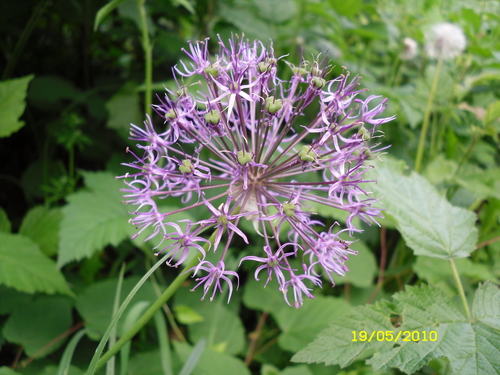
Allium sikkimense
Baker
iNaturalist· cc-by-nc
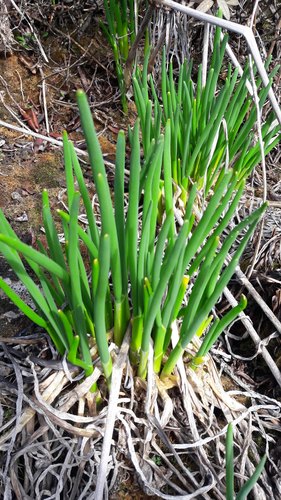
(c) Leoš Smutný a Antonín Horáček, some rights reserved (CC BY-NC)
iNaturalist· cc-by-nc
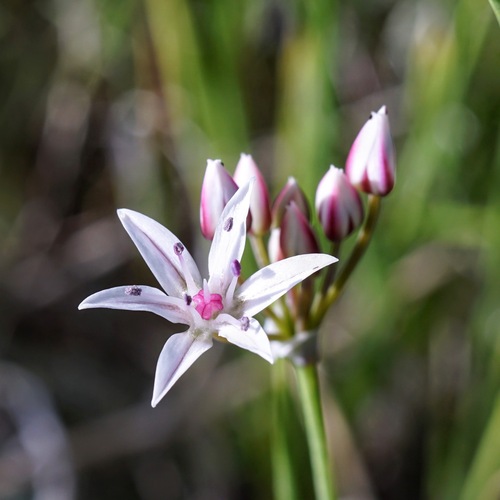
(c) Sangay Wangchuk, some rights reserved (CC BY-NC)
iNaturalist· cc-by-nc
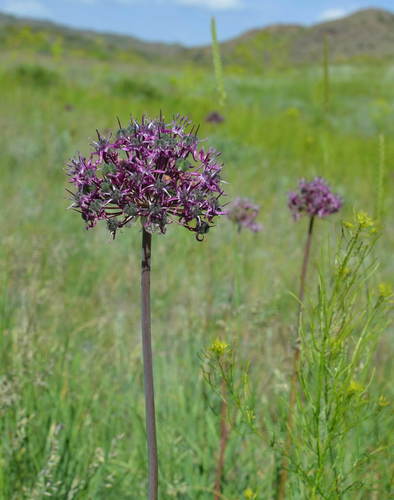
(c) observe-syz, some rights reserved (CC BY-NC)
Summary
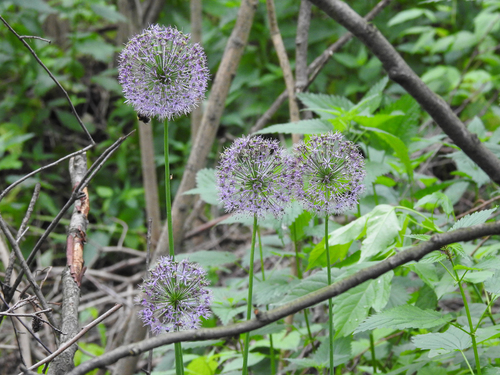
Source: WikipediaAllium sikkimense is a plant species native to Sikkim, Tibet, Bhutan, Nepal, India and parts of China (Gansu, Ningxia, Qinghai, Shaanxi, Sichuan, Xizang, Yunnan). It grows in meadows and on the edges of forests at elevations of 2400–5000 m. The species is cultivated as an ornamental in other regions because of its strikingly beautiful blue flowers. It is used medicinally in the Sikkim Eastern Himalayas. Allium sikkimense has a cluster of narrow bulbs generally less than 5 mm in diameter. Scape is up to 40 cm tall. Leaves are flat, narrow, shorter than the scape, up to 5 mm wide. Umbel is a densely crowded hemisphere of blue flowers.
Description
An onion herb. It has a cluster of bulbs. They are 3-5 mm across. The leaves are narrow and 2-5 mm wide and flat. The stalk is 15-40 cm long.
This description is brief — help expand it
Edible Uses
The leaves are eaten.
Distribution
It is a temperate plant. It the Himalayas it grows between 2,500-3,500 m above sea level. In Sichuan and Yunnan.
Where It Grows
Asia, Bhutan, China, Himalayas, India, Nepal, Northeastern India, Sikkim, Tibet,
Notes
They have also been put in the family Alliaceae.
Nutrition
| Part | Moisture | kJ | kcal | Protein | Vit A | Vit C | Iron | Zinc |
|---|---|---|---|---|---|---|---|---|
| Leaves | 4 | — | — | 20.4 | — | — | 0.04 | — |
Synonyms
Also Known As
Da la pu, Ochaurimuchi, Ri guo
References (2)
- Chen, W., et al, 2021, Wild plants used by the Lhoba people in Douyu Village, characterized by high mountains and valleys, in southeastern Tibet, China. Journal of Ethnobiology and Ethnomedicine (2021) 17:46
- Sundriyal, M., et al, 1998, Wild edibles and other useful plants from the Sikkim Himalaya, India. Oecologia Montana 7:43-54