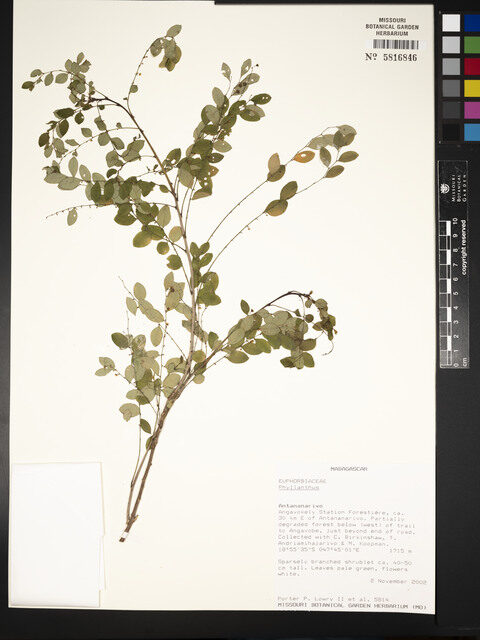
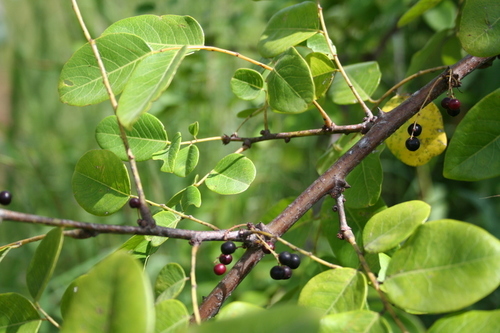
Phyllanthus niruri
L.
Stonebraker
iNaturalist· cc-by
(c) Alexis López Hernández, some rights reserved (CC BY), uploaded by Alexis López Hernández
iNaturalist· cc-by-nc
(c) ignaciogarcia55, some rights reserved (CC BY-NC)
iNaturalist· cc-by-nc
(c) ignaciogarcia55, some rights reserved (CC BY-NC)
Summary
Source: WikipediaPhyllanthus niruri in the genus Phyllanthus of the family Phyllanthaceae is a widespread tropical plant commonly found in coastal areas from Texas southward through Mexico, Central America, and wide regions of South America and India. It has the common name chanca piedra among numerous others in Spanish.
Description
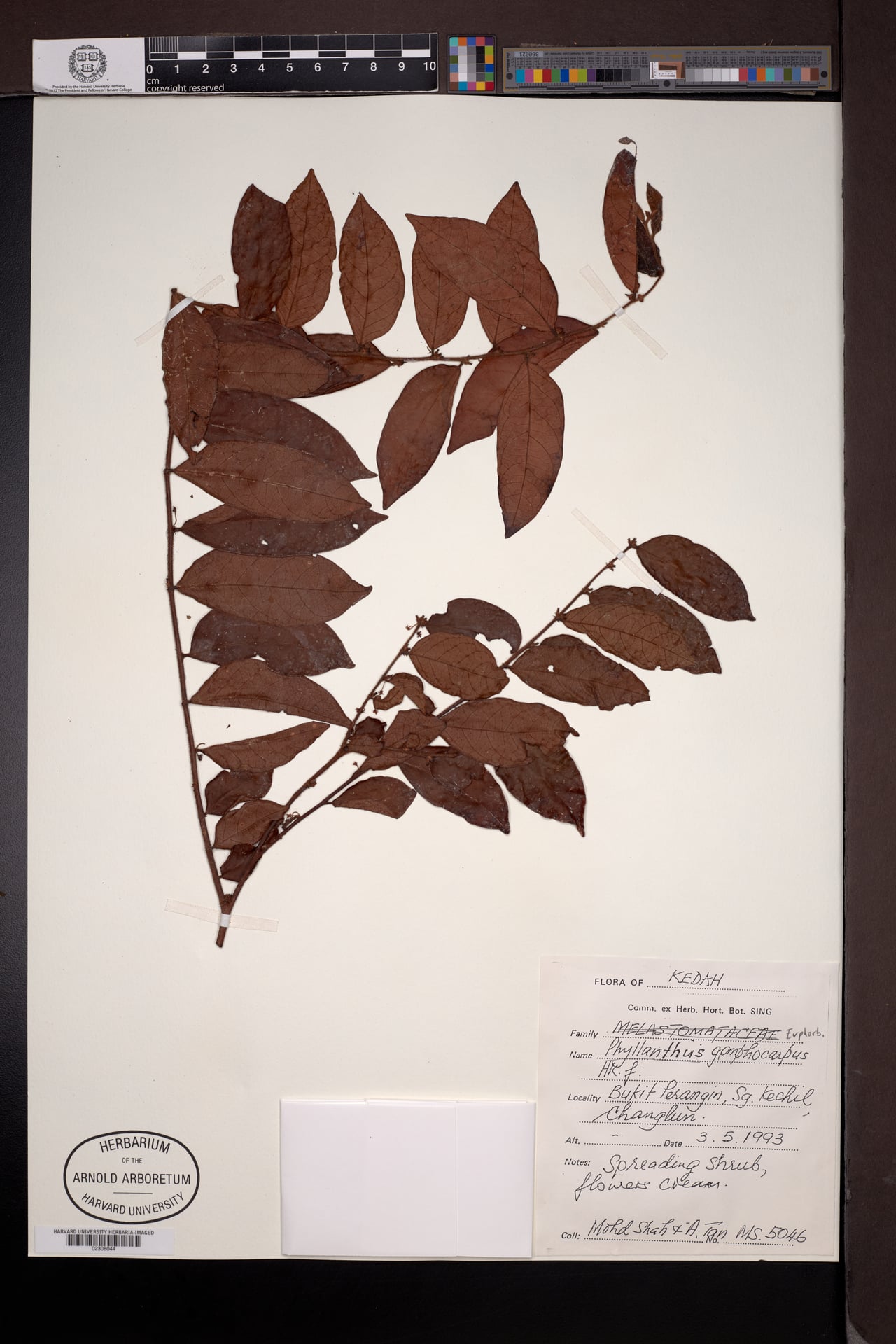
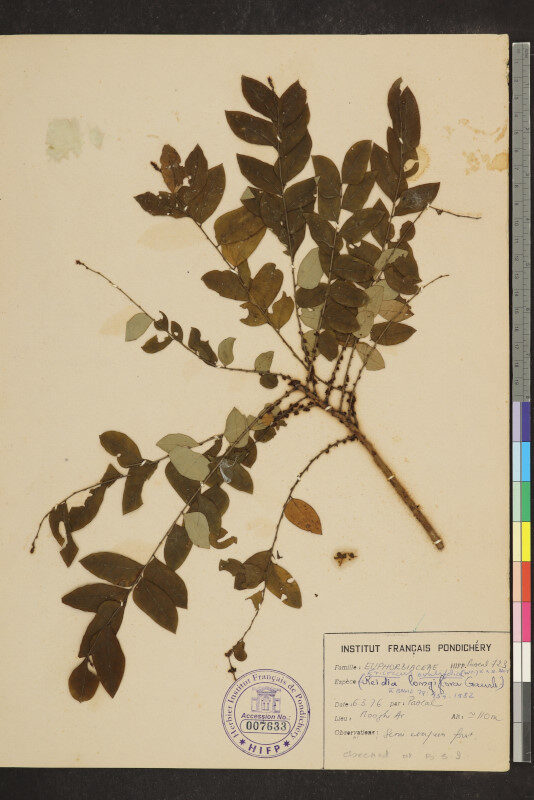
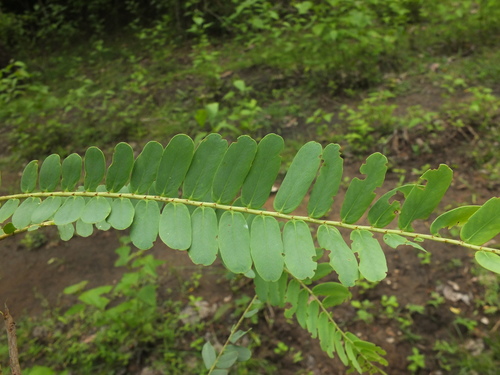
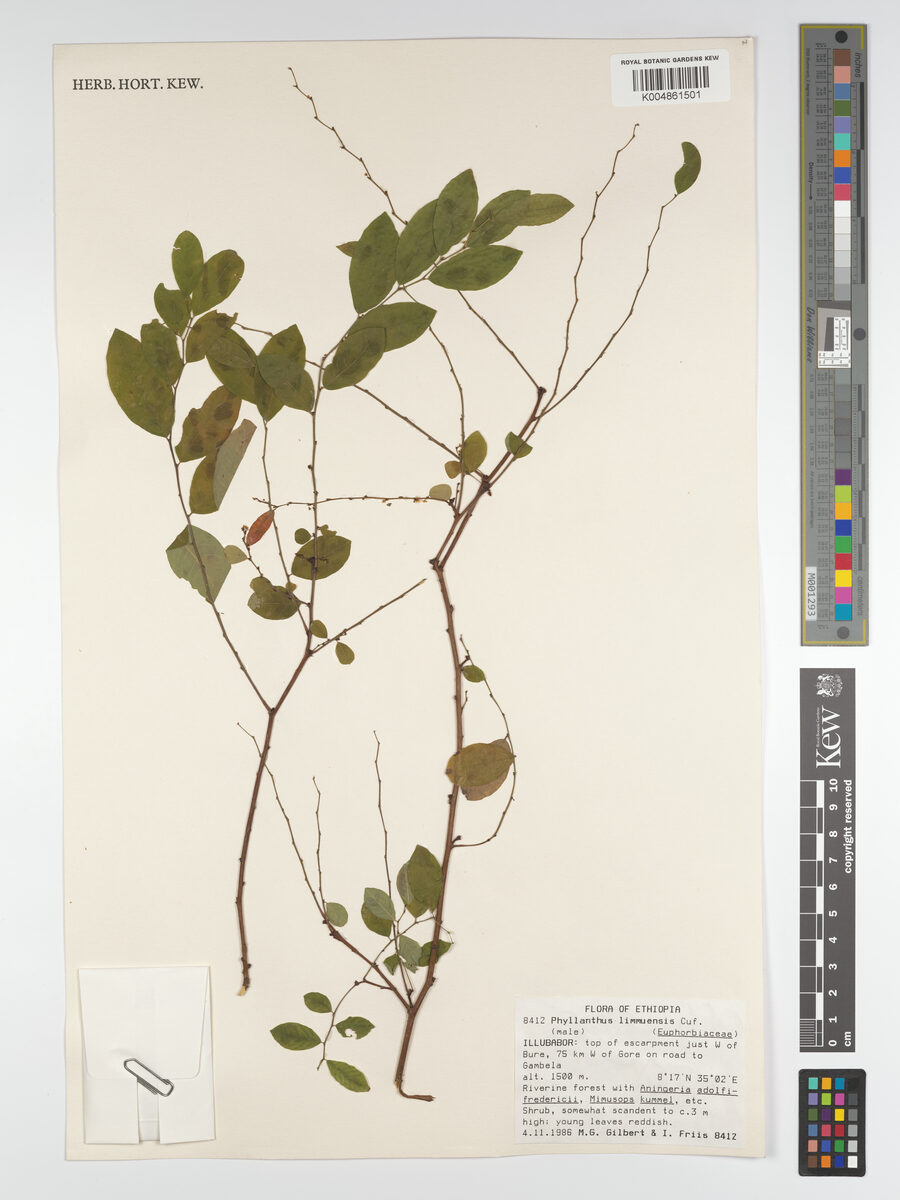
A shrub. It grows 50-70 cm tall. The branches are soft and reach upwards. The bark is smooth and light green. The leaves are simple and arranged one after the other (alternate). The flowers are pale green. The fruit are small capsules with many seeds.
Edible Uses
The leaves are used to make tea. The fruit and leaves are eaten.
Medicinal Uses
The plant is often used medicinally in India, where the root, leaves, fruits, milky juice, and whole plants can be used. It is considered to be acrid, cooling, diuretic and alexipharmic. It is considered to be useful in the treatment of thirst, bronchitis, leprosy, anaemia, urinary discharge, anuria, biliousness, asthma, hiccups. The plant is used to treat syphilitic blennorrhoea. The root is diuretic. It is used to remove bladder stones, and is a remedy for jaundice. An infusion of the tender fresh roots is valuable in the treatment of chronic dysentery. An infusion of the leaves is used as a treatment for dysentery. The herb is stomachic and useful in the treatment of sores and chronic dysentery. A poultice of the leaves, combined with salt, is used to treat scabby affection, used without salt it is applied on bruises and wounds. An infusion of the root and leaves is a good tonic and diuretic when taken cold in repeated doses. The milky juice is a good application to treat offensive sores. The fruits are useful in the treatment of tubercular ulcers, wounds, sores, scabies and ring worm. The seeds are cholagogue and febrifuge. An infusion is given to a woman after giving birth.. The plant contains the alkaloid norsecurinine, numerous lignans and leucodelphinidine alkaloids, and antihepatoxic principles. The bark and leaves yield a bitter principle, phyllanthin.
Distribution
It is a tropical plant. It grows in coastal areas. In Argentina it grows from sea level to 1,000 m above sea level. In Costa Rica it grows between 1,000-2,500 m above sea level.
Where It Grows
Amazon, Argentina, Asia, Bangladesh, Brazil, Caroline Islands, Central America, Costa Rica, Dominican Republic, India, Guiana, Guianas, Myanmar, Nepal, Niue, Northeastern India, Pacific, Paraguay, Samoa, SE Asia, South America*, Suriname, Tokelau, Uruguay, West Indies,
Cultivation
Succeeds in most soils in a position in full sun or partial shade.
Other Uses
A decoction of the leaves and stem is used for dyeing cotton black.
Synonyms
Also Known As
Amin buah, Arranca-pedras, Bhui amala, Bhumi amla, Bhumyamalaki, Bon amlokhi, Cane senna, Carry-me seed, Cahnca piedra, Creole senna, Dukong anak, Flor-de-joja, Flyroost, Gale-wind grass, Hazardana, Keezhar nelli nela usiri, Kyet-tha-hin, Limar-mah-pom, Nila nelli, Niruri, Quebra-pedra, Rami buah, Vuiamla, Yaung-ma-ywet
References (8)
- Ara, R. I. T., 2015, Leafy Vegetables in Bangladesh. Photon eBooks. p 66
- Barua, U., et al, 2007, Wild edible plants of Majuli island and Darrang districts of Assam. Indian Journal of Traditional Knowledge 6(1) pp 191-194
- Hossain, U. & Rahman, A., 2018, Study and quantitative analysis of wild vegetable floral diversity available in Barisal district, Bangladesh. Asian J. Med. Biol. Res. 2018, 4 (4), 362-371
- INFOODSUpdatedFGU-list.xls
- Kermath, B. M., et al, 2014, Food Plants in the Americas: A survey of the domesticated, cultivated and wild plants used for Human food in North, Central and South America and the Caribbean. On line draft. p 644
Show all 8 references Hide references
- Kumar, R. & Saikia, P., 2020, Wild edible plants of Jharkhand and their utilitarian perspectives. Indian Journal of Traditional Knowledge Vol 19 (2), April 2020, pp 237-250
- Parham, B. E. V., 1971, The Vegetation of the Tokelau Islands with special reference to the Plants of Nukunonu Atoll. New Zealand Journal of Botany. 9:4, 576-609
- Parham, B. E. V., 1972, Plants of Samoa. New Zealand Department of Scientific and Industrial Research. Information Series. No. 85 p 55