Castanopsis boisii
Hickel & A. Camus
De yen the
gbif· cc0
President and Fellows of Harvard College
gbif· cc0
President and Fellows of Harvard College
Description
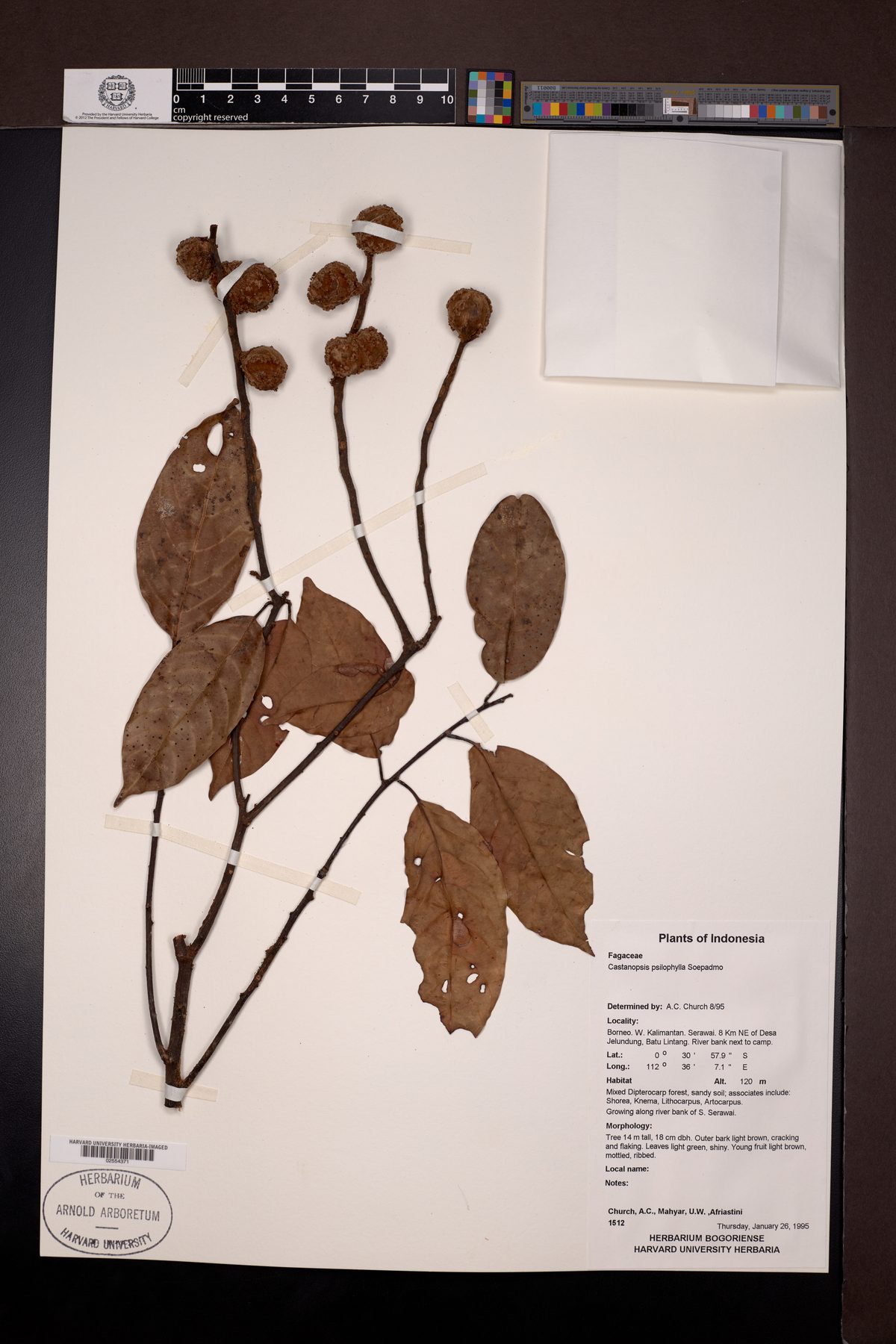
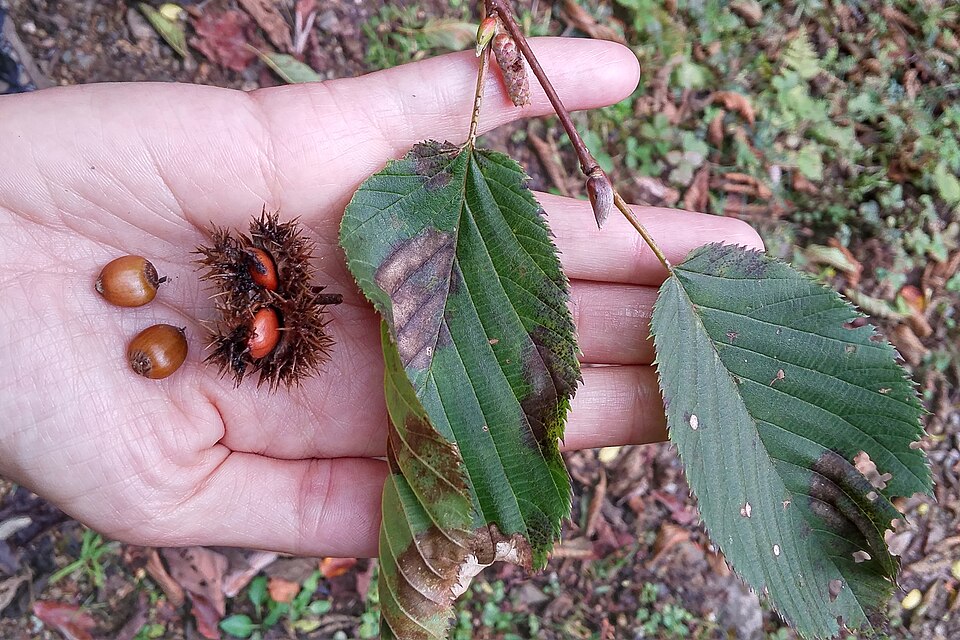
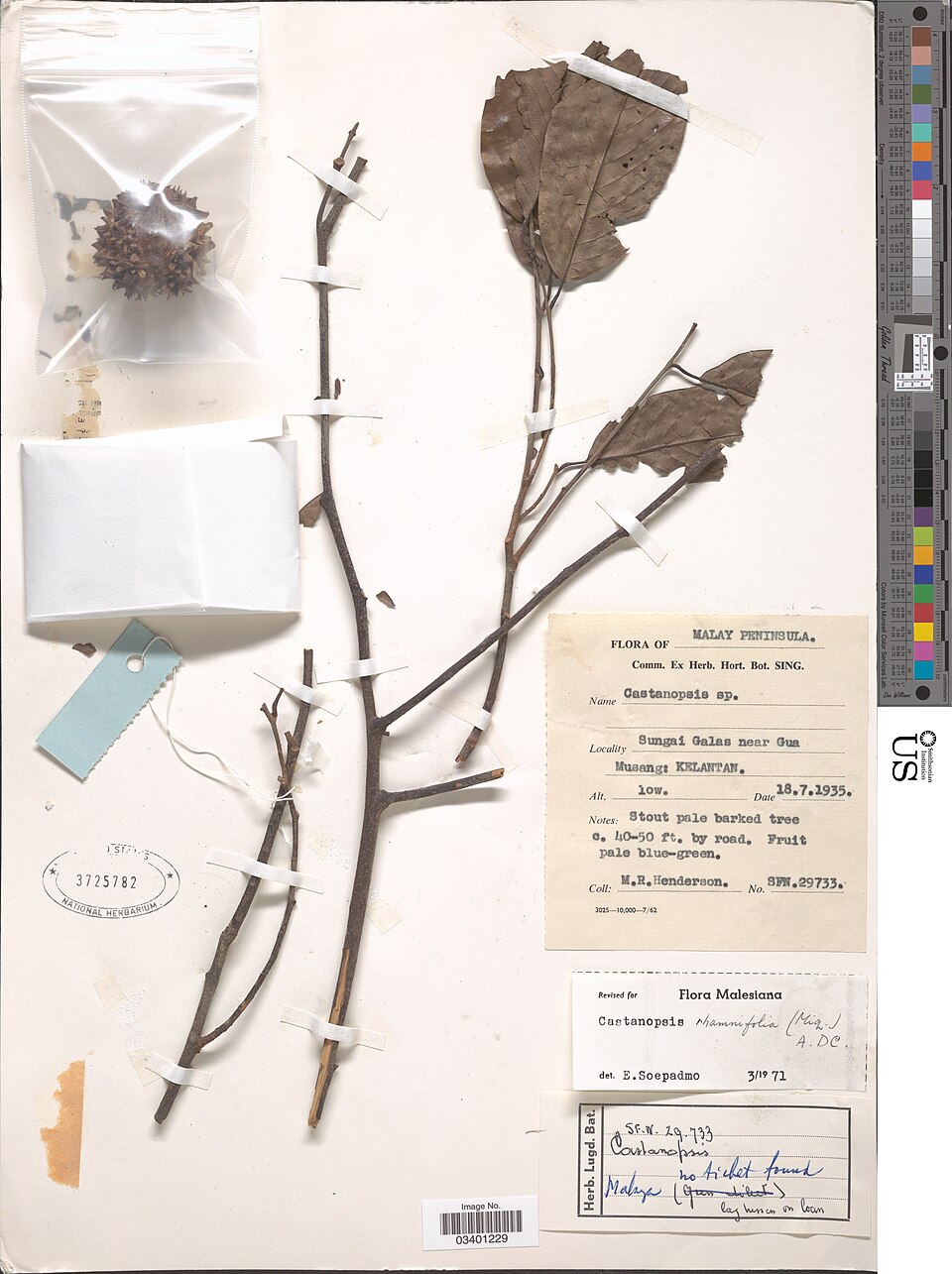
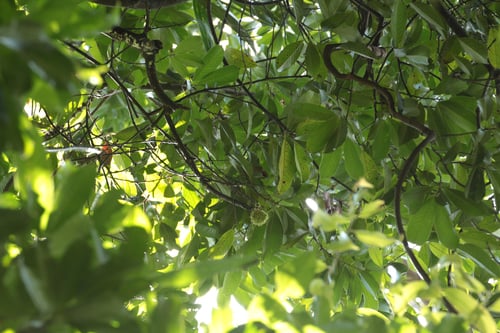
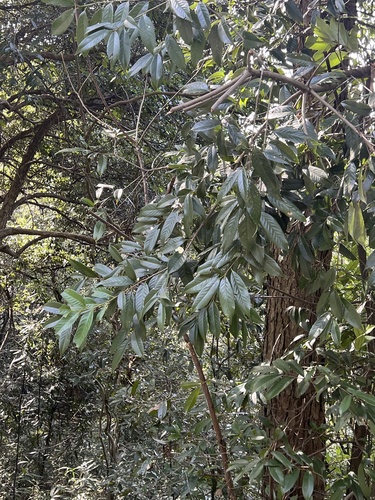
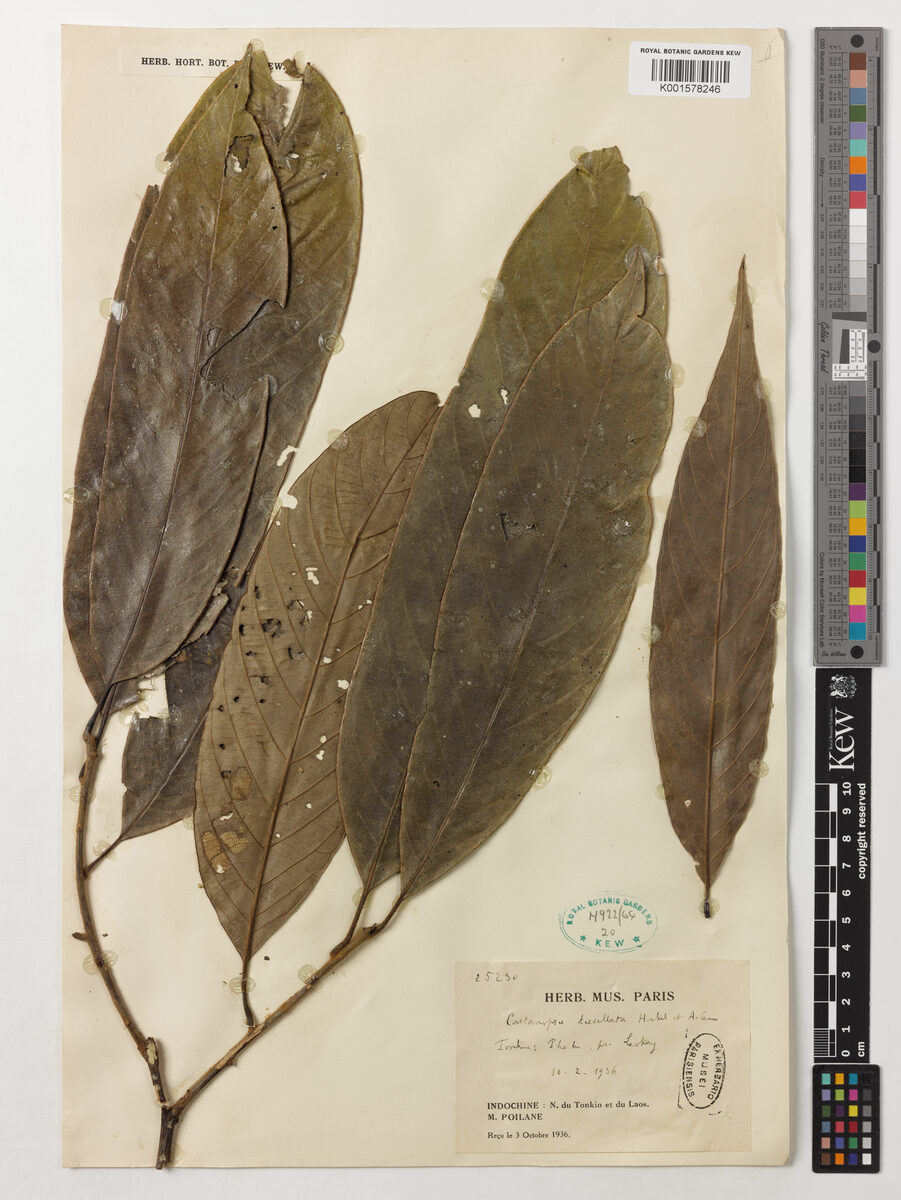
A medium sized tree. It grows 15-20 m high. The trunk is straight. The branches are long, dry and brittle and curve downwards. The leaves are hairy underneath with scale like processes. The leaf stalk is 1.5-2 cm long. The leaf blade is oval or oblong. It is 9-18 cm long by 4-6 cm wide. It is thickly papery. There are 13-17 side veins on each side. The female flowering stalk is 27 cm long. The cup is oval and 2.5-3 cm across. The outside is hairy. There is one or occasionally 2 nuts per cup. They are oval and 1.2-1.4 cm long by 0.9-1.2 cm wide.
Edible Uses
Seed - raw or cooked. A sweet flavour. The broadly ovoid seed is up to 14 - 12mm. It is contained, singly or in pairs, inside a spiny seedcase.
Traditional Uses
The seeds can be eaten.
This uses section is brief — help expand it
Distribution
A tropical plant. It grows on low hills below 300-400 m altitude. It is light demanding. They grow in broad leafed evergreen forest between 1000-1500 m altitude in Southern China.
Where It Grows
Asia, China, Indochina, SE Asia, Vietnam,
Cultivation
Castanopsis species are generally tolerant of a range of soils, preferably well-drained. They succeed in full sun, though young plants generally grow best in dappled woodland shade.
Propagation
Seed - easy to germinate if sown fresh. Self-sown seedlings can be transplanted.
Other Uses
The bark is a source of tannins and can be used as a dye, to weatherproof fibres etc. The branches and stems of many Castanopsis species are used as bed logs in mushroom cultivation. The wood is a good fuel and can be used to make charcoal.
Production
It is a fast growing tree.
Notes
There are about 120 Castanopsis species. Many have edible nuts.
Synonyms
Also Known As
De an qua, Lan qiao zhui
References (6)
- Huang Chengjiu, Zhang Yongtian, Bartholomew, B., Fagaceae, Flora of China.
- Forest Inventory and Planning Institute, 1996, Vietnam Forest Trees. Agriculture Publishing House p 252
- Uphof,
- Usher,
- Van Sam, H. et al, 2008, Uses and Conservation of Plant Species in a National Park. A case study of Ben En, Vietnam. Economic Botany 62:574-593
Show all 6 references Hide references
- Wickens, G.E., 1995, Edible Nuts. FAO Non-wood forest products. FAO, Rome. p 122