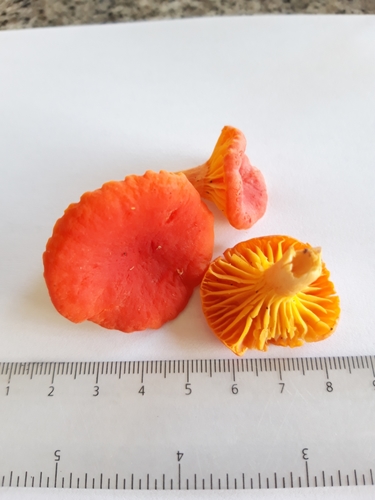
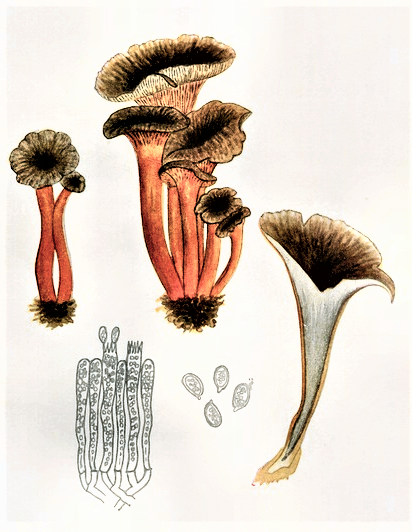
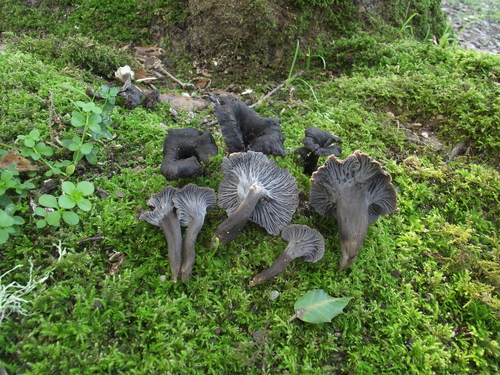
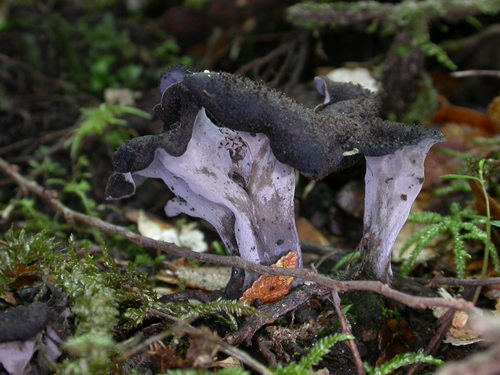
Cantharellus isabellinus
Heinem.
gbif· cc-by
Meise Botanic Garden
gbif· cc-by
Meise Botanic Garden
Description
Cantharellus isabellinus is a mushroom in the family Cantharellaceae found in tropical regions.
This description is brief — help expand it
Edible Uses
Chanterelles in general go well with eggs, curry, chicken, pork, fish, beef and veal, can be used as toppings on pizzas, be stewed, marinated, sauteed, or used as filling for stuffed crêpes. Of course these are just examples; chanterelles are versatile and can be added as an ingredient to most dishes. In European cuisine, chanterelles are often served with venison. A traditional method of preparing these mushrooms is sauteed and then used to make scrambled eggs. In Polish tradition, chanterelles are used for making creamy sauces that top chicken. Many mushroom enthusiasts just like chanterelles sauteed in butter, with a pinch of salt, a clove of fresh crushed garlic, and some whipping cream. This recipe is said to bring out the subtle flavor of the chanterelle without masking it with other aromas. This recipe has the added benefit of retaining flavor even after being stored frozen. It is a feature of Viennese cuisine.
Distribution
It is a tropical plant.
Where It Grows
Africa, Benin, Central Africa, Congo DR, East Africa, Tanzania, West Africa,
Dangerous Lookalikes
This plant can be confused with the following toxic species. Always verify identification carefully before consuming any wild plant.
Jack-O'-Lantern Mushroom
Omphalotus olearius
Antonio Abbatiello
Cantharellus isabellinus
Cantharellus isabellinus
Meise Botanic Garden
Jack-O'-Lantern Mushroom: True knife-like gills, grows in clusters on wood/stumps, glows in the dark, orange throughout.
Cantharellus isabellinus: Blunt forked ridges (not true gills), grows singly from soil, apricot/fruity smell, solid flesh.
Synonyms
References (6)
- Boa, E. R., 2004, Wild edible fungi and their importance to people. FAO Non Wood Forest Products Booklet 17
- Bloesch, U., 2008, Mushroom study, The potential of wild edible mushrooms. GTZ project. p 15
- efta-online.org, Edible Fungi of Tropical Africa, Jardin botanique Meise
- Kamalebo, H. M., et al, 2018, Uses and importance of wild fungi: traditional knowledge from the Tshopo province in the Democratic Republic of the Congo. Journal of Ethnobiology and Ethnomedicine (2018) 14:13
- Tibuhwa, 2013, Wild Mushroom - an underutilized healthy food resource and income generator: experience from Tanzania rural areas. Journal of Ethnobiology and Ethnomedicine 9:49 (As Cantharellus isabellinus var. isabellinus)
Show all 6 references Hide references
- Tibuhwa, 2013, Wild Mushroom - an underutilized healthy food resource and income generator: experience from Tanzania rural areas. Journal of Ethnobiology and Ethnomedicine 9:49 (As Cantharellus isabellinus var. parvisporus)