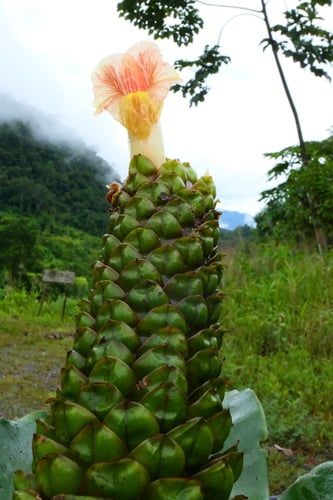
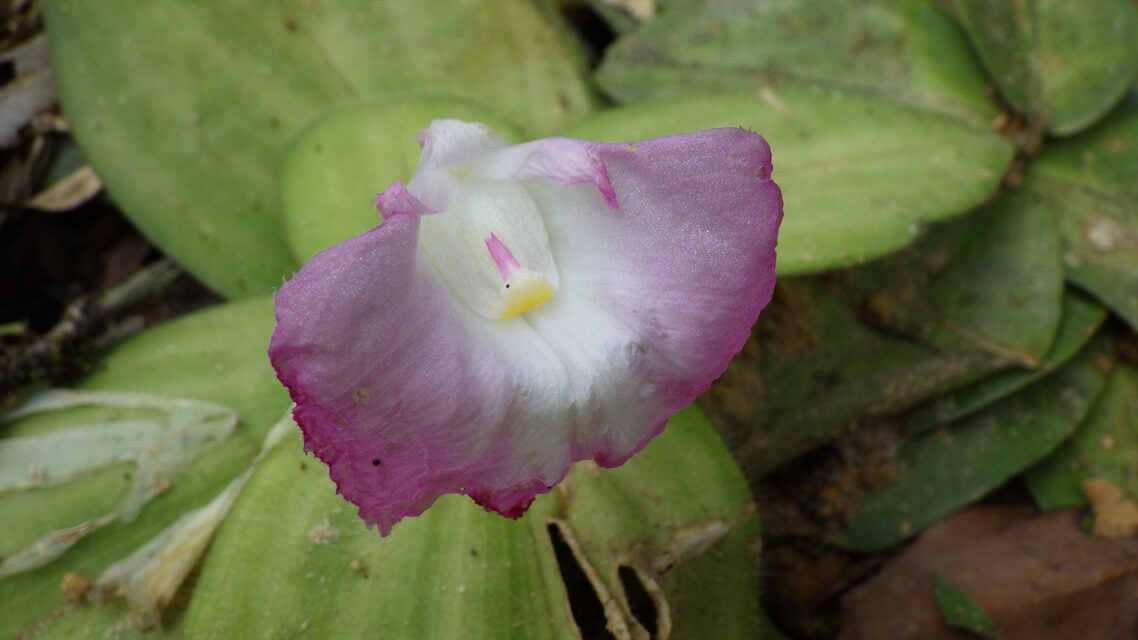
Dimerocostus strobilaceus
Kuntze
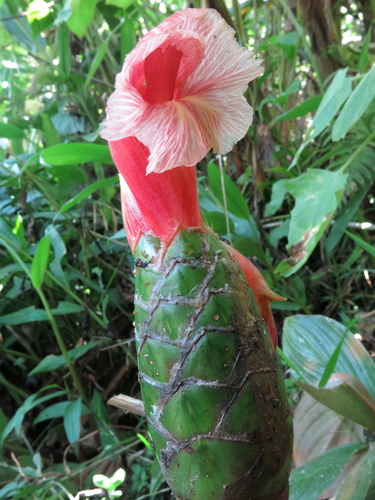
iNaturalist· cc-by
(c) Tim Lenz, some rights reserved (CC BY), uploaded by Tim Lenz
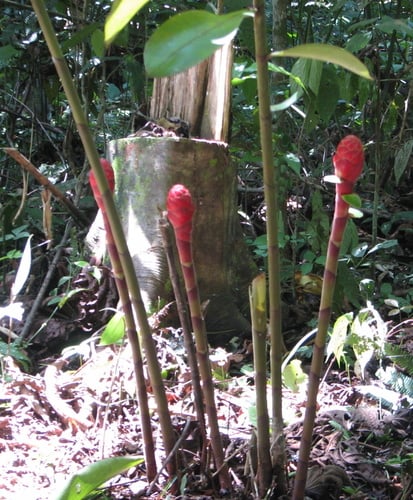
iNaturalist· cc-by-nc
(c) Dave Skinner, some rights reserved (CC BY-NC), uploaded by Dave Skinner
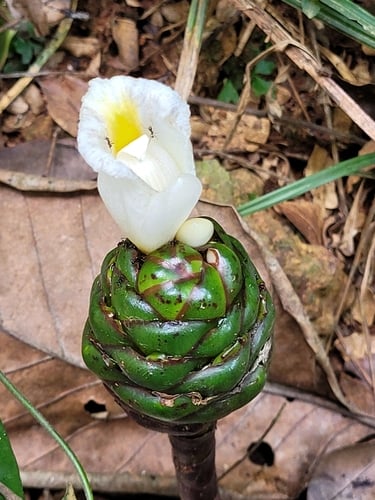
iNaturalist· cc-by-nc-sa
(c) Andreas Kay, some rights reserved (CC BY-NC-SA)
Summary
Source: WikipediaDimerocostus strobilaceus, called “Pinuue Barbat” by the Kuna people of Panama, is a species of plant native to Central and South Tropical America. It mainly grows in wet areas. Dimerocostus strobilaceus grows up to 6 meters tall. The flower corolla may be white or yellow. Dimerocostus strobilaceus is used for food and medicinal purposes. It has cardiovascular effects, and the Kuna people of Panama use it to treat hypertension and other cardiovascular diseases. Dimerocostus strobilaceus is possibly naturalizing in Hawaii.
Description
A large herb. It has tall cane like stems. It can be 5 m tall. It has rhizomes and can form clumps. The leaves are long and fleshy. The flowers are yellow and trumpet shaped. The fruit are slender and 4 cm long. The skin is light brown.
Edible Uses
The fleshy layer or aril surrounding the seeds is eaten. The stems and seeds are also edible.
Traditional Uses
The fleshy layer or aril around the seeds is eaten.
This uses section is brief — help expand it
Distribution
It is a tropical plant. It can grow up to 900 m above sea level. Cairns BG.
Where It Grows
Amazon, Australia, Bolivia, Central America, Colombia, Costa Rica, Ecuador, Guyana, Honduras, Nicaragua, Panama, Peru, South America, Suriname, Venezuela,
Synonyms
Also Known As
Cana-de-macaco, Godanyi monkawe, Nenenquemo, Untuntu, Wiru tullu, Wenokimenkawe
References (5)
- Kermath, B. M., et al, 2014, Food Plants in the Americas: A survey of the domesticated, cultivated and wild plants used for Human food in North, Central and South America and the Caribbean. On line draft. p 305
- Kew Plants of the World Online
- Roa, J. A. G. & Boada, D. S. G., 2018, Fundación para el Fortalecimiento de la Fruticultura y Plantas Alimenticias no Convencionales en Colombia.
- Smith, N., et al, 2007, Amazon River Fruits. Flavors for Conservation. Missouri Botanical Gardens Press. p 108
- Torre, de la, L., et al, 2008, Enciclopedia de las Plantas Útiles del Ecuador. Herbario QCA. Pontificia Universidad Católica del Ecuador. p 296