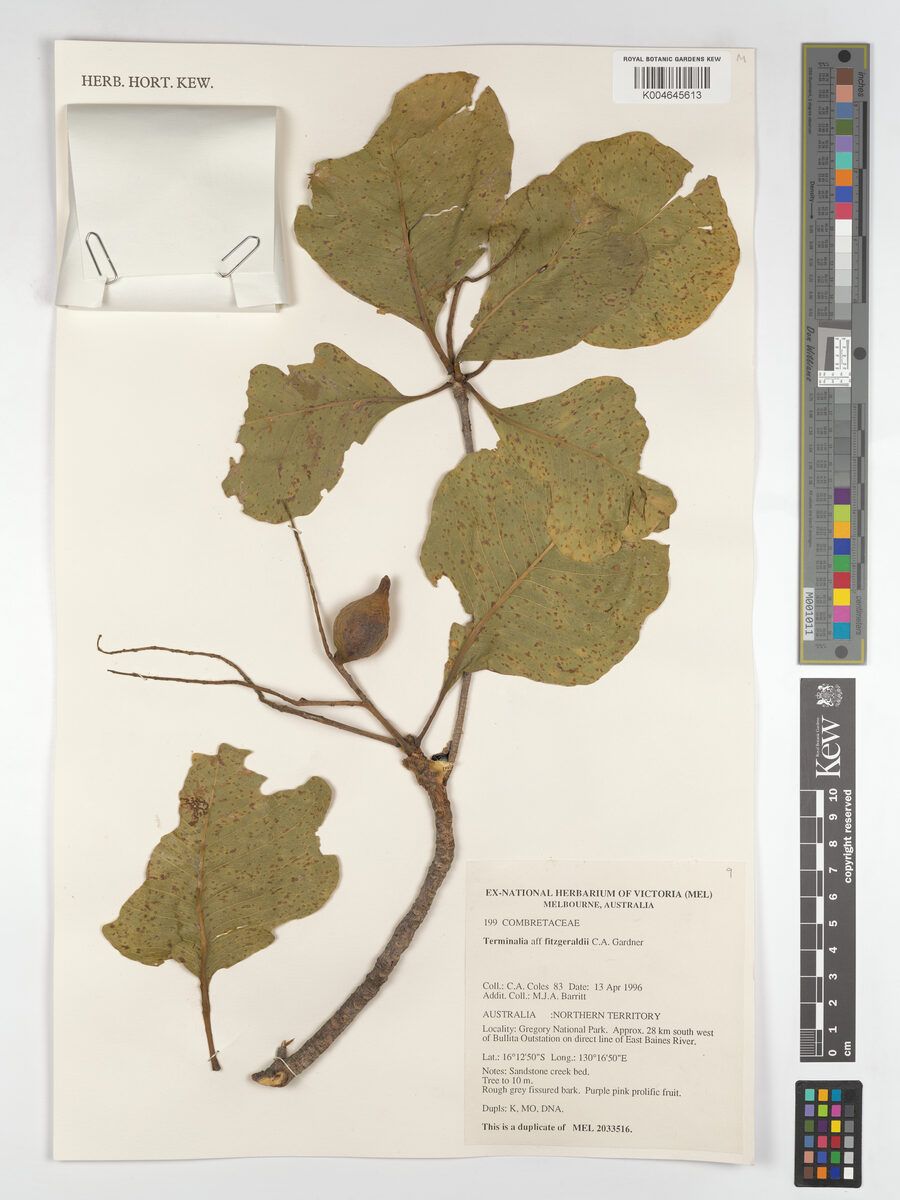
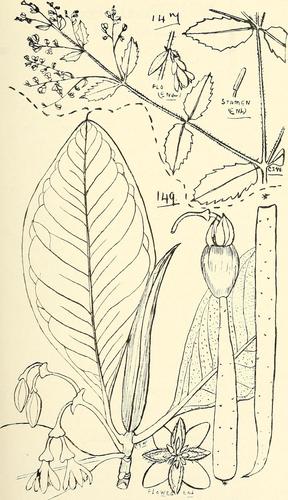
Pteleopsis myrtifolia
(M. A. Lawson) Engl. & Diels
Two-winged stink-bush
Wikipedia· cc-by-sa
Wikimedia Commons - Pteleopsis_myrtifolia01.jpg
iNaturalist· cc-by-nc
(c) Gigi Laidler, some rights reserved (CC BY-NC)
Summary
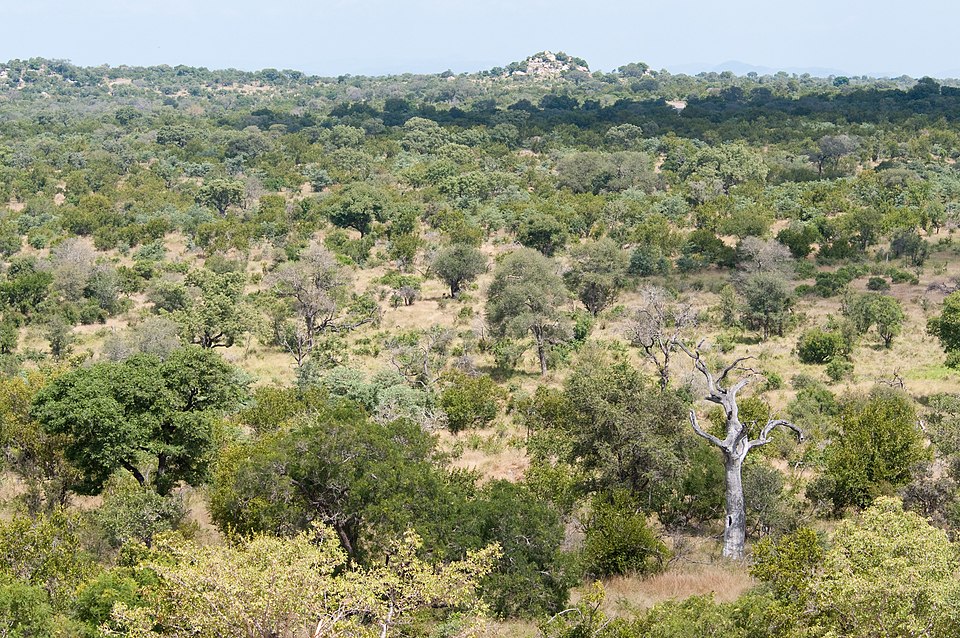
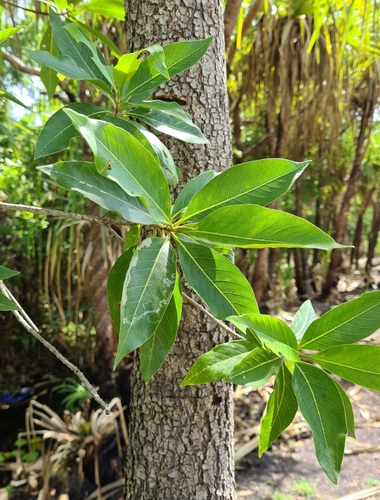
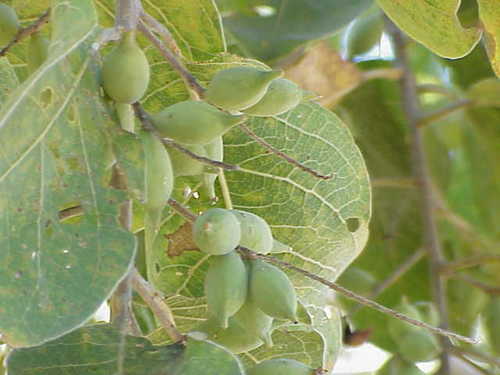
Source: WikipediaPteleopsis myrtifolia ('Ptelea' = elm, 'opsis' = resembling, 'myrtifolia' = leaves like those of the myrtle) is one of some 10 African species in this genus in the family of Combretaceae. It is the only Pteleopsis species to occur in Southern Africa. Its flowers are strongly scented and perceived by humans to be either 'honey-like' or 'cloying' or even 'stinky'. The timber is red, hard and durable, and used for furniture and construction. This is a dense, often multi-stemmed semi-deciduous small tree with a drooping habit up to 20 m tall. Bark is greyish-pink, and smooth, net-like in appearance. Leaves are opposite and simple, 10–95 mm x 6–35 mm, narrowly elliptical with acute apex and base; surface glabrous and occasionally glossy above; margins entire and may be wavy. Petiole is often hairy. Inflorescence axillary and some 45 mm long. Ellipsoid fruit with 2 or 3 wings, 10–25 mm x 5–17 mm. It is found on rocky hillsides and stony outcrops, in evergreen and riverine forest, from sea level up to 1600 m altitude, mainly along the east coast of Southern Africa. It occurs in savanna such as Baikiaea, mopane, and miombo (Brachystegia) woodlands, and ranges from northern Zululand, the Nwambiya Sandveld of the Kruger National Park, Mozambique, westwards to Botswana, Caprivi Strip, Zambia, Zimbabwe, Angola and northwards to Malawi, Tanzania, and Kenya where it is very rare. This species is very like Pteleopsis anisoptera (Welw. ex M.A.Lawson) Engl. & Diels in appearance, and may yet prove to be closely related. Pteleopsis is intermediate in many characters between Combretum and Terminalia.
Description
A shrub or small tree. It grows 20 m tall but has a drooping habit. The bark is smooth and grey and has a net like appearance. The leaves are opposite and simple. They are 1-10 cm long by 1-4 cm wide. The are narrowly oval and taper to the ends. The edges are entire and may be wavy. The flowering shoots are 4.5 cm long and in the axils of leaves. The fruit are narrowly oval and have 2 or 3 wings. The fruit are 1-2.5 cm long by 0.5-1.7 cm wide.
Edible Uses
The leaves are cooked and eaten as a vegetable, and the fruit and juice are also consumed.
Traditional Uses
The sap is mostly used as medicine. The leaves are recorded as being cooked and eaten as a vegetable.
This uses section is brief — help expand it
Medicinal Uses
The sap is traditionally used as medicine.
Distribution
It is a tropical plant. It grows from sea level to 1,600 m above sea level. It grows along the East Coast in Southern Africa.
Where It Grows
Africa, Angola, Botswana, East Africa, Kenya, Malawi, Mozambique, Namibia, Tanzania, Zambia, Zimbabwe,
Cultivation
It can be grown from seeds. It is best to soak the seeds overnight and discard any that float.
Synonyms
Also Known As
Amuyadi, Fendaluzi, Mgoji, Mlakwenzi, Moleua, Muandja, Mufundalabalo, Muleva, Murrepa, Musikanyemba, Musunganyemba, Mwanda, Ngolozi, N'wandla, Sunganhemba, Umsunganyama, Umwandla
References (2)
- Grivetti, L. E., 1980, Agricultural development: present and potential role of edible wild plants. Part 2: Sub-Saharan Africa, Report to the Department of State Agency for International Development. p 73
- PlantUse Africa,