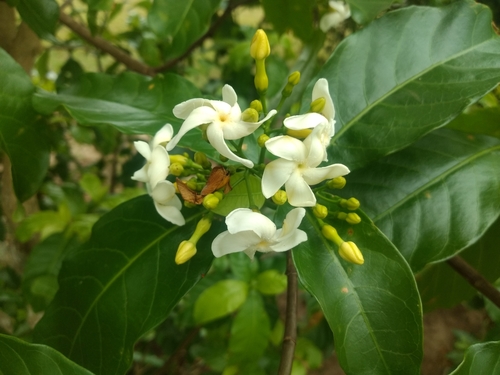
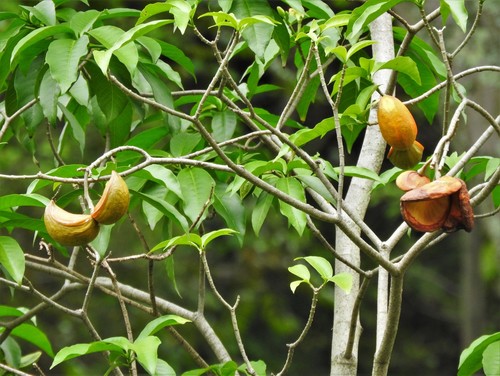
Cynanchum viminale
(L.) L.
iNaturalist· cc-by-nc
(c) Tony Benn, some rights reserved (CC BY-NC), uploaded by Tony Benn
iNaturalist· cc-by
(c) Kevin Murray, some rights reserved (CC BY), uploaded by Kevin Murray
iNaturalist· cc-by-nc
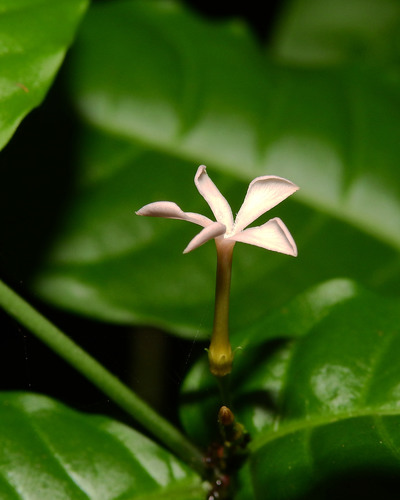
(c) nj-aus, some rights reserved (CC BY-NC)
Summary
Source: WikipediaCynanchum viminale is a leafless succulent plant in the family Apocynaceae. The species is native to West Africa, the Indian Ocean and Western Pacific region. The species' natural range extends from South Africa throughout much of Africa and the Middle East to India, Indochina, Southern China, Indomalaya and into Meganesia. The species is also found on several Indian Oceans islands including Mauritius, Réunion and the Seychelles. In keeping with its wide distribution, the species is known by a range of common names, including caustic-creeper, caustic bush, sacred soma, soma, rou shan hu, Rapunzel plant, liane calle and kitupa.
Description
A tropical succulent shrub in the dogbane family (Apocynaceae) that lacks leaves but produces edible stems.
This description is brief — help expand it
Edible Uses
The young stems are eaten fresh. The flowers, fruit, and roots are also edible parts.
Traditional Uses
The young stems are eaten fresh.
This uses section is brief — help expand it
Medicinal Uses
The plant has been used as a traditional medicine to treat a range of conditions, including sores and wounds, smallpox, eye infections, diarrhoea, intestinal and skin parasites and insufficient milk production. The aerial parts, roots and latex of the plant are all used for medicine, and the method of use varies from ingestion of plant parts, drinking a decoction of the plant, application of the sap to affected parts, exposure to smoke from the burning plant or placing patients onto bedding made from the plant. Care is usually required because of the poisonous and caustic nature of the sap, however in some locales toxicity is considered low, at least for part of the year.
Distribution
It is a tropical plant.
Where It Grows
Africa, East Africa, Kenya, Middle East, Oman, South Africa, West Africa, Yemen,
Synonyms
Also Known As
Amaq, Bidar, Khal, Radhaa
References (5)
- Al-Fatimi, M. A., Wild Edible Plants Traditionally Collected and Used in Southern Yemen. Research Square. University of Aden. p 17
- Grivetti, L. E., 1980, Agricultural development: present and potential role of edible wild plants. Part 2: Sub-Saharan Africa, Report to the Department of State Agency for International Development. p 44 (As Cynanchum viminale)
- Mutie, F. M., et al, 2023, Important Medicinal and Food Taxa (Orders and Families) in Kenya, Based on Three Quantitative Approaches. Plants 2023, 12, 1145
- Ruiters-Welcome, A. K., 2019, Food plants of southern Africa. Ph.D. thesis. Univ. of Johannesburg p 23
- World Checklist of Useful Plant Species 2020. Royal Botanic Gardens, Kew