Memecylon edule
Roxb.
Red ironwood tree
iNaturalist· cc-by-nc-sa
(c) 106611639464075912591, some rights reserved (CC BY-NC-SA), uploaded by 106611639464075912591
iNaturalist· cc-by-nc
(c) HP Lim, some rights reserved (CC BY-NC)
iNaturalist· cc-by-nc
(c) HP Lim, some rights reserved (CC BY-NC)
Summary
Source: WikipediaMemecylon edule is a small evergreen tree native to India especially the Deccan Plateau including most of Karnataka, Andhra Pradesh and parts of Tamil Nadu, Thailand, Malay Peninsula, Singapore and Borneo. It is found in shores with sand or rocky soils. Common names include kaayam, delek bangas, delek air, nipis kulit ("thin-skinned" in Malay), miat, and nemaaru.
Description
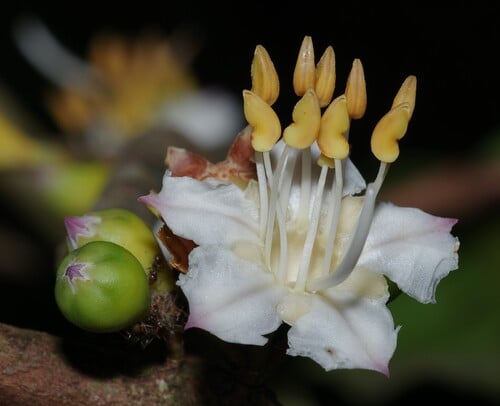
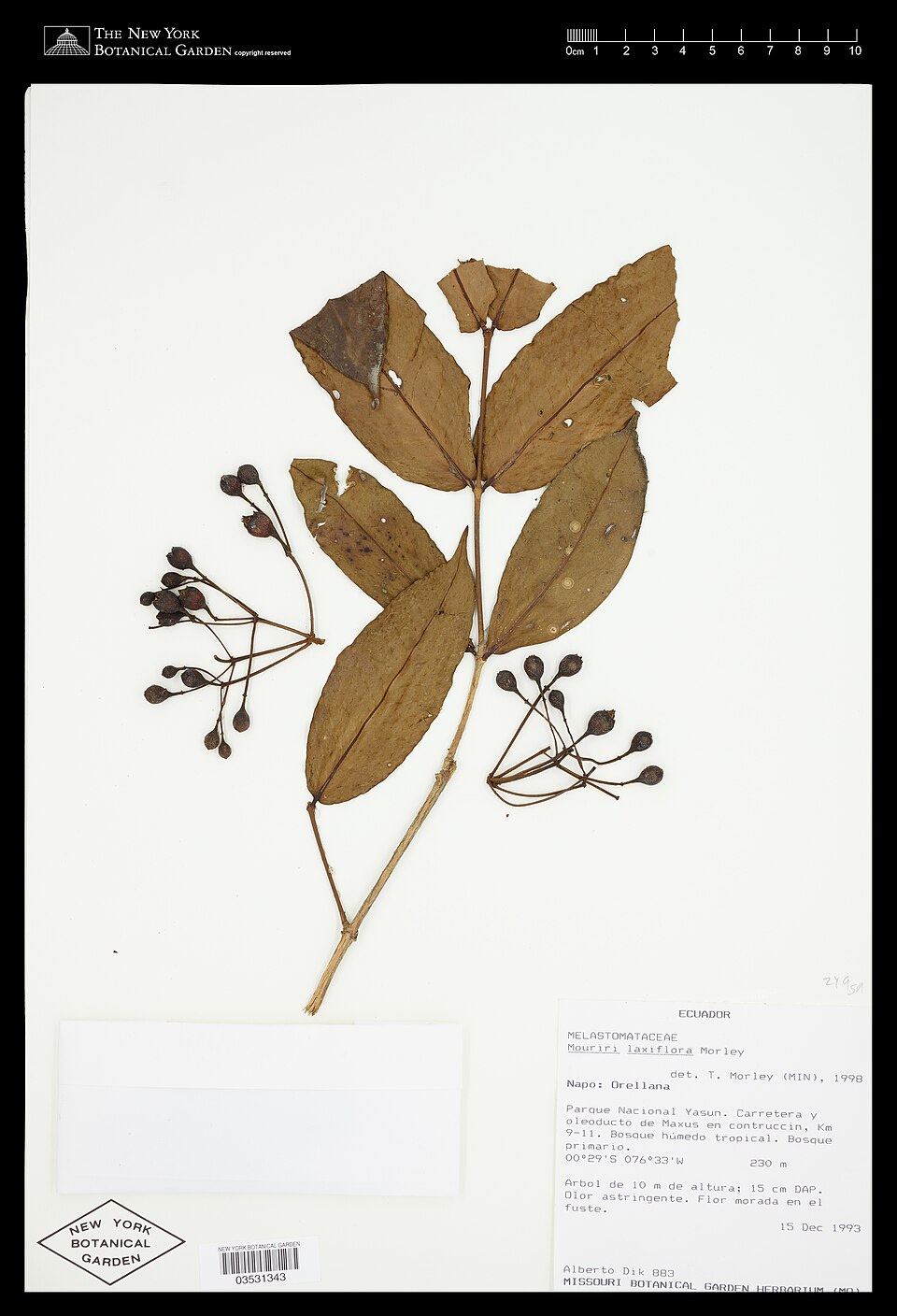
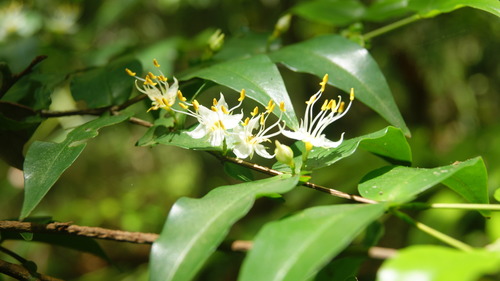
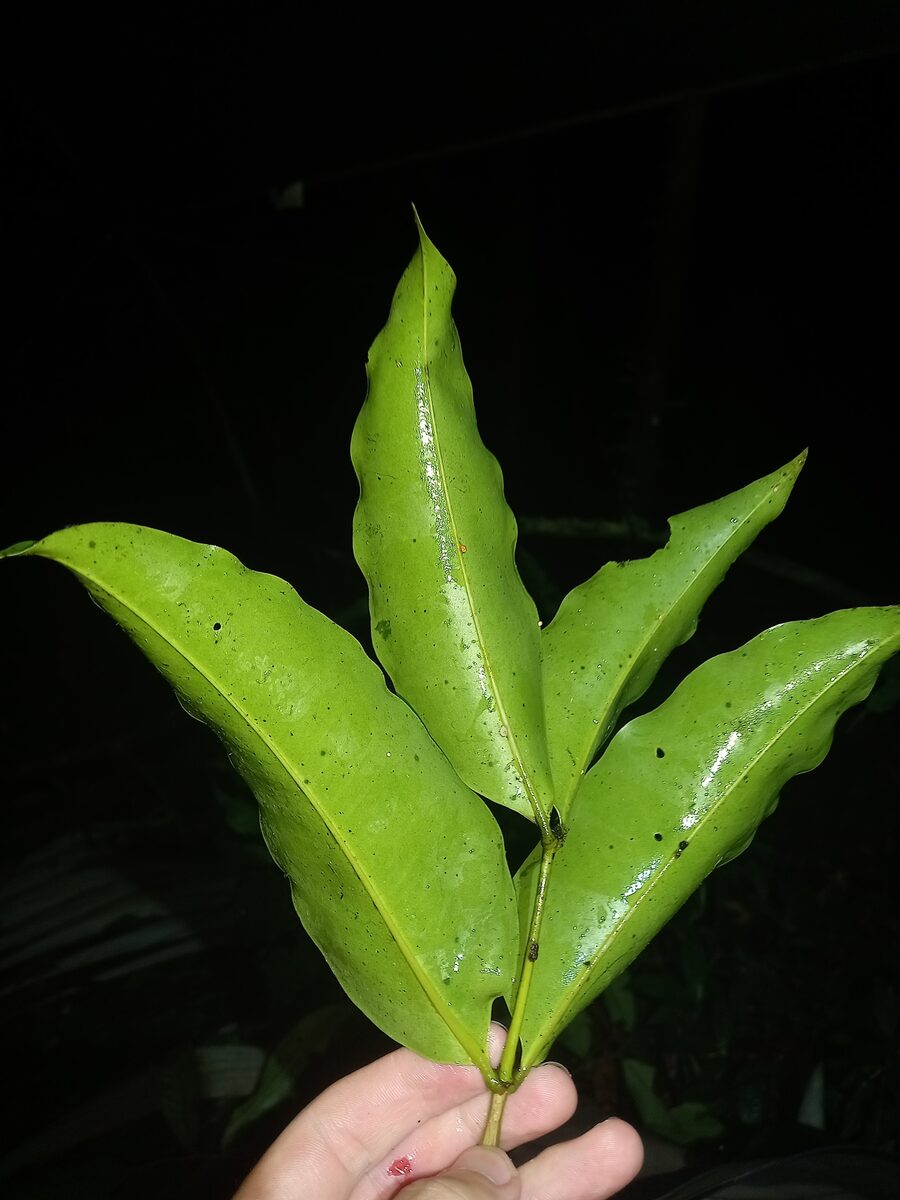
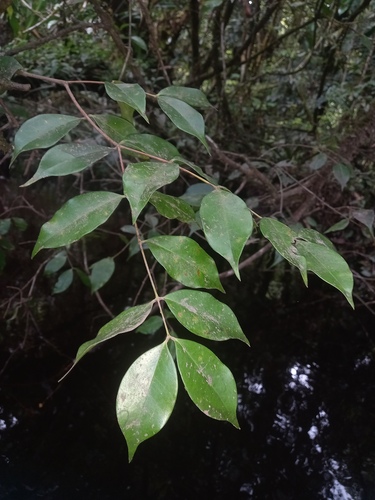
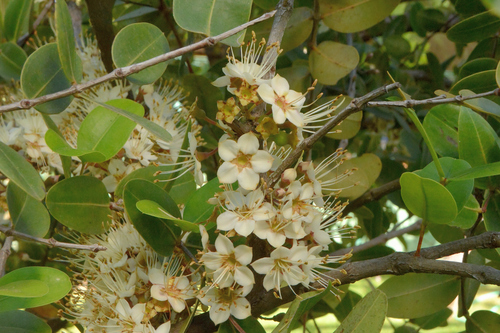
A small tree. It grows 23 m high. The leaves are opposite and simple. They are 10 cm long by 4 cm wide. They are oval. The flowers are blue to purple and 2 mm across. They are in bundles in the axils of leaves. The fruit are blue to purple and 8 mm long by 6 mm across. There are 1-2 seeds.
Edible Uses
This tree is valued as an ornamental and a source of wood for construction. The twigs can be taken and rubbed its ends as a natural toothbrush. Yellow colour dye can be extracted from the leaves and flowers, the dye is used to colour the robes of Buddhist monks. Leaves and roots are used as a medicine for dysentery and as an astringent.
Traditional Uses
The young leaves are eaten fresh or lightly boiled.
This uses section is brief — help expand it
Medicinal Uses
The bark is used to treat bruises. An infusion of the flowers is used to treat inflammation of the conjuctiva.
Distribution
It is a tropical plant. It grows in a range of forest types including swamp forest. It grows up to 1,400 m above sea level. It is often on alluvial sites near rivers. It is usually on sandy soils.
Where It Grows
Asia, Brunei, Cambodia, India, Indochina, Indonesia, Laos, Malaysia, Myanmar, Philippines, SE Asia, Singapore, Sri Lanka, Thailand, Vietnam,
Cultivation
Plants can be grown from seeds.
Propagation
Seed - Air layering
Other Uses
The leaves are rich in aluminium and have been used traditionally as a mordant for fixing the colour of dyes. A yellow and a crimson dye can be extracted from the leaves and flowers. It can be used for dyeing cottons and woven goods such as mats. The light brown wood is very hard, close-grained. Used for house posts and building boats. An excellent fuel, it also makes a good charcoal. We have no more specific information for this species, but in general the wood of Memecylon species is usually white to brown, very dense and heavy, sinking in water. It is also often very durable. Where the wood gets large enough it is often used traditionally for purposes such as poles, house posts, lumber and furniture. The wood of many species in the genus has a high calorific value and is often favoured as a fuel and for making charcoal.
Production
In southern India the plants fruit in April to May.
Notes
Also put in the family Memecylaceae.
Synonyms
Also Known As
Alimara, Basing, Byin-gale, Delek air, Kayu besi, Kebesi, Lee-ko-kee, Me-byaung, Mi-nauk, Moc, Nipis kulit, Obar, Pak mead aer, Phlong dam, Phlong mueat, Pohon delek air, Pohon kebes, Telinga
References (10)
- Cengel, D. J. & Dany, C., (Eds), 2016, Integrating Forest Biodiversity Resource Management and Sustainable Community Livelihood Development in the Preah Vihear Protected Forest. International Tropical Timber Organization p 120
- Khumgratok, S., Edible Plants in Cultural Forests of Northeastern Thailand. Mahasarakham University Thailand.
- McElwee, P. D., 2010, Resource Use Among Rural Agricultural Households Near Protected Area in Vietnam: The Social Costs of Conservation and Implications for Enforcement. Environmental Management 45:113-131
- Milow, P., et al, 2013, Malaysian species of plants with edible fruits or seeds and their evaluation. International Journal of Fruit Science. 14:1, 1-27
- Ravikrishna, S., 2011, Ethno-medico-botanical survey on Wild Edible fruits of Udupi Taluq, Udupi p 85
Show all 10 references Hide references
- Slik, F., www.asianplant.net
- Srichaiwong, P., et al, 2014, A Study of the Biodiversity of Natural Food Production to Support Community Upstream of Chi Basin, Thailand. Asian Social Science 10 (2):
- Suksri, S., et al, 2005, Ethnobotany in Bung Khong Long Non-Hunting Area, Northeast Thailand. Kasetsart J., (Nat. Sci) 39: 519-533
- Sukarya, D. G., (Ed.) 2013, 3,500 Plant Species of the Botanic Gardens of Indonesia. LIPI p 395
- World Checklist of Useful Plant Species 2020. Royal Botanic Gardens, Kew