Chamaecrista mimosoides
(L.) Greene
Sensitive Senna, Japanese Tea bush, Five-leaved Cassia
iNaturalist· cc-by-nc
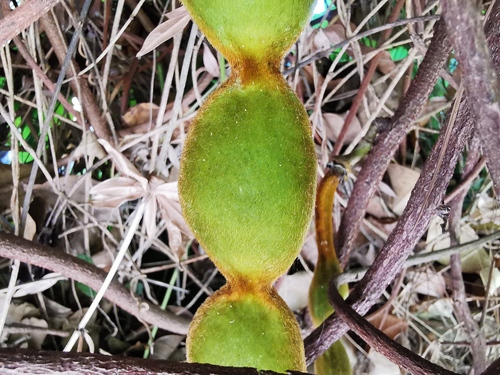
(c) Russell Cumming, some rights reserved (CC BY-NC), uploaded by Russell Cumming
iNaturalist· cc-by-nc
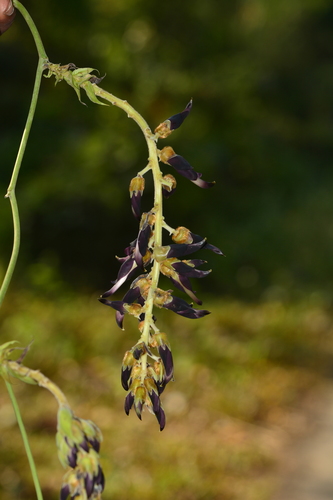
(c) Malcolm Tattersall, some rights reserved (CC BY-NC), uploaded by Malcolm Tattersall
iNaturalist· cc-by-nc
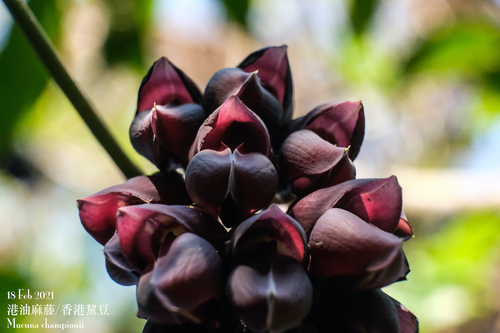
(c) berthapi2, some rights reserved (CC BY-NC), uploaded by berthapi2
Summary
Source: WikipediaChamaecrista mimosoides is a species of flowering plant in the plant family Fabaceae.
Description
A herb or small shrub. It can grow each year from seed or keep growing from year to year. It grows to 1 m high. The stem are wiry and come from a woody rootstock. It is a very variable plant. The leaves are 3-8 cm long and are made up of 20-80 pairs of small leaflets. These are 0.5 cm long by 0.1 cm wide. They are very narrow, thin and crowded. The leaf stalk has a round gland near the top. They have sharp points. They clasp one another along the stalk. They are sensitive to touch. The flowers are about 2 cm across. They occur either on their own or as 2-3 together. They occur in the axils of upper leaves. They are bright yellow. The fruit are straight narrow pods. The pods are 3-4 cm long and 0.5 cm across. They are flattened. There are about 20-25 seeds.
Edible Uses
The young leaves are used as tea. The shoots and young leaves are cooked as a vegetable. The young tender pods are boiled and eaten. The fully ripe seeds are boiled.
Traditional Uses
The young leaves are used as tea. The shoots and young leaves are cooked and used as a vegetable. The young tender pods are boiled and eaten. The fully ripe seeds are boiled.
Medicinal Uses
In India, the root of Chamaecrista mimosoides is traditionally used to treat diarrhea and stomach spasms. The powdered leaves are applied for dressing wounds and sores, as well as for managing mouth ulcers, stomach spasms, and headaches.
Known Hazards
The plant is considered edible for cattle, though at the same time it is also often considered unsuitable for fodder because it contains toxins such as the anthraquinone chrysophenol.
Distribution
A tropical plant. It grows in upland savannah and bushland. It is often along rivers and ditches. In Ethiopia it grows between 1,000 and 2,800 metres altitude. In Papua New Guinea it grows between 60 and 1800 m altitude. It grows in grassland and can grow in standing water. It grows from sea level to 1,750 m above sea level. It is often in dry sandy soil. It can grow in arid places.
Where It Grows
Africa, Angola, Asia, Australia, Benin, Botswana, Cameroon, Central Africa, China, Congo, Côte d'Ivoire, East Africa, Eswatini, Ethiopia, Gabon, Gambia, Ghana, Guinea, Guinée, Guinea-Bissau, Himalayas, India, Indochina, Indonesia, Ivory Coast, Kenya, Laos, Liberia, Madagascar, Malawi, Malaysia, Mali, Mauritius, Mozambique, Namibia, Nepal, Niger, Nigeria, Pacific, Papua New Guinea, PNG, Philippines, Sahel, SE Asia, Senegal, Seychelles, Sierra Leone, South Africa, Southern Africa, Sri Lanka, Sudan, Swaziland, Tanzania, Thailand, Togo, Uganda, Vietnam, West Africa, Zambia, Zimbabwe,
Cultivation
Plants are grown from seed.
Propagation
Seed - it has a hard seedcoat and may benefit from scarification before sowing in order to speed up and improve germination. This can usually be done by pouring a small amount of nearly boiling water on the seeds (being careful not to cook them!) and then soaking them for 12 - 24 hours in warm water. By this time they should have imbibed moisture and swollen - if they have not, then carefully make a nick in the seedcoat (being careful not to damage the embryo) and soak for a further 12 hours before sowing.
Other Uses
Plants are grown for improving the soil. A self-seeding green manure plant, providing a light ground cover and stabilizing loose sandy soils. Opinions on usefulness vary. The plant has been recommended as a shade and cover plant in tea plantations at elevations around 1,500 metres in India, though it is also considered a weed there and in Sri Lanka.
Production
They grow quickly. Plants can be short lived.
Other Information
It is not known if they are used in Papua New Guinea.
Notes
There are 100 Cassia species. This group has been revised to a smaller more consistent group. Also as Caesalpinaceae.
Synonyms
Also Known As
Ajuwajuwa, Amala jhar, Cila-canto-uenrao, Dinding, Fish-bone cassia, Imbubu, Jewer, Jirhul, Kedingding, Lajari, Makam-bia, Merendim, Merendinlole-faro, Muong trinhnu, Netendim, Sendjoel, Tequeli-toquedi, Umbonisela, Umnyana, Unobothungwana
References (27)
- Burkill, I.H., 1966, A Dictionary of the Economic Products of the Malay Peninsula. Ministry of Agriculture and Cooperatives, Kuala Lumpur, Malaysia. Vol 1 (A-H) p 483 (As Cassia mimosoides)
- Dalziel, 1937 (As Cassia)
- Ekka, N. S. & Ekka, A., 2016, Wild Edible plants Used by Tribals of North-east Chhattisgarh (Part-I), India. Research Journal of Recent Sciences. Vol. 5(ISC-2015), 127-131 (2016) (As Cassia)
- FAO, 1988, Traditional Food Plants, FAO Food and Nutrition Paper 42. FAO Rome p 158 (As Cassia mimosoides)
- Jardin, C., 1970, List of Foods Used In Africa, FAO Nutrition Information Document Series No 2.p 64 (As Cassia mimosoides)
Show all 27 references Hide references
- Kiran, K. C., et al, 2019, Diversity and Seasonal Availability of Potential Wild Edible Plants from Vidarbha Region of Maharashtra State, India. Int.J.Curr.Microbiol.App.Sci (2019) 8(2): 1434-1446 (As Cassia mimosoides)
- Lazarides, M. & Hince, B., 1993, Handbook of Economic Plants of Australia, CSIRO. p 50 (As Cassia mimosoides)
- Luo, B., et al, 2019, Wild edible plants collected by Hani from terraced rice paddy agroecosystem in Honghe Prefecture, Yunnan, China. Journal of Ethnobiology and Ethnomedicine 15:56
- Martin, F.W. & Ruberte, R.M., 1979, Edible Leaves of the Tropics. Antillian College Press, Mayaguez, Puerto Rico. p 107, 198 (As Cassia mimosoides)
- Elliot, W.R., & Jones, D.L., 1982, Encyclopedia of Australian Plants suitable for cultivation. Vol 2. Lothian. p 472 (As Cassia mimosoides)
- Levitt, D., 1981, Plants and people. Aboriginal uses of plants on Groote Eylandt, Australian Institute of Aboriginal Studies, Canberra. p 85 (As Cassia mimosoides)
- Manandhar, N.P., 2002, Plants and People of Nepal. Timber Press. Portland, Oregon. p 140 (As Cassia mimosoides)
- McMakin, P.D., 2000, Flowering Plants of Thailand. A Field Guide. White Lotus. p 68 (As Cassia mimosoides)
- Peekel, P.G., 1984, (Translation E.E.Henty), Flora of the Bismarck Archipelago for Naturalists, Division of Botany, Lae, PNG. p 221, 222 (As Cassia mimosoides)
- Peters, C. R., O'Brien, E. M., and Drummond, R.B., 1992, Edible Wild plants of Sub-saharan Africa. Kew. p 122
- Pickering, H., & Roe, E., 2009, Wild Flowers of the Victoria Falls Area. Helen Pickering, London. p 72
- Pham-Hoang Ho, 1999, An Illustrated Flora of Vietnam. Nha Xuat Ban Tre. p 849 (As Cassia mimosoides)
- PROSEA (Plant Resources of South East Asia) handbook, Volume 2, 1991, Edible fruits and nuts.
- READ, (As Cassia mimosoides)
- Royal Botanic Gardens, Kew (1999). Survey of Economic Plants for Arid and Semi-Arid Lands (SEPASAL) database. Published on the Internet; http://www.rbgkew.org.uk/ceb/sepasal/internet [Accessed 21st April 2011]
- Ruiters-Welcome, A. K., 2019, Food plants of southern Africa. Ph.D. thesis. Univ. of Johannesburg p 56
- Sp. pl. 1:379. 1753 (As Cassia mimosoides)
- Swaziland's Flora Database http://www.sntc.org.sz/flora
- van Wyk, Ben-Erik, 2019, The diversity and multiple uses of southern African legumes. Australian Systematic Botany, 2019, 32, 519–546
- Verdcourt, B., 1979, Manual of New Guinea Legumes. Botany Bulletin No 11, Division of Botany, Lae, Papua New Guinea. p 50 (As Cassia mimosoides)
- Welcome, A. K. & Van Wyk, B.-E., 2019, An inventory and analysis of the food plants of southern Africa. South African Journal of Botany 122 (2019) 136–179
- World Checklist of Useful Plant Species 2020. Royal Botanic Gardens, Kew