Miconia ibaguensis
(Bonpl.) Triana
Bird seed
iNaturalist· cc-by-nc
(c) Laurent Quéno, some rights reserved (CC BY-NC), uploaded by Laurent Quéno
iNaturalist· cc-by-nc
(c) Mabelin, some rights reserved (CC BY-NC)
Description
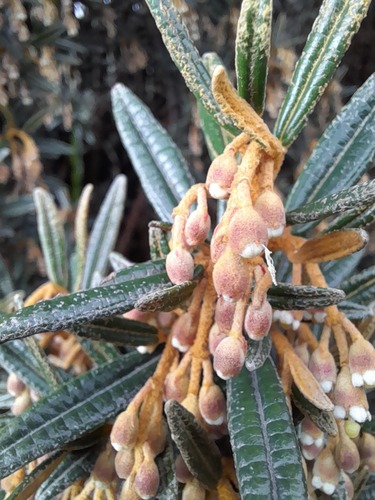
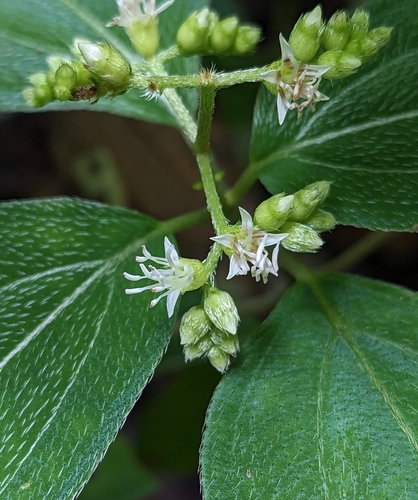
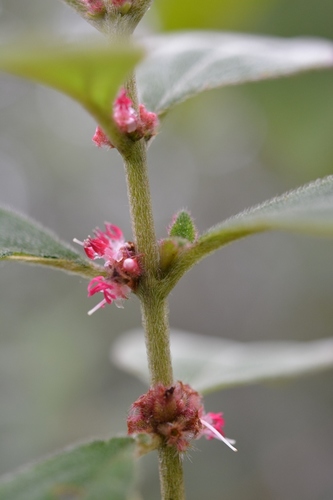
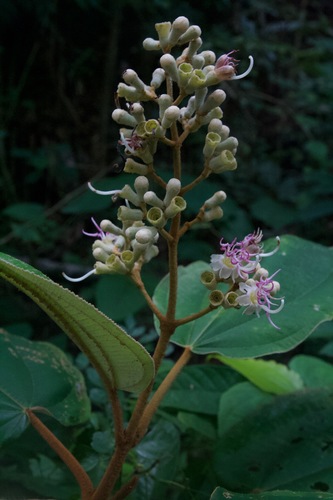
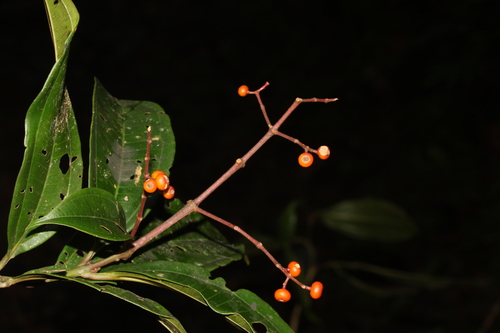
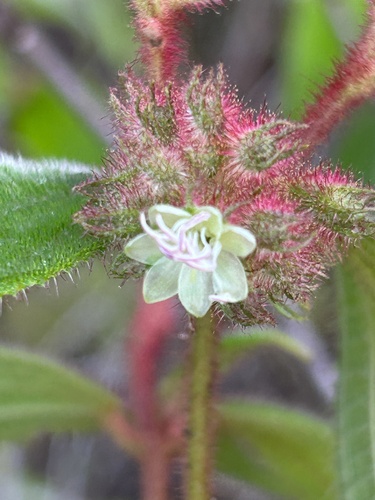
A shrub. The leaves have reddish veins underneath. The flowers are white. They are in groups at the ends of branches. The fruit are black berries.
Edible Uses
The black berries are edible and are eaten especially by children.
Distribution
It is a tropical plant. It grows in secondary forests along roads.
Where It Grows
America, Belize, Bolivia, Brazil, Central America, Colombia, Costa Rica, Cuba, Ecuador, El Salvador, Guatemala, Guianas, Guyana, Honduras, Mexico, Nicaragua, Panama, Peru, South America, Suriname, Trinidad-Tobago, Venezuela,
Other Information
The fruit are eaten especially by children.
Synonyms
Acinodendron ibaquense (Bonpl.) KuntzeMelastoma ibaguense Bonpl.Clidemia chamissois Naudinand several others
Also Known As
Uva, Waraia
References (5)
- Kew Plants of the World On line
- Reis, S. V. and Lipp, F. L., 1982, New Plant Sources for Drugs and Foods from the New York Botanical Garden herbarium. Harvard. p 214
- Roa, J. A. G. & Boada, D. S. G., 2018, Fundación para el Fortalecimiento de la Fruticultura y Plantas Alimenticias no Convencionales en Colombia.
- Torre, de la, L., et al, 2008, Enciclopedia de las Plantas Útiles del Ecuador. Herbario QCA. Pontificia Universidad Católica del Ecuador. p 429
- van Andel, T., 2000, Useful plants of Guyana. Non-timber forest products of the North-West District of Guyana. Part 2. A Field Guide. Tropenbos-Guyana Programme. p 289