Mammea usambarensis
Verdc.
gbif· cc-by-nc-sa
MBG
gbif· cc-by-nc-sa
MBG
gbif· cc-by-nc-sa
MBG
Summary
Source: WikipediaMammea usambarensis is a species of flowering plant in the Calophyllaceae family. It is found only in Tanzania.
Description
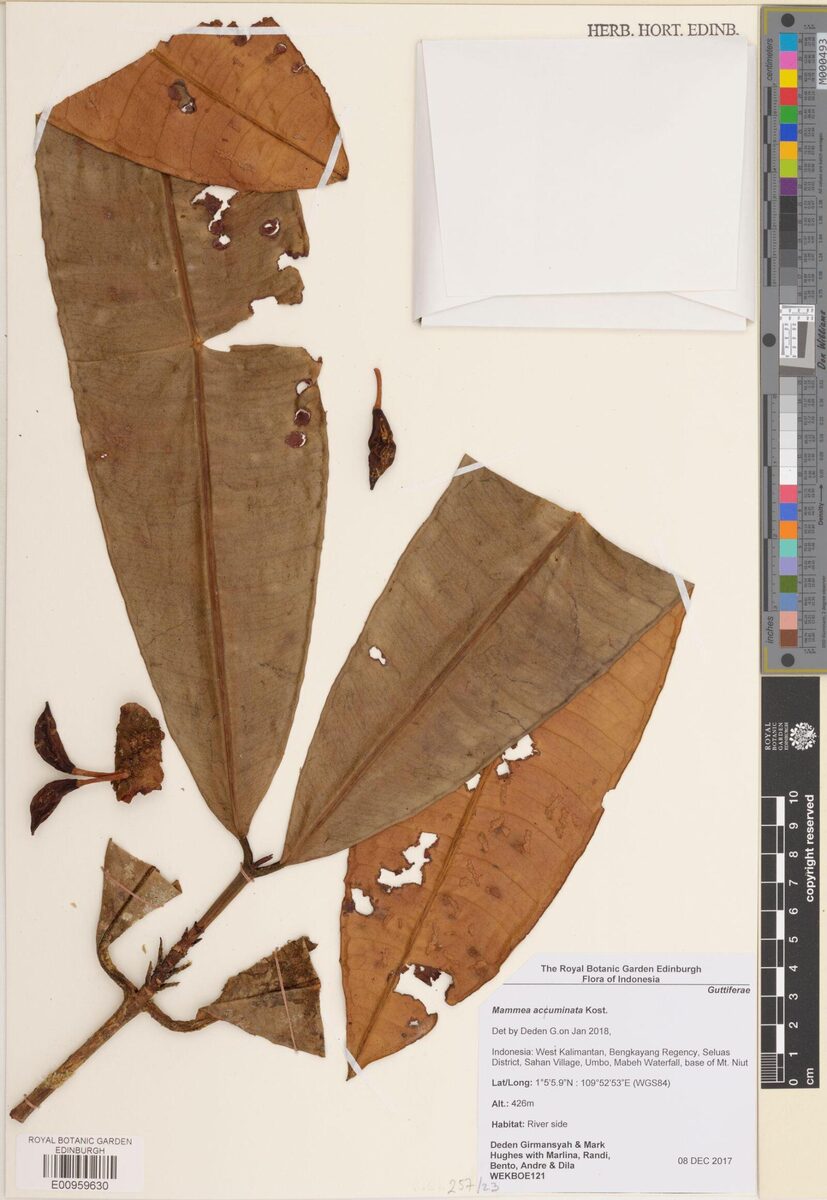
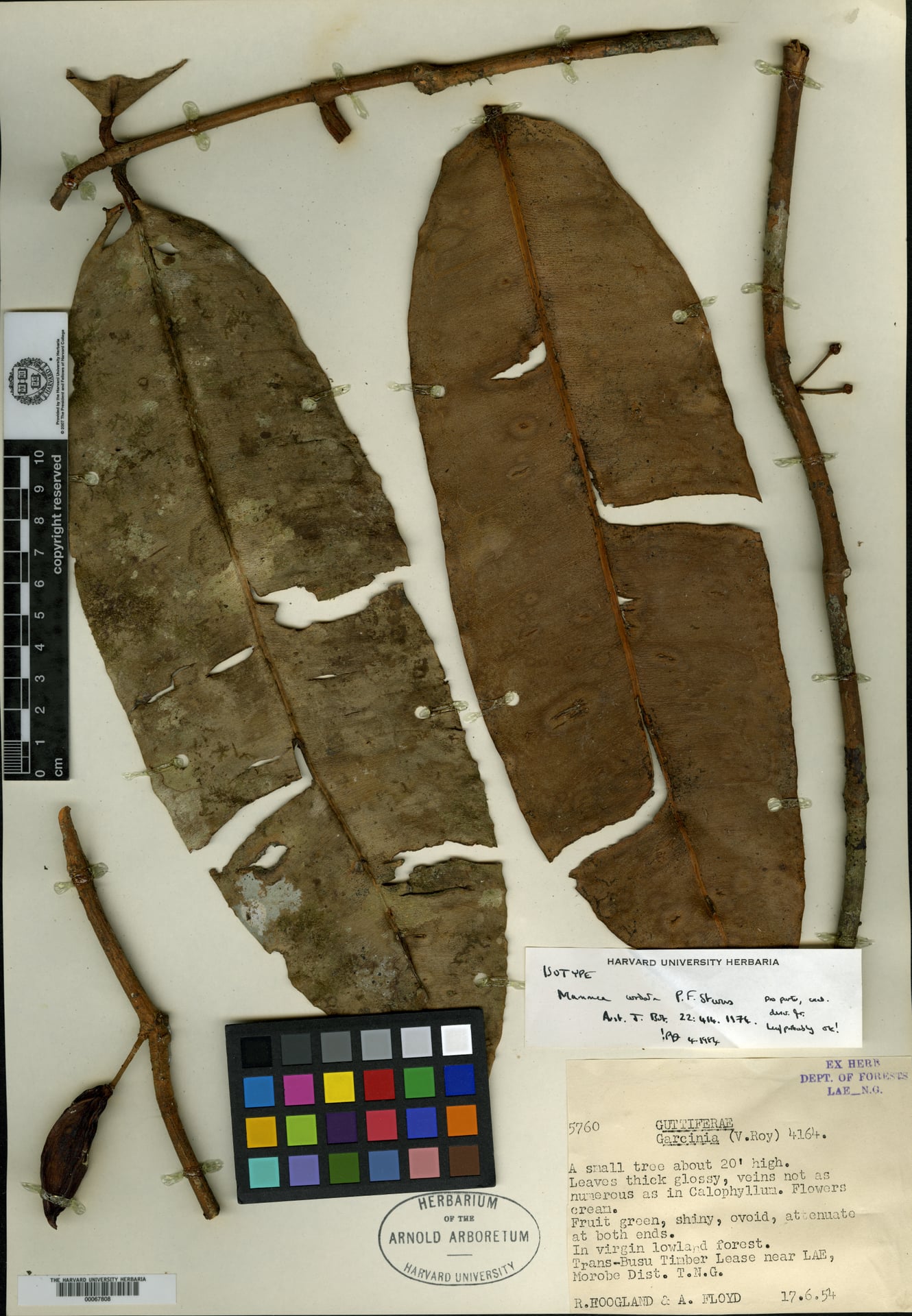
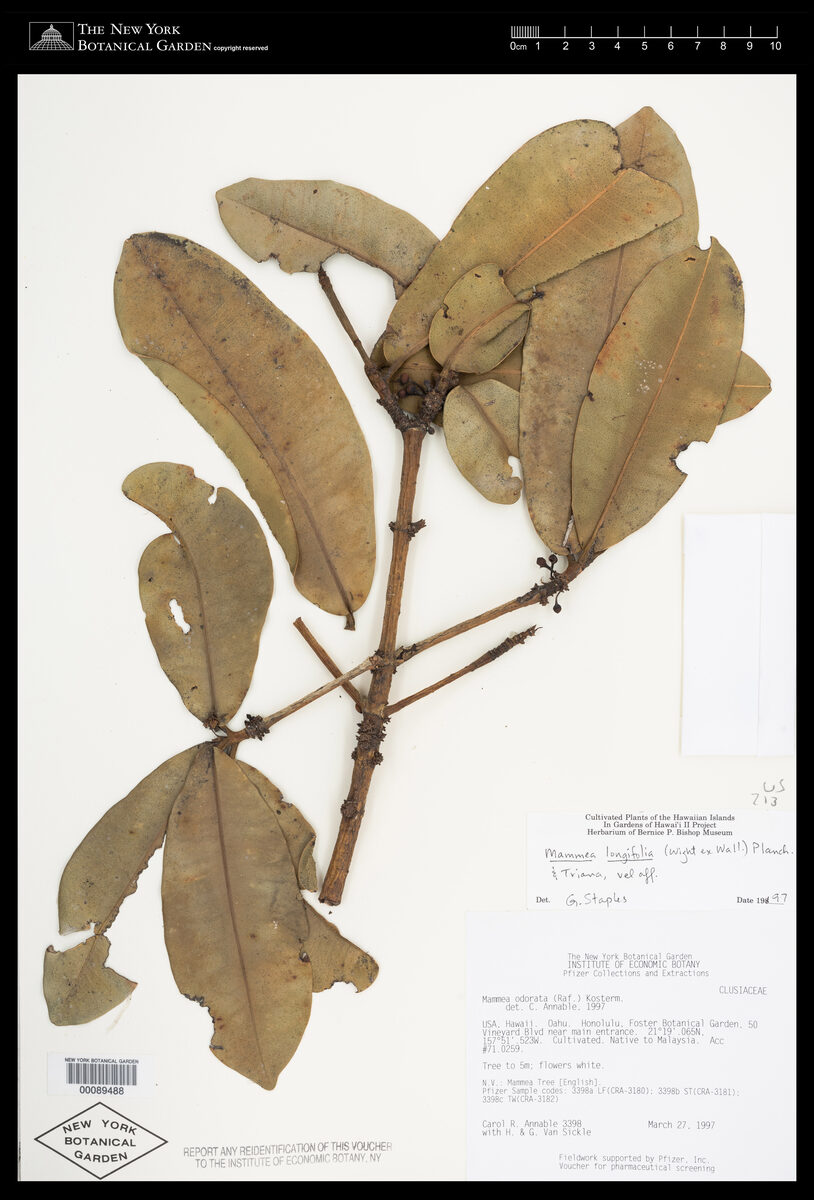
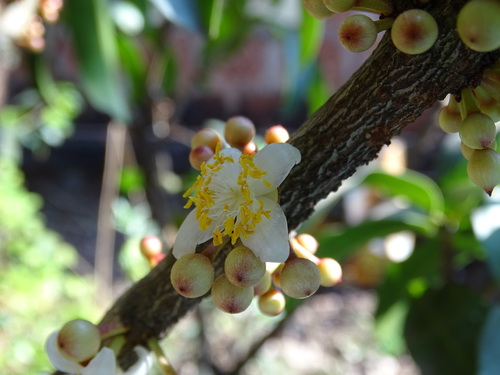
A tree. It grows 30 m tall. The trunk is straight. The bark is grey to red brown and smooth and flaking. The leaves are simple and opposite. They are 14-29 cm long by 7-9 cm wide. They are oblong and wedge shaped at the base and taper to the tip. The flowers are white and in groups in the axils of leaves. The fruit are pale green to yellow and flattened. They are 4-7 cm long by 4-7 cm wide.
Edible Uses
The ripe fruit are juicy and eaten raw, with a sweet but acidic taste. The seeds are roasted and eaten, especially by children.
Traditional Uses
The ripe fruit are juicy and eaten raw. They are sweet but acidic. The seeds are roasted and eaten.
This uses section is brief — help expand it
Medicinal Uses
Not mentioned in available data.
Distribution
It is a tropical plant. It grows in mountain forest. In Tanzania it grows between 1,600-2,100 m above sea level.
Where It Grows
Africa, East Africa, Tanzania,
Cultivation
Plants can be grown from fresh seeds.
Other Uses
The bark produces a yellow dye. The wood is used for timber, building poles, tool handles, spoons and bedsteads. The wood is used for fuel.
Production
Fruit are collected from November to April.
Other Information
The seeds are especially eaten by children.
Notes
Also put in the family Clusiaceae.
Also Known As
Ikongwe, Mbuni, Muikongwe
References (6)
- http://www.fao.org/forestry/25323-096344a3de335832e8f363c3ac5184a66.pdf
- Lovett, J. C. et al, Field Guide to the Moist Forest Trees of Tanzania. p 67
- Makonda, F. B. S., & Ruffo, C. K., 2011, Species List. NAFORMA, Tanzania
- Msuya, T. S., et al, 2010, Availability, Preference and Consumption of Indigenous Foods in the Eastern Arc Mountains, Tanzania, Ecology of Food and Nutrition, 49:3, 208-227
- Ruffo, C. K., Birnie, A. & Tengnas, B., 2002, Edible Wild Plants of Tanzania. RELMA p 452
Show all 6 references Hide references
- World Checklist of Useful Plant Species 2020. Royal Botanic Gardens, Kew