Mammea longifolia
(Wight) Planch. & Triana
Indian laurel
gbif· cc-by
The New York Botanical Garden
gbif· cc-by
Royal Botanic Gardens, Kew
gbif· cc-by
Royal Botanic Gardens, Kew
Description
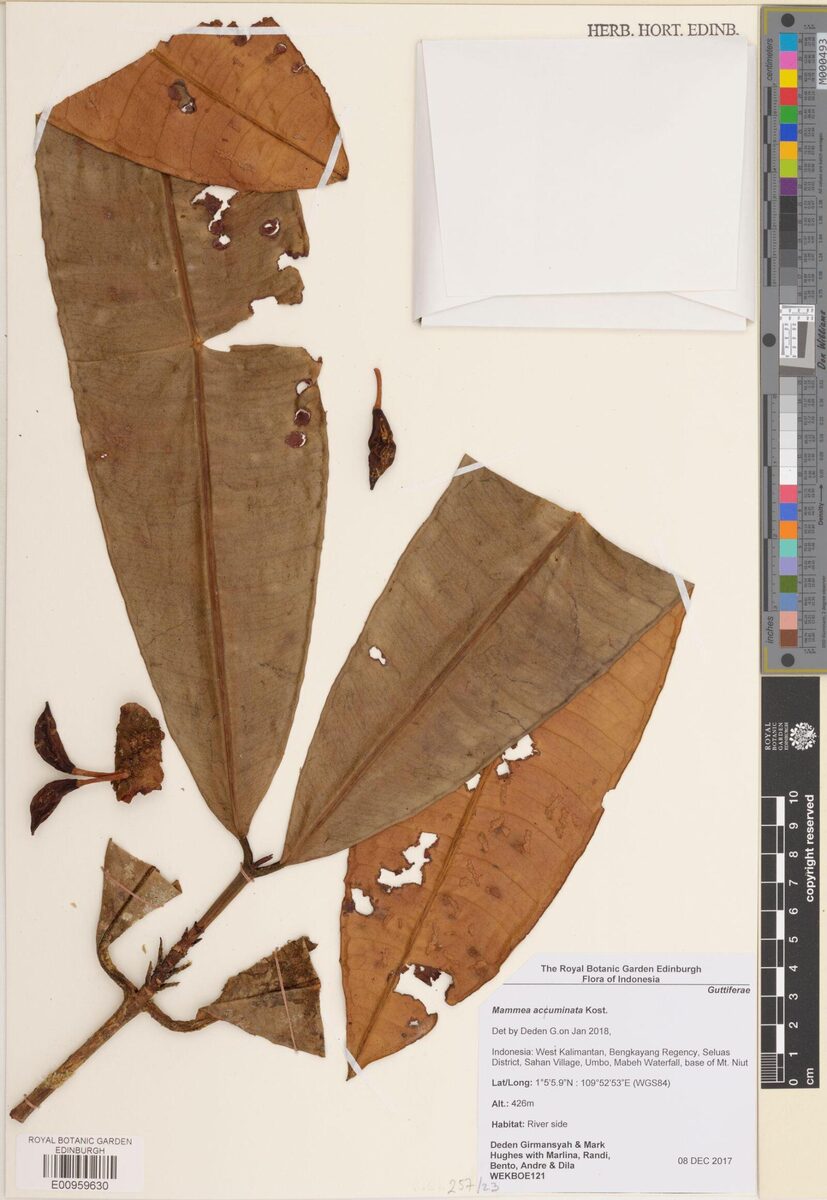
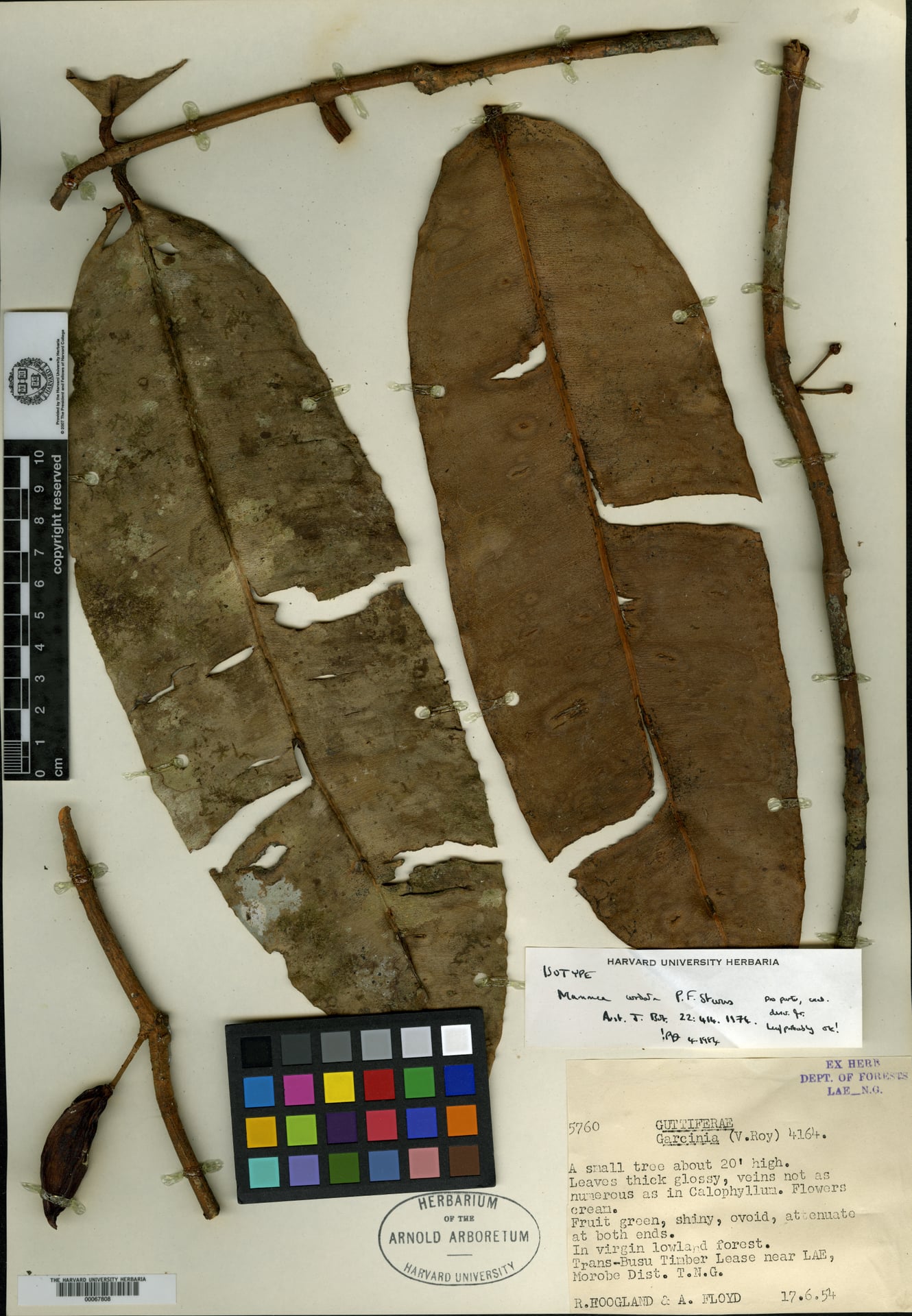
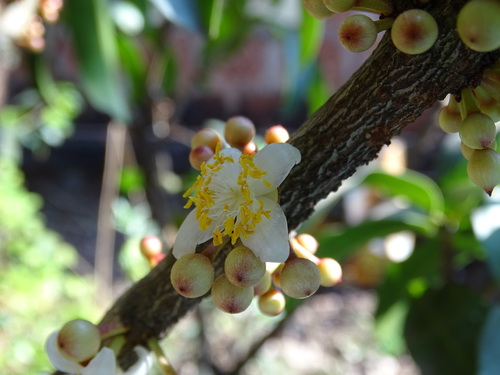
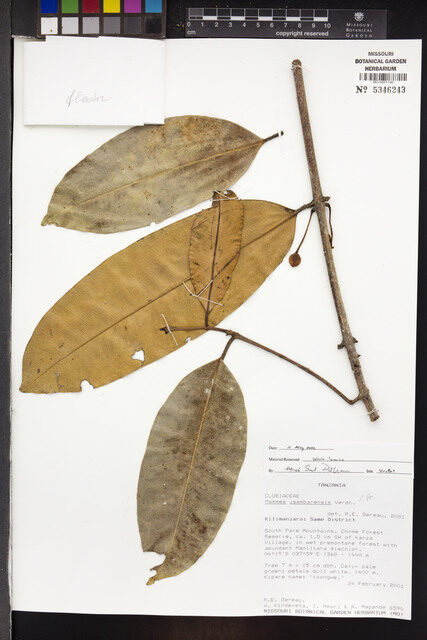
A large tree. It grows 18 m tall. The bark is rough. The small branches are 4 angled. The leaves are opposite at the ends of branches. The leaves are oblong to sword shaped. They are 12-20 cm long by 5-8 cm wide. Flowers can have male and female parts in separate flowers or in the same flower. They are white or pink and about 1 cm across. The fruit are oval berries 2-3 cm long by 1-1.5 cm wide. There are 1-4 seeds. These are 2 cm long by 1 cm wide. The fruit is like an acorn.
Edible Uses
The fruit and buds (used as a spice) are edible.
Distribution
A tropical plant. It grows in evergreen and deciduous forests.
Where It Grows
Africa, Asia, Bangladesh, East Africa, India, Madagascar,
Production
In south India plants flower and fruit March to July.
Notes
There are about 27 Mammea species. They grow in the tropics. Also put in the family Clusiaceae.
Synonyms
Also Known As
Churiana, Gardundi, Nagakesara, Nagappu, Nagesar, Nagesarpu, Nagkesar, Punnag, Ratinagkesar, Seraya, Suragi, Suraponna, Suran-punna, Suringi, Wundi
References (6)
- Ambasta, S.P. (Ed.), 2000, The Useful Plants of India. CSIR India. p 353
- Burkill, I.H., 1966, A Dictionary of the Economic Products of the Malay Peninsula. Ministry of Agriculture and Cooperatives, Kuala Lumpur, Malaysia. Vol 2 (I-Z) p 1596 (As Ochrocarpus longifolius)
- Hedrick, U.P., 1919, (Ed.), Sturtevant's edible plants of the world. p 444 (As Ochrosia longifolius)
- Jardin, C., 1970, List of Foods Used In Africa, FAO Nutrition Information Document Series No 2.p 150 (As Ochrocarpus longifolius)
- Singh, H.B., Arora R.K.,1978, Wild edible Plants of India. Indian Council of Agricultural Research, New Delhi. p 66
Show all 6 references Hide references
- WATT (As Ochrocarpus longifolius)