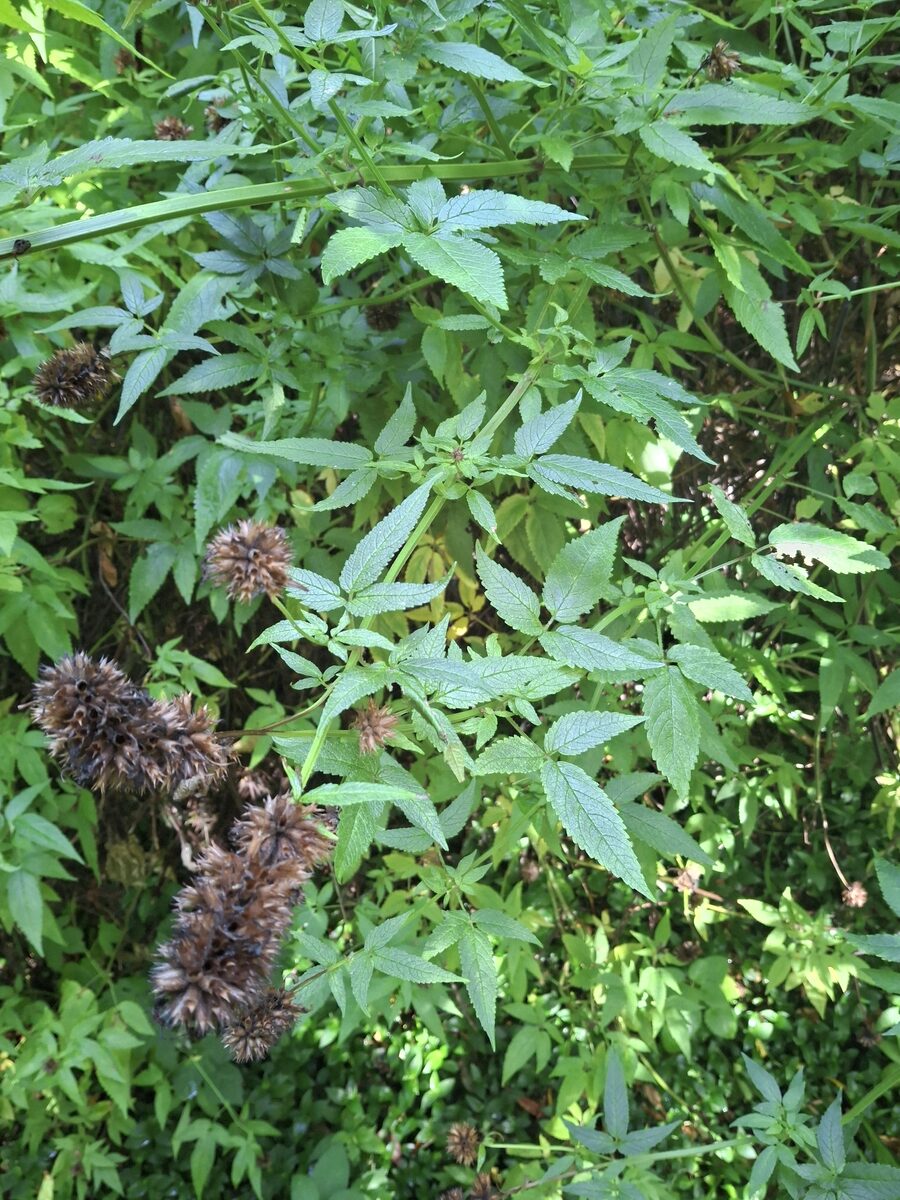
Clinopodium thymifolium
(Scop.) Kuntze
Mountain mint, Savoury of Greece, Balkan mint
Lamiaceae Edible: Leaves - tea, Leaves - flavouring
wikimedia· cc-by-sa
Wikimedia Commons - Pavle Cikovac
wikimedia· cc-by-sa
Wikimedia Commons - Syrio
Description
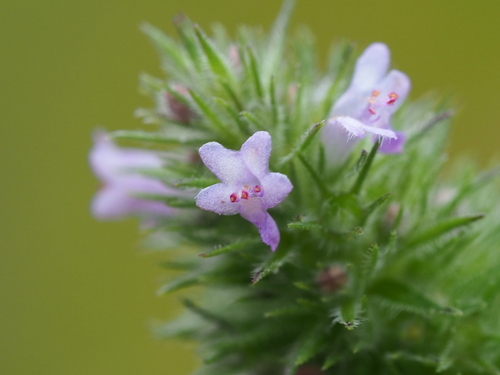
A herb. It keeps growing from year to year. It forms tufts. It grows 1 m tall. It spreads 60 cm wide. The leaves are narrow and dark green. They are 5-20 mm long and narrowly oval. There can be teeth near the tip. The flowers are white and purple. They are 5-9 mm long.
Edible Uses
The leaves are used fresh as tea and as a flavoring herb.
Distribution
It is a Mediterranean climate plant. It needs to be in full sun and a dry, well-drained soil. It suits hardiness zones 5-9.
Where It Grows
Australia, Balkans, Bosnia, Europe, Greece*, Hungary, Mediterranean, Tasmania,
Synonyms
Calamintha alba (Waldst. & Kit.) Rchb.Calamintha officinalis var. alba (Waldst. & Kit.) NymanCalamintha rupestris (Wulfen) HostCalamintha thymifolia (Scop.) Rchb.Cuspidocarpus rupestris (Wulfen) Spenn.Cuspidocarpus thymifolius (Scop.) KuntzeMelissa alba Waldst. & Kit.Melissa thymifolia (Scop.) Benth.Melissa croatica (Spreng.) WeldenMicromeria rupestris (Wulfen) Benth.Micromeria thymifolia (Scop.) FritschNepeta croatica Spreng.Nepeta pumila Spreng.Satureja rupestris WulfenSatureja thymifolia Scop.Thymus albus LinkThymus duinensis Moretti ex Rchb.
References (1)
- Redzic, S., 2010, Use of Wild and Semi-Wild Edible Plants in Nutrition and Survival of People in 1430 Days of Siege of Sarajevo during the War in Bosnia and Herzegovina (1992–1995). Coll. Antropol 34 (2010) 2:551-570 (As Micromeria thymifolium)