Quercus peninsularis
Trel.
iNaturalist· cc-by-nc
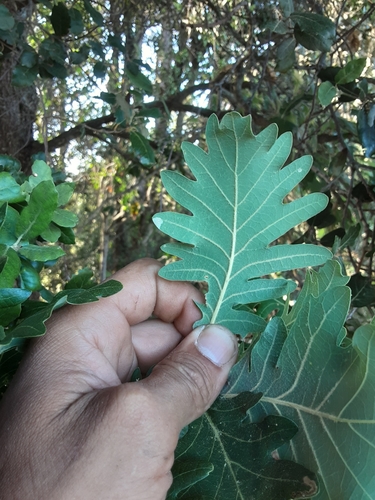
(c) Christian Schwarz, some rights reserved (CC BY-NC), uploaded by Christian Schwarz
iNaturalist· cc-by-nc-sa
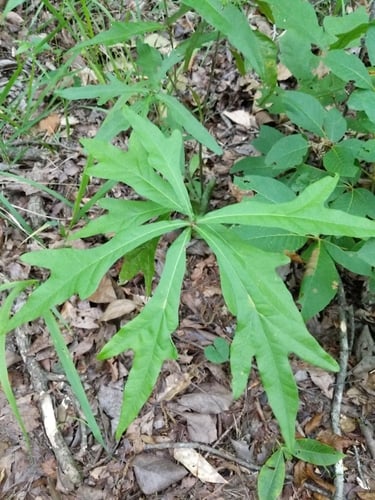
(c) Cristian A. D. Meling L., some rights reserved (CC BY-NC-SA)
iNaturalist· cc-by-nc-sa
(c) Cristian A. D. Meling L., some rights reserved (CC BY-NC-SA)
Summary
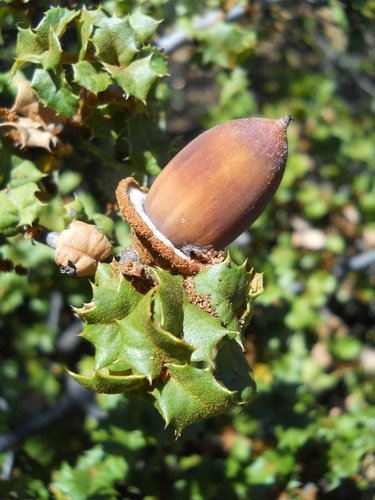
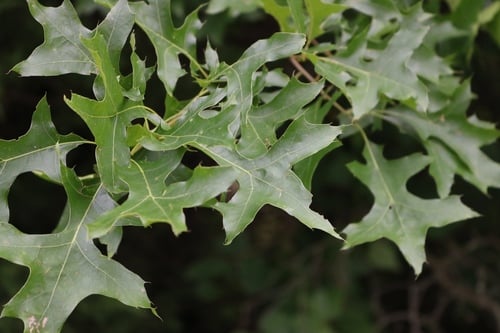
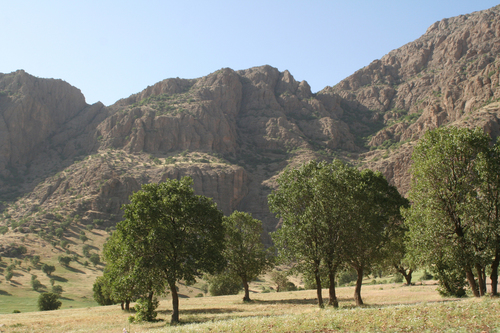
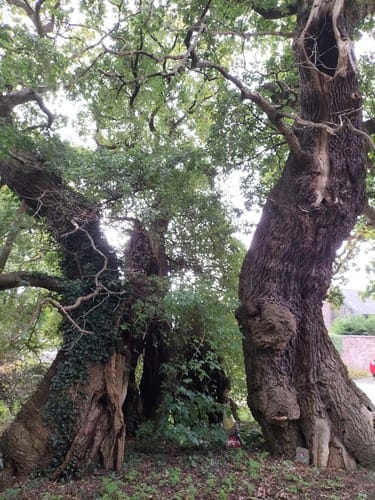
Source: WikipediaQuercus peninsularis, common name peninsular oak, is a species of oak endemic to Baja California, Mexico. It is a shrub or small tree to 10 m, occurring in mountain valleys and canyons up to 3000 m. It is placed in section Lobatae. Leaves are 5–8 cm, flat, leathery and hairy, with pointed tips and 2–5 pairs of teeth. Flowers occur in 3 cm catkins. Fruits are 1.5 cm acorns, stemless, ovoid, with hairy cupules, maturing in a year. Mature bark is reddish; young twigs are thin and hairy.
Description
A temperate oak tree of the Fagaceae family.
This description is brief — help expand it
Edible Uses
The acorns are pounded, sun dried, ground, and leached before consumption.
Traditional Uses
The acorns are pounded, sun dried, ground and leached.
This uses section is brief — help expand it
Distribution
It is a temperate plant.
Where It Grows
North America, USA,
References (1)
- Moerman, D. F., 2010, Native American Ethnobotany. Timber Press. p 464