Cleome maculata
(Sond.) Szyszl.
iNaturalist· cc-by-nc
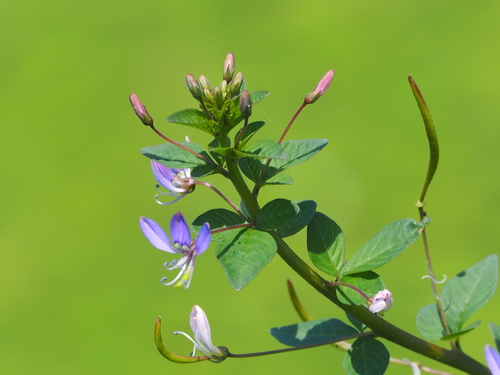
(c) Craig Peter, some rights reserved (CC BY-NC), uploaded by Craig Peter
iNaturalist· cc-by-nc
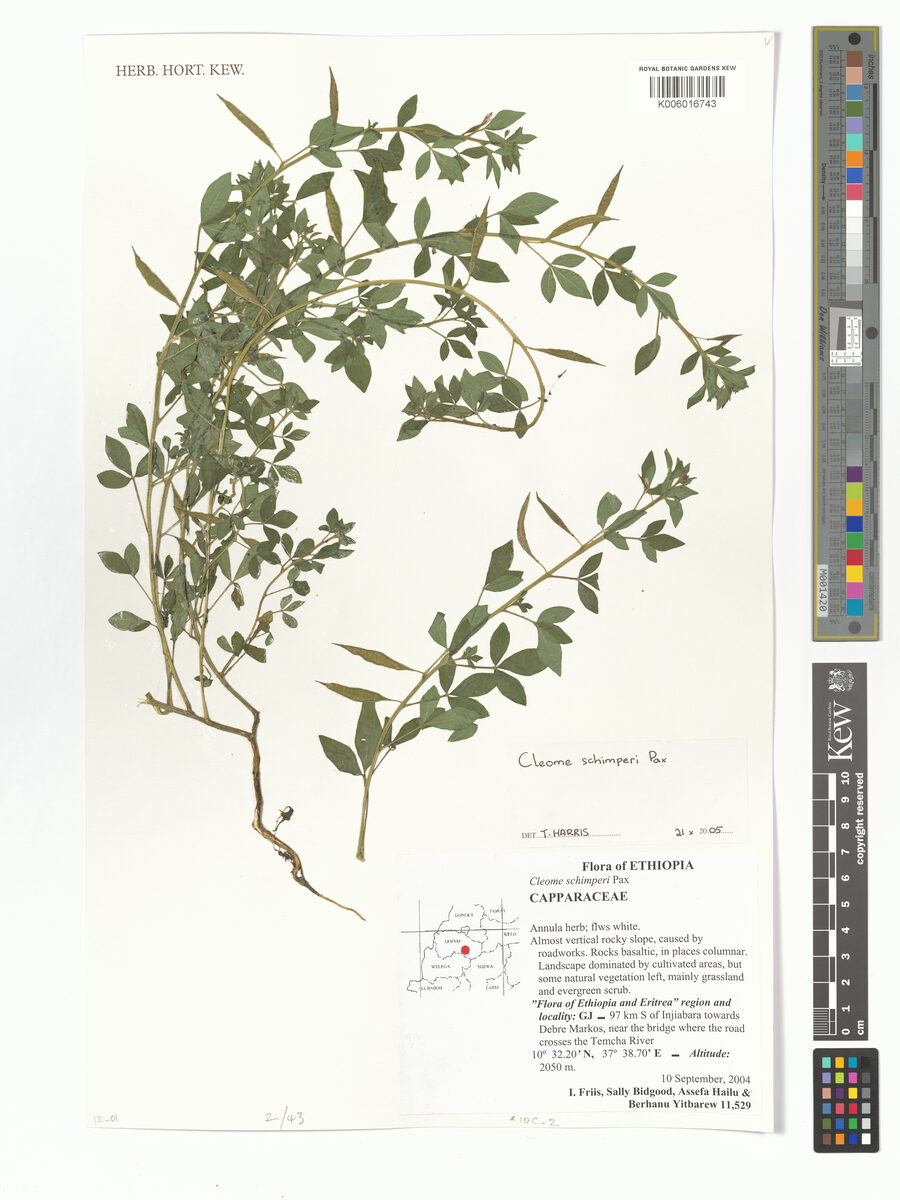
(c) Corné Rautenbach, some rights reserved (CC BY-NC), uploaded by Corné Rautenbach
iNaturalist· cc-by-nc
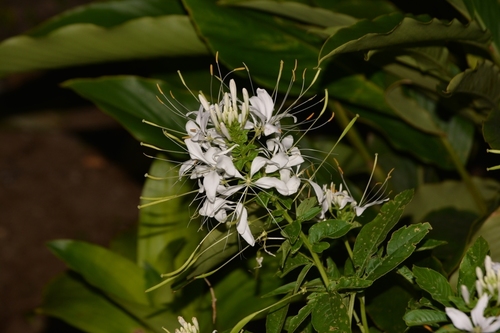
(c) Jaunne-Marelize Van Tonder, some rights reserved (CC BY-NC), uploaded by Jaunne-Marelize Van Tonder
Summary
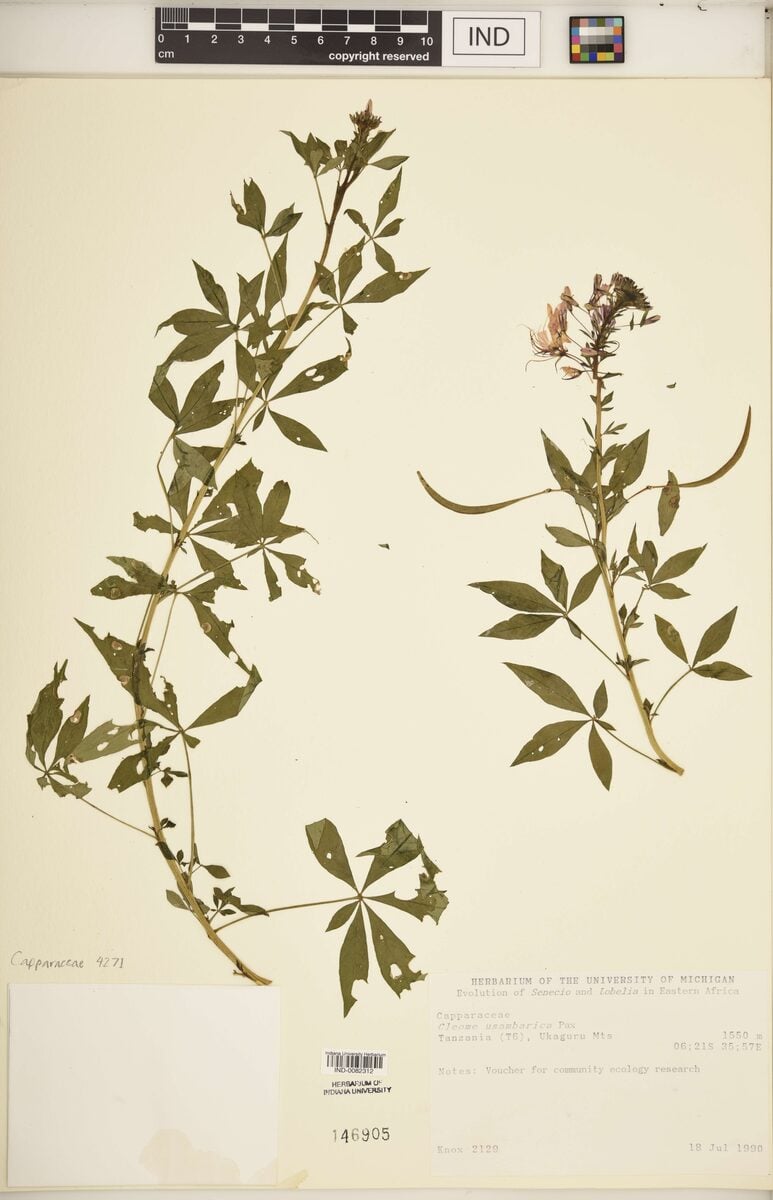
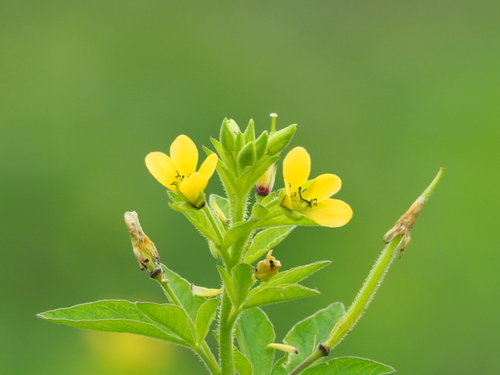
Source: WikipediaCleome maculata is a species of cleome that is native to southern Africa, where it occurs in sandy soils, especially in rocky habitats, and on slopes. It is a mostly annual plant, which is found in highveld regions of medium rainfall in South Africa, Botswana and Namibia. It is an erect and simple or branching plant, usually less than a foot tall, with sparse leaves. The linear leaflets are three to five compound. Two of the up-curved, mauve flower petals have a yellow mark at their center, which is bordered with dark purple. The long, up-curved stamens are tipped with bluish, knobby anthers. The fruit is a linear capsule. The species is a pioneer plant that may become a weed.
Description
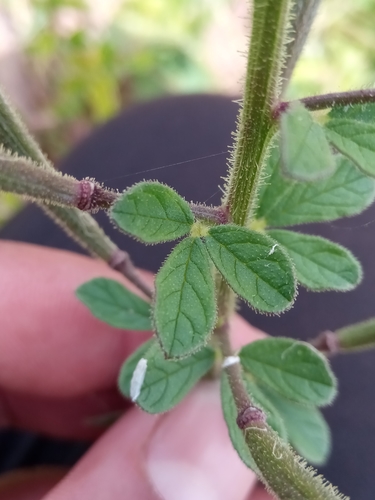
A small herb. It grows 30 cm high. It grows each year from seed. The stem is thin and light green with lines along them. The leaves are compound with 3-5 narrow leaflets. The leaflets are 4-5 cm long by about 1 mm wide. The flowers are in a loose group at the ends of the branches. The flowers are pink or red. The fruit is a narrow capsule.
Edible Uses
The leaves, stems, and flowers are edible; leaves and stems are typically cooked as a vegetable, and flowers can be eaten raw or cooked.
Traditional Uses
The leaves are cooked and eaten.
This uses section is brief — help expand it
Distribution
It is a tropical and subtropical plant. It grows in sandy soil.
Where It Grows
Africa, Botswana, East Africa, South Africa, Southern Africa, Zambia, Zimbabwe,
Synonyms
Also Known As
Kanunubwi, Kasukuboa
References (3)
- Grivetti, L. E., 1980, Agricultural development: present and potential role of edible wild plants. Part 2: Sub-Saharan Africa, Report to the Department of State Agency for International Development. p 71 (As Tetratelia tenuifolis)
- Grubben, G. J. H. and Denton, O. A. (eds), 2004, Plant Resources of Tropical Africa 2. Vegetables. PROTA, Wageningen, Netherlands. p 196
- World Checklist of Useful Plant Species 2020. Royal Botanic Gardens, Kew