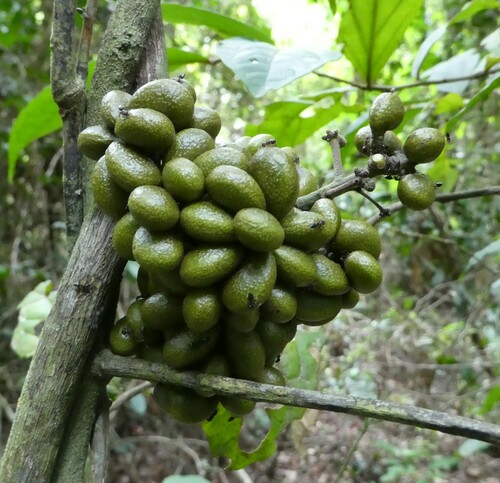
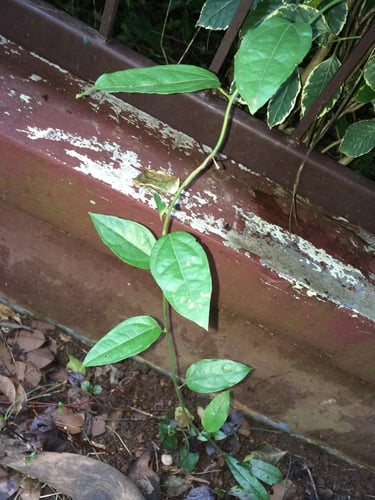
Penianthus longifolius
Miers
iNaturalist· cc-by-nc
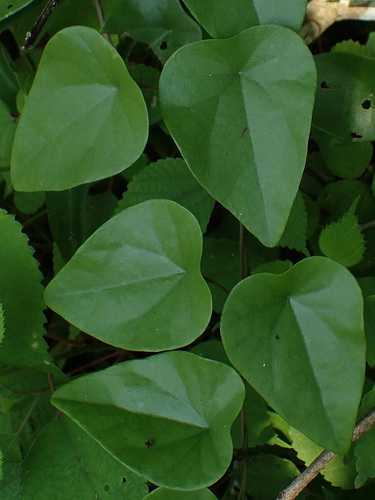
(c) Bart Wursten, some rights reserved (CC BY-NC), uploaded by Bart Wursten
iNaturalist· cc-by-nc
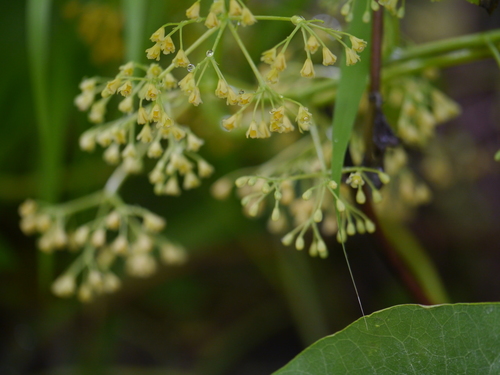
(c) Bart Wursten, some rights reserved (CC BY-NC)
Description
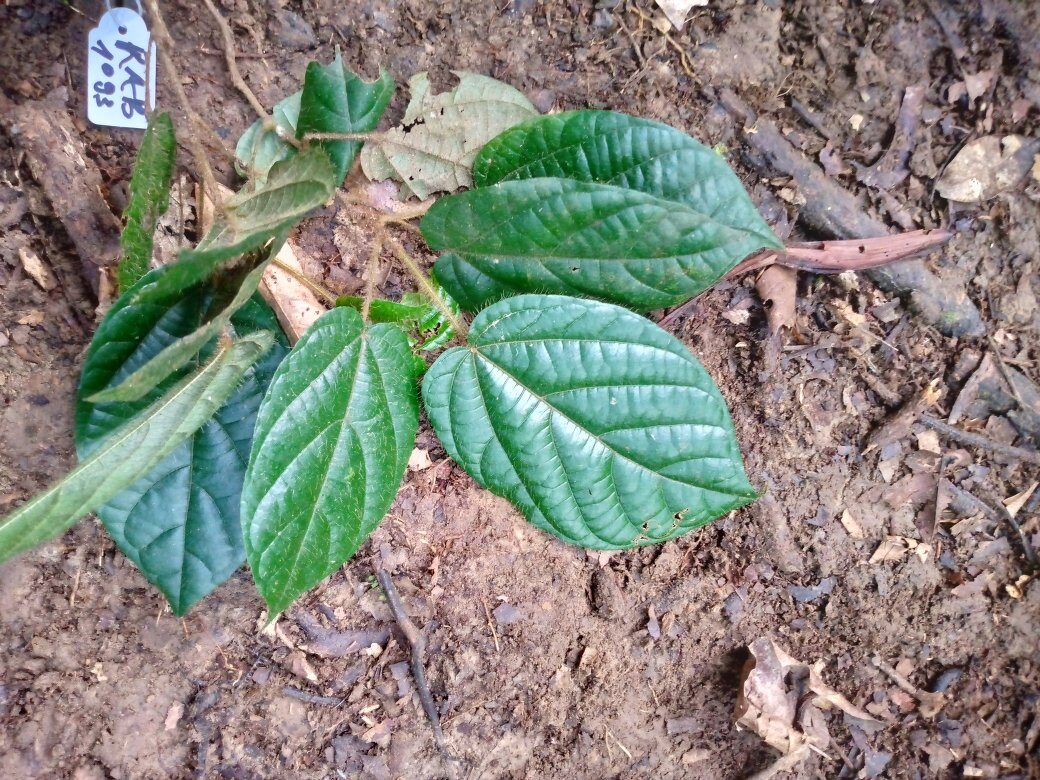
A small tropical shrub in the Menispermaceae family that grows approximately 1 m tall. It produces edible fruit and has edible roots.
This description is brief — help expand it
Edible Uses
The pulp of the fruit is eaten raw. The roots are chewed raw as a stimulant.
Traditional Uses
The pulp of the fruit is eaten raw. The roots are chewed raw as a stimulant.
This uses section is brief — help expand it
Medicinal Uses
The plant is a popular traditional medicine, used especially as an aphrodisiac with the root and root bark being considered especially powerful. Although the plant has many medicinal uses, its chemical and pharmaceutical properties have hardly been investigated. The aqueous leaf extract contains carbohydrates, proteins, tannins, saponins, alkaloids, steroidal aglycones and glycosides. The root and stem contain up to 1% alkaloids, the leaves only traces. The pulverized root, combined with Aframomum melegueta and a ripe banana, either in palm oil or pineapple wine according to taste, is taken to cure sexual weakness. A piece of fresh root may be chewed for the same purpose. The pulverized and macerated root, either alone or combined with sugar-cane juice, is taken as an anthelmintic and emetic, and is also used as a treatment for colic. The root sap is also taken to treat coughs. The grated roots, or the powdered bark, mixed with water, is applied as a dressing to mature abscesses. The moistened root is applied to infected wounds and nails affectedby whitlow. The sap of either the roots or the bark is used as eardrops to cure purulent ear troubles and deafness. The root bark, ground with palm oil, is applied to the feet as a dressing to fight sand fleas. The leaves are eaten to treat hernia. The leaf pulp is applied as a dressing to mature abscesses. The pounded leaves are inserted into the ears to cure otitis.
Known Hazards
The bark sap is widely used as an ingredient of arrow poisons. The root is an important component of several arrow poisons.
Distribution
It is a tropical plant.
Where It Grows
Africa, Central Africa, Central African Republic, CAR, Congo DR, Nigeria, West Africa,
Cultivation
The plant thrives under a moist equatorial climate, with a mean minimum temperature of 20°c and a mean maximum temperature of 29°c. The mean annual rainfall in its area of distribution is about 1,800mm. Found in the wild in sandy to rocky soils. A dioecious species, both male and female forms need to be grown if fruit and seed are required.
Propagation
Seed - it has a hard seedcoat and may benefit from scarification before sowing in order to speed up and improve germination. This can usually be done by pouring a small amount of nearly boiling water on the seeds (being careful not to cook them!) and then soaking them for 12 - 24 hours in warm water. By this time they should have imbibed moisture and swollen - if they have not, then carefully make a nick in the seedcoat (being careful not to damage the embryo) and soak for a further 12 hours before sowing.
Other Uses
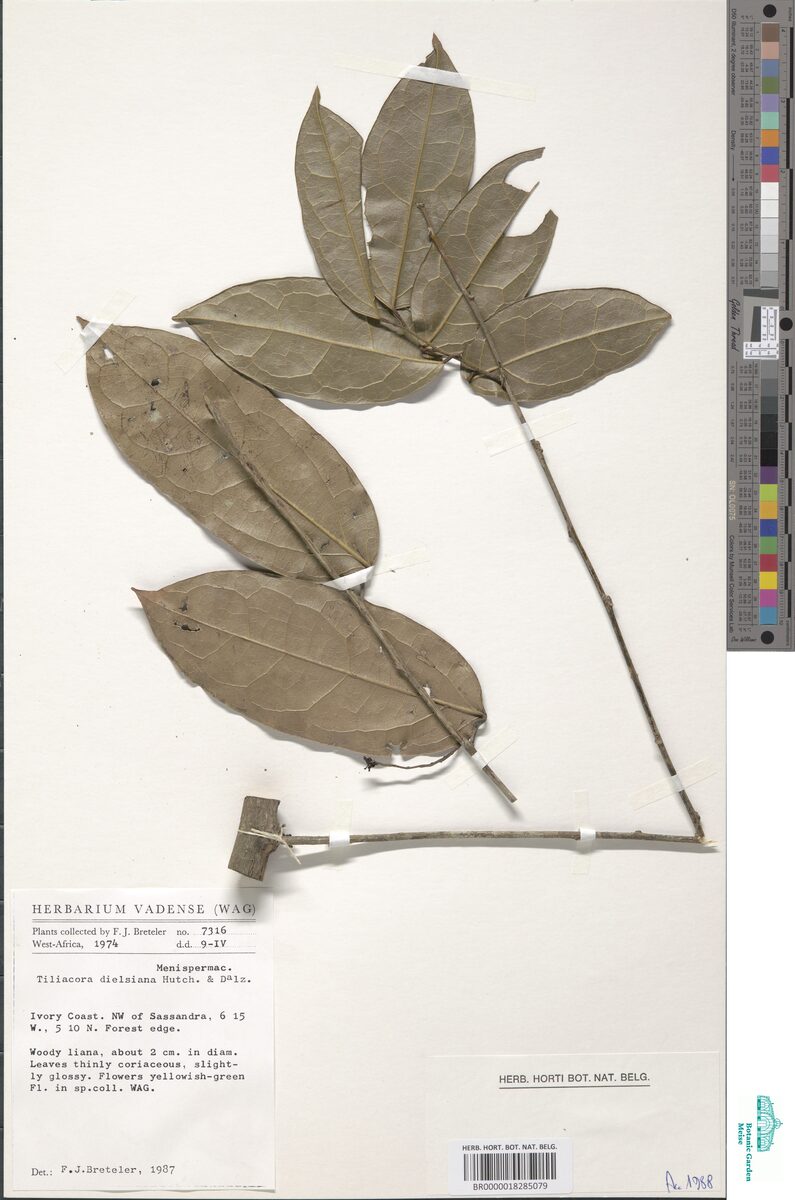
The yellow wood is very hard; it is occasionally used as timber. The stem is used to make arrows and the leathery leaves are used as arrow-feathers.
Production
In Central African Republic plants have been recorded flowering in December and February and fruiting in April.
Also Known As
Kosombo, Lokumbo
References (2)
- Termote, C., et al, 2011, Eating from the wild: Turumbu, Mbole and Bali traditional knowledge of non-cultivated edible plants, District Tshopo, DRCongo, Gen Resourc Crop Evol. 58:585-618
- World Checklist of Useful Plant Species 2020. Royal Botanic Gardens, Kew