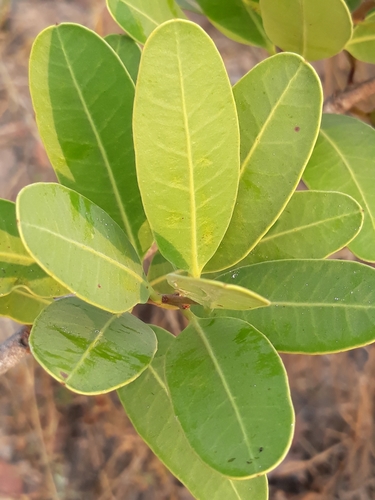
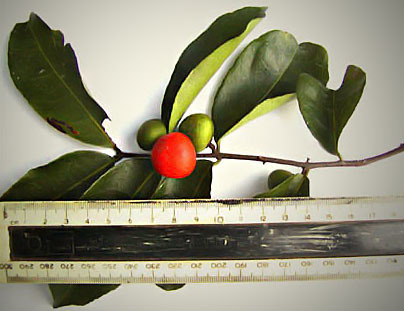
Salacia korthalsiana
Miq.
Aropit
gbif· cc-by
Royal Botanic Gardens, Kew
gbif· cc-by
Royal Botanic Gardens, Kew
gbif· cc-by
Royal Botanic Gardens, Kew
Description
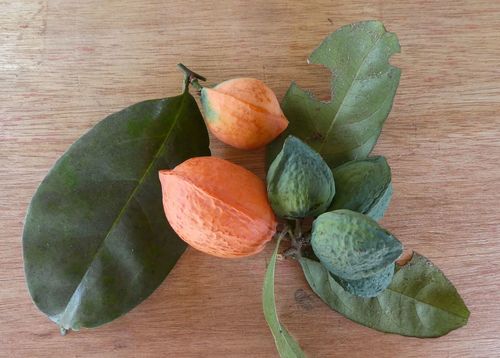
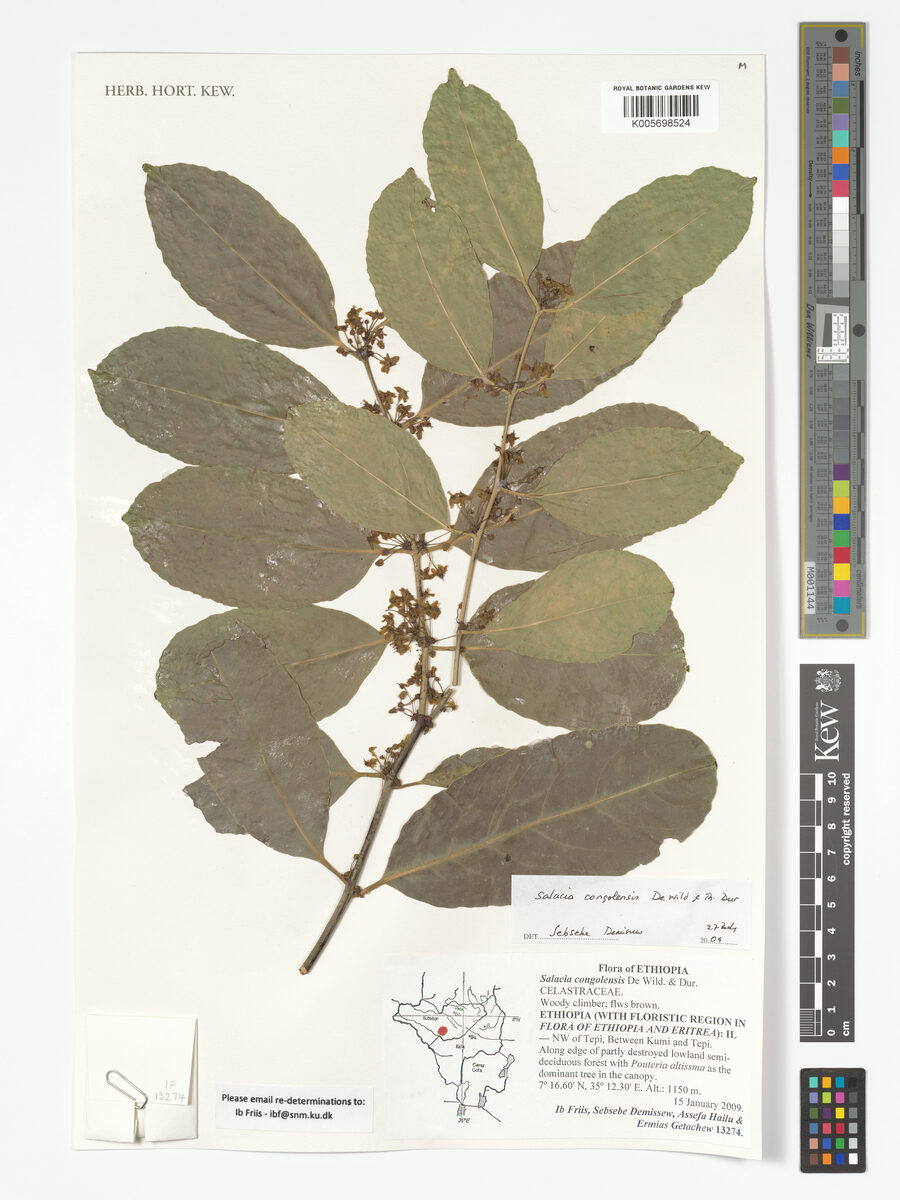
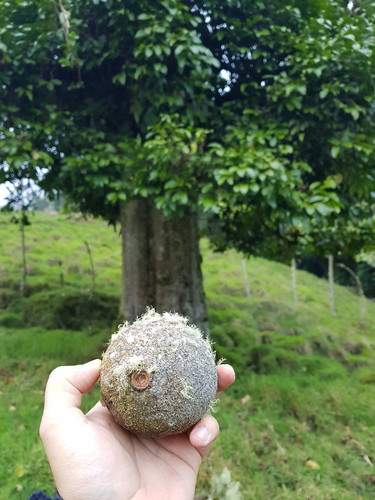
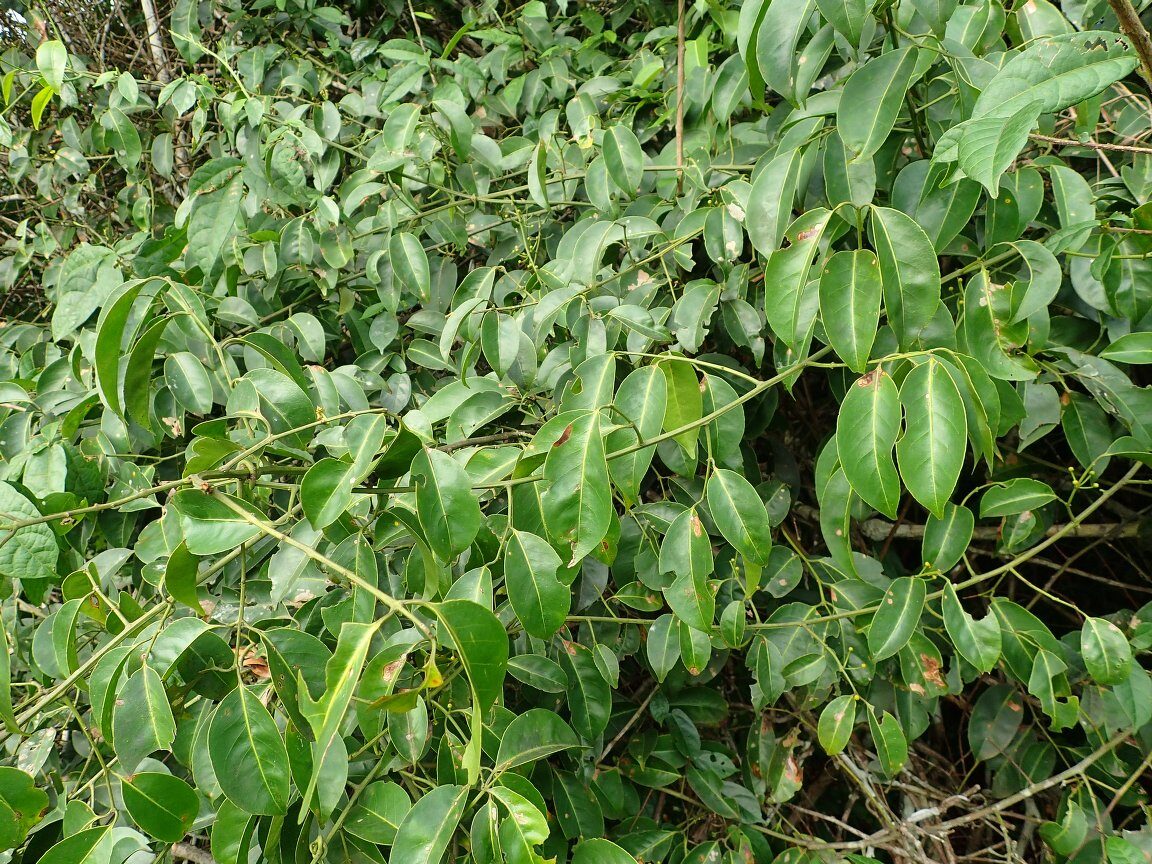
A creeper. It grows 18 m long. It can sometimes be an erect shrub. The fruit is a flattened round shape. It is 2-3 cm long. It has one seed in a stone. The flowers have yellow particles. The fruit are oval and reddish-orange. They are 2-3 cm across. The seeds are round and have yellow tufts.
Edible Uses
Fruit - raw. The pulp surrounding the seeds is eaten. The subglobose fruit is around 20 - 30mm in diameter, containing a single seed 13 - 20mm in diameter.
Medicinal Uses
A decoction from the roots is drunk as a treatment against cracked lips.
Distribution
It is a tropical plant. It grows wild in forests and thickets. It can be on limestone rock. It grows up to 1,400 m above sea level.
Where It Grows
Asia, Indonesia, Malaysia, Philippines, SE Asia, Singapore, Thailand,
Cultivation
Plants can be grown from seeds.
Synonyms
Also Known As
A'roy kuluk, Akar beting, Akar menjela, Aropit, Kuluk l'okuk, Tjantel wesi
References (5)
- Burkill, I. H., 1966,
- Milow, P., et al, 2013, Malaysian species of plants with edible fruits or seeds and their evaluation. International Journal of Fruit Science. 14:1, 1-2
- PROSEA No. 2
- Sukarya, D. G., (Ed.) 2013, 3,500 Plant Species of the Botanic Gardens of Indonesia. LIPI p 966
- World Checklist of Useful Plant Species 2020. Royal Botanic Gardens, Kew