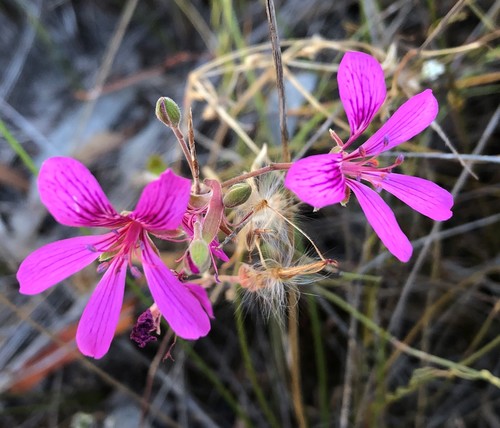
Monsonia umbellata
Harv.
Bush tea
iNaturalist· cc-by-nc
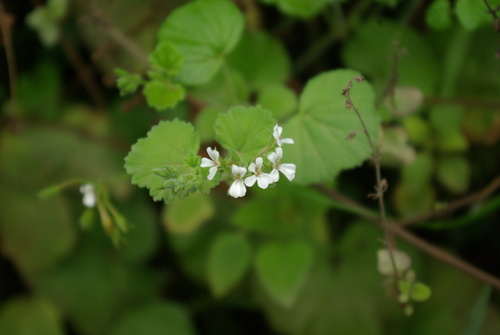
(c) jcorrie, some rights reserved (CC BY-NC)
iNaturalist· cc-by-nc
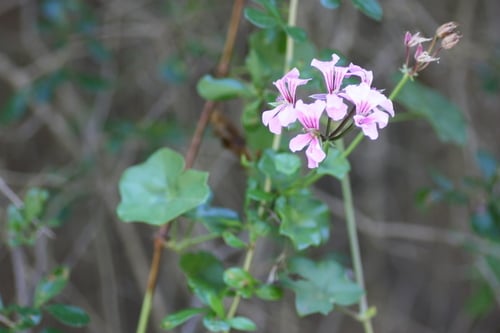
(c) Craig Peter, some rights reserved (CC BY-NC)
iNaturalist· cc-by-nc
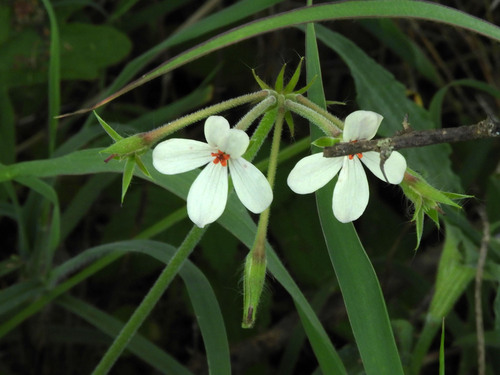
(c) Craig Peter, some rights reserved (CC BY-NC)
Description
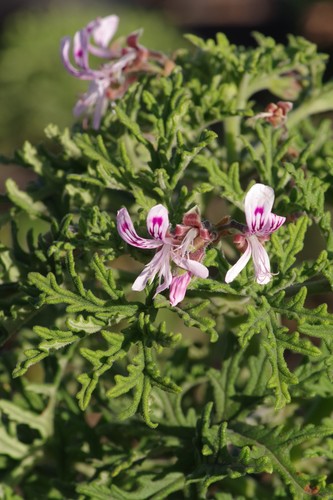
A herb or small shrub. It can lie along the ground or be slightly erect. It can grow 60 cm high. It can grow each year from seed or keep growing for a few years. The leaves are almost round with a heart shaped base. The leaves have a mint like smell. The flowers are white or pink. They are on loose groups.
Edible Uses
The stems and leaves are brewed into tea with milk and sugar. The seeds are added to porridge, eaten as a snack, used in cakes, and added to beer.
Traditional Uses
The stems, leaves and flowers are used for tea with milk and sugar. The seeds are added to porridge and also eaten as a snack food and in cakes. The seeds are also added to beer.
Medicinal Uses
Used traditionally as a tea preparation.
Distribution
It is a Mediterranean plant. It grows in well-drained stony and sandy soils. It can grow in desert. It grows below 1,400 m above sea level. It can grow in arid places.
Where It Grows
Africa, Namibia, South Africa, Southern Africa,
Production
The seeds are collected by ants and removed from their nests.
Synonyms
Also Known As
Etendera, Ondami, Raba
References (5)
- Fox, F. W. & Young, M. E. N., 1982, Food from the Veld. Delta Books. p 236
- Royal Botanic Gardens, Kew (1999). Survey of Economic Plants for Arid and Semi-Arid Lands (SEPASAL) database. Published on the Internet; http://www.rbgkew.org.uk/ceb/sepasal/internet [Accessed 16th April 2011]
- Ruiters-Welcome, A. K., 2019, Food plants of southern Africa. Ph.D. thesis. Univ. of Johannesburg p 64
- Welcome, A. K. & Van Wyk, B.-E., 2019, An inventory and analysis of the food plants of southern Africa. South African Journal of Botany 122 (2019) 136–179
- World Checklist of Useful Plant Species 2020. Royal Botanic Gardens, Kew