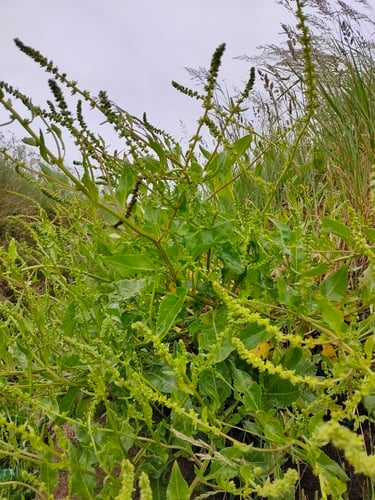
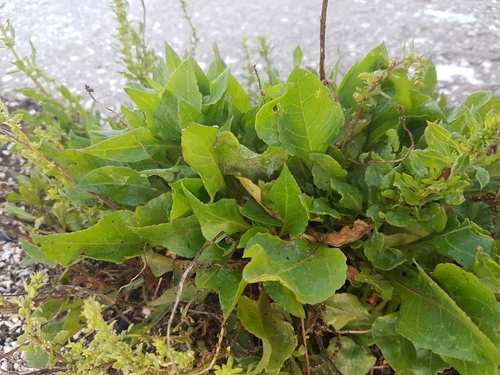
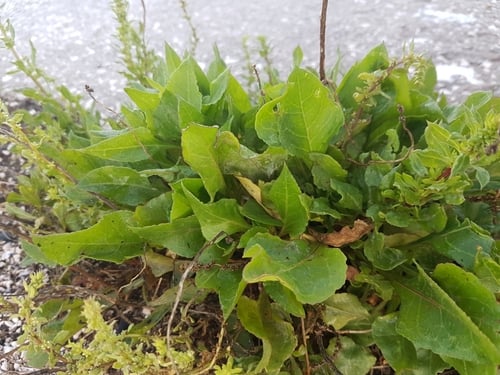
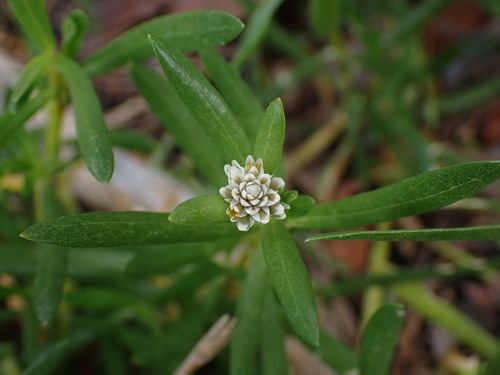
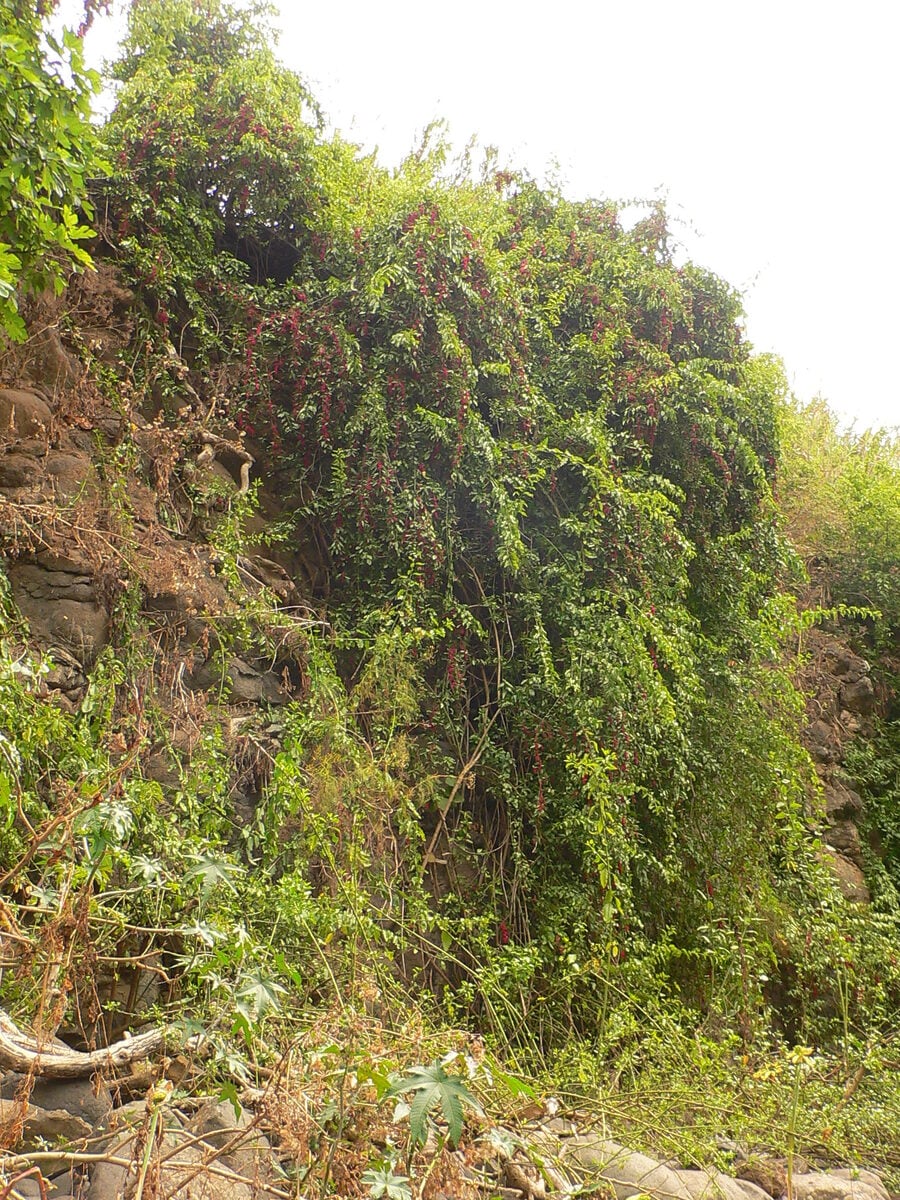
Dysphania pumilio
(R. Br.) Mosyakin & Clements.
iNaturalist· cc-by-nc-sa
(c) Valter Jacinto | Portugal, some rights reserved (CC BY-NC-SA)
iNaturalist· cc-by-nc
(c) Susan J. Hewitt, some rights reserved (CC BY-NC), uploaded by Susan J. Hewitt
iNaturalist· cc-by-nc
(c) Sara Rall, some rights reserved (CC BY-NC), uploaded by Sara Rall
Summary
Source: WikipediaDysphania pumilio (common names - small crumbweed, clammy goosefoot) is a species of flowering plant in the family Chenopodioideae. It is native to Australia, but it is found in other parts of the world as an introduced species, often growing in disturbed and waste areas such as roadsides and lots. It is known from many parts of North America and Europe, and it was recently found in Iran for the first time, in the Māzandarān Province. It is thought to have first arrived in Europe with imports of wool from Australia.
Description
An annual herb growing to 45 cm high with a spreading or prostrate habit, found in temperate regions at altitudes between 500-2,530 m. It tolerates sandy and arid soils.
Edible Uses
The leaves are used to make tea.
Distribution
It grows in temperate places. It can grow in sandy soils. It grows between 500-2,530 m altitude. It can grow in arid places.
Where It Grows
Africa, Argentina, Australia*, Britain, Europe, Kenya, Korea, New Caledonia, New Zealand, Paraguay, South America, Tasmania,
Notes
Also put in the family Chenopodiaceae.
References (2)
- Baker, M. L. & de Salas, M. F., 2012, A Census of the Vascular Plants of Tasmania. (On line)
- Royal Botanic Gardens, Kew (1999). Survey of Economic Plants for Arid and Semi-Arid Lands (SEPASAL) database. Published on the Internet; http://www.rbgkew.org.uk/ceb/sepasal/internet [Accessed 8th April 2011] (As Chenopodium pumilio)