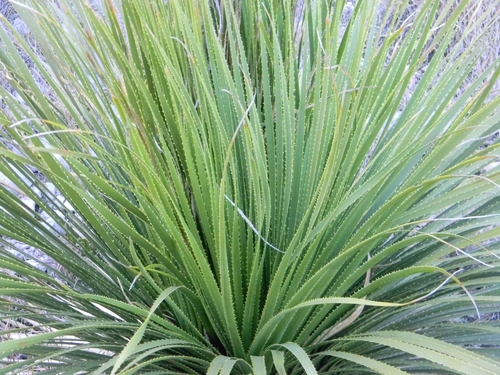
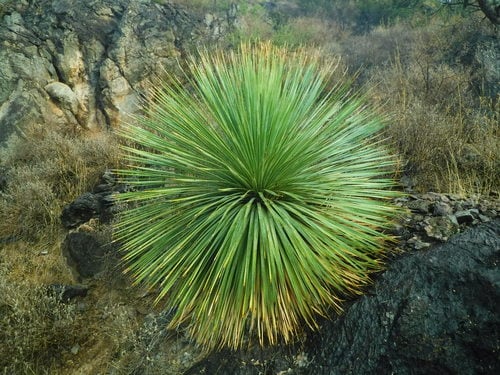
Asparagus striatus
(L. f.) Thunb.
Bergappel, Katdoring
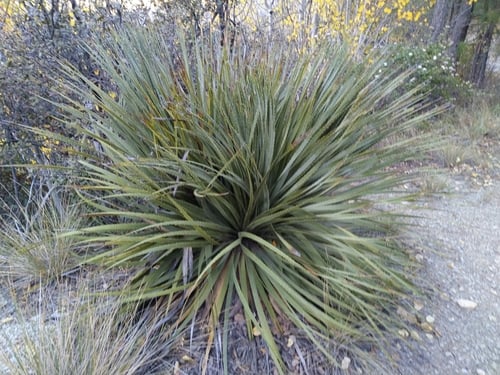
iNaturalist· cc-by-nc
(c) Marion Maclean, some rights reserved (CC BY-NC), uploaded by Marion Maclean
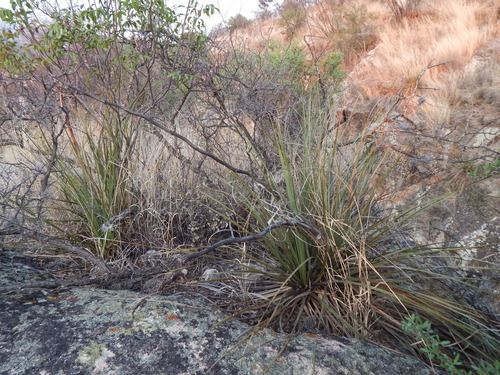
iNaturalist· cc-by-nc
(c) Debbie Bodley, some rights reserved (CC BY-NC), uploaded by Debbie Bodley
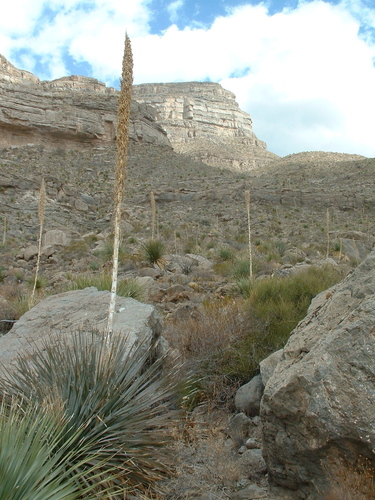
iNaturalist· cc-by-nc
(c) stompie, some rights reserved (CC BY-NC)
Summary
Source: WikipediaAsparagus striatus ("Bergappel") is a hard perennial shrublet of the Asparagus genus, that is indigenous to dry, rocky areas of South Africa.
Description
A small shrub. It keeps growing from year to year. The stems are spiny. It grows 1.2 m high. The leaves are very small scales. The stems are flattened and look like leaves and have a spine at the end. The flowers have a scent. The flowers are small and white and occur in groups with small hard brown bracts at the base. The fruit is a berry. It is 5 mm across and red with 1 or 2 seeds. They are green but turn yellow then red as they ripen.
Edible Uses
Large round galls produced by the fly Asparagobius braunsi on the stems are eaten.
Traditional Uses
A fly (Asparagobius braunsi) produces large round galls that are eaten.
This uses section is brief — help expand it
Distribution
It is a subtropical plant. It grows in rocky and stony places. In southern Africa it grows between 1-1,670 m altitude. It is very drought tolerant. It can grow in arid places.
Where It Grows
Africa, Botswana, Namibia, South Africa, Southern Africa,
References (2)
- Royal Botanic Gardens, Kew (1999). Survey of Economic Plants for Arid and Semi-Arid Lands (SEPASAL) database. Published on the Internet; http://www.rbgkew.org.uk/ceb/sepasal/internet [Accessed 4th April 2011]
- World Checklist of Useful Plant Species 2020. Royal Botanic Gardens, Kew