Cardamine lyrata
Bunge
Paddy water-cress, Shui tian sui mi qi
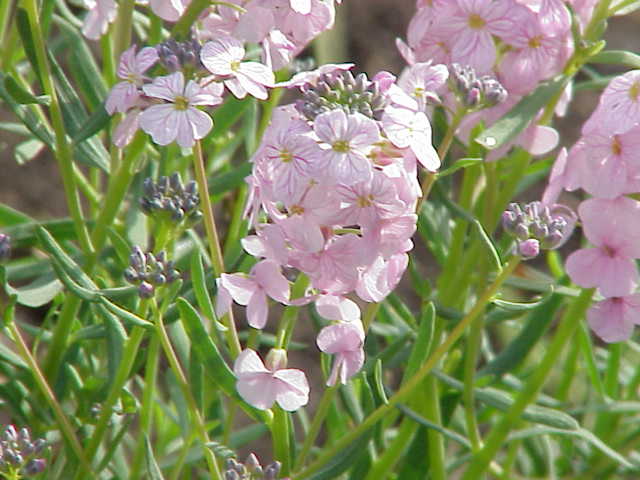
iNaturalist· cc-by-nc
(c) MP Zhou, some rights reserved (CC BY-NC), uploaded by MP Zhou
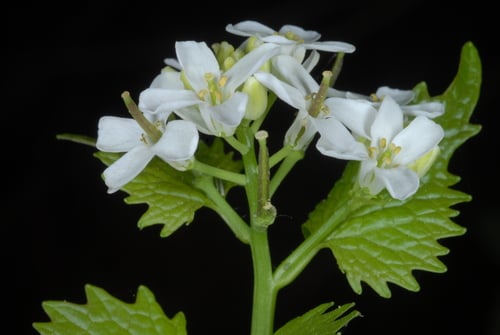
iNaturalist· cc-by-nc
(c) 小铖/Smalltown, some rights reserved (CC BY-NC)
Summary
Source: WikipediaCardamine lyrata, known commonly as Japanese cress and Chinese ivy, is a species of aquatic plant in the mustard family. It is native to the marshes of eastern China and Siberia, as well as Korea and Japan. It flowers from May to June in the wild, with seeds ripening through September. The flowers are bisexual and are pollinated by insects, but are also self-fertile. The species is cultivated as an aquarium ornamental. It needs a supply of cool, slow-moving water and strong light. It can grow rapidly under the right conditions and makes an attractive, bushy plant. It can be grown in ponds as long as the water temperature does not exceed about 82 °F (28 °C). It propagates easily by cuttings and high levels of carbon dioxide speed growth. Some fish will nibble on the leaves.
Description
A cabbage family herb. It grows up to 70 cm tall. It has creeping runners. The leaves are of 2 forms. Those on the creeping stems are simple and oval and wavy along the edges. The leaves along the stems are compound with leaflets along the stems. The leaves are alternate and 5 cm long. They are rounded or kidney shaped and let light through. The leaf stalks are thin. The flowers are small and have white petals. The pods are narrow and compressed. They are 3 cm long by 2 mm wide. They have a beak. The seeds are in a row. They are 2 mm long and have wings.
Edible Uses
Both the leaves and root can be eaten raw or cooked.
Traditional Uses
The young shoot are eaten as a potherb.
This uses section is brief — help expand it
Medicinal Uses
None known.
Distribution
It is a temperate plant. It grows in moist places, stream sides from near sea level to 1000 m. altitude in China. It needs a temperature of 16-20°C. It needs good light. It can grow in water. It grows in wetlands. In Sichuan.
Where It Grows
Asia, Australia, China, Japan, Korea, Russia, Siberia,
Cultivation
Succeeds in most soils. Prefers a moist humus rich soil in shade or semi-shade. A stoloniferous species.
Propagation
Sow seed in spring in a cold frame; germination typically occurs within 1–3 weeks at 15°C. Once large enough to handle, prick seedlings into individual pots and grow on in light shade in a greenhouse or cold frame for the first two years, planting out when dormant in late summer. Divide in early spring or after the plant dies back in summer. Large clumps can go straight into permanent positions, while smaller clumps are better potted and grown on in a cold frame before planting out in spring.
Other Uses
None known.
Notes
There are about 160 Cardamine species. They are mostly in damp places in temperate regions.
Synonyms
References (8)
- Flora of China @ efloras.org Volume 8
- Hibbert, M., 2002, The Aussie Plant Finder 2002, Florilegium. p 60
- Hu, Shiu-ying, 2005, Food Plants of China. The Chinese University Press. p 414
- Mem. Acad. Imp. Sci. St.-Petersbourg Divers Savans 2:573. 1835
- Plants for a Future database, The Field, Penpol, Lostwithiel, Cornwall, PL22 0NG, UK. http://www.scs.leeds.ac.uk/pfaf/
Show all 8 references Hide references
- Slocum, P.D. & Robinson, P., 1999, Water Gardening. Water Lilies and Lotuses. Timber Press. p 76
- Zhang, Y., et al, 2014, Diversity of wetland plants used traditionally in China: a literature review. Journal of Ethnobiology and Ethnomedicine. 10:72
- Zhou Taiyan, Lu Lianli, Yang Guang; Ihsan A. Al-Shehbaz, BRASSICACEAE (CRUCIFERAE), Flora of China.