Caragana brevispina
Royle ex Benth.
Bebali kanda
iNaturalist· cc-by-nc
(c) Bikram Gyawali, some rights reserved (CC BY-NC), uploaded by Bikram Gyawali
iNaturalist· cc-by
(c) Sagnik Dutta Roy, some rights reserved (CC BY)
iNaturalist· cc-by
(c) Sagnik Dutta Roy, some rights reserved (CC BY)
Summary
Fast-growing deciduous shrub reaching 2.5 m tall and 1.8 m wide. Hardy to UK zone 6. Flowers in June with seeds ripening by September. Hermaphrodite flowers attract bees. Thrives in light sandy or medium loamy, well-drained soil and tolerates poor soil fertility. Grows in mildly acid to mildly alkaline conditions. Requires full sun and cannot tolerate shade. Handles dry or moist soil and drought well. Tolerates strong winds but not coastal salt spray. Noted for attracting wildlife and fixing nitrogen in soil.
Description
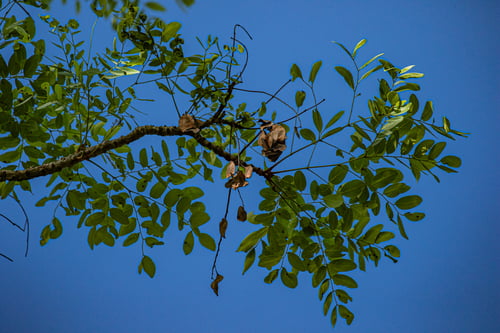
A spiny shrub. It grows to 2 m high. The leaves are 8 cm long. The leaves are divided into leaflets along the stalk. The leaflets are oval and hairy underneath. There are prickles along the midrib. The flowers are yellow. There are 2-4 flowers in a cluster. The fruit is a pod. It is straight and like a cylinder. The pod is woolly inside. It is 4-5 cm long.
Edible Uses
The seeds are small but produced in abundance and should be cooked before eating. A specimen observed at the Royal Horticultural Gardens, Wisley in Surrey in September 1993 bore seeds roughly twice the size of those of C. arborescens, though with a distinctly bitter taste. High in protein, the seed has been recommended as an emergency food for humans. Young buds can be cooked and eaten as a green vegetable.
Traditional Uses
The young buds are cooked as a green vegetable. The fresh flowers are eaten raw. The flower nectar is sucked.
This uses section is brief — help expand it
Medicinal Uses
A decoction of the plant is taken internally to treat aching joints.
Known Hazards
Reports that this plant contains toxins have not been substantiated. The occurrence of cystine in the seeds is doubtful.
Distribution
It is a temperate plant. It grows in Nepal at 2400-3500 m altitude. It suits hardiness zones 6-9.
Where It Grows
Asia, Central Asia, Himalayas, India, Nepal, Pakistan, Tajikistan,
Cultivation
Succeeds in most well-drained soils but prefers full sun and a light sandy dry or well-drained soil. It does not require rich soil, succeeding on marginal land. Succeeds in acid or alkaline soils. Established plants are drought resistant. This species is hardy to at least -20°c, it prefers a continental climate with hot summers and cold winters so it does not grow so well in the milder western half of Britain. Plants in this genus are notably resistant to honey fungus. This species has a symbiotic relationship with certain soil bacteria, which form nodules on the roots and fix atmospheric nitrogen. The growing plant utilizes some of this nitrogen, but some can also be used by other plants growing nearby. Caragana species are fast-growing, reaching 6 to 10 feet (1.8 to 3 meters) in just a few years under optimal conditions. Seeds can typically be harvested in late summer to early autumn. Caragana species generally flower in late spring to early summer.
Propagation
Seed is best sown as soon as it is ripe in a cold frame, where it typically germinates within 2 weeks. Stored seed should be pre-soaked for 24 hours in warm water before sowing in a cold frame. If the seed has not swollen after soaking, scarify it and re-soak for a further 12 hours before sowing. Germination usually occurs within 2–3 weeks at 20°C, with a good success rate. Once seedlings are large enough to handle, prick them out into individual pots and grow on in a greenhouse for at least their first winter, then plant out into permanent positions in late spring or early summer after the last expected frosts. Cuttings of half-ripe wood, 7–10cm with a heel, can be taken in July or August and rooted in a frame. Layering can be carried out in spring.
Other Uses
Caragana is widely used in agroforestry for erosion control and as a windbreak, and its nitrogen-fixing ability can improve soil fertility. The dense, very spiny growth makes it suitable for planting as an impenetrable hedge, and the extensive root system helps stabilise soil and control erosion. The wood is hard and close-grained, and serves as an important fuel source for people living at high elevations. The flowers are rich in nectar and pollen, attracting bees and other pollinators. Seeds and pods can provide food for birds and small mammals, while the dense shrub structure offers shelter, nesting, and roosting sites for birds and insects. The plant's dense growth and leaf litter also create overwintering habitat for beneficial invertebrates.
Other Information
The young flowers are eaten especially by children.
Notes
There are 80 Caragana species. They grow in temperate continental climates.
Synonyms
Also Known As
Bhalu kanda, Jhilu, Kyiwa, Ohamshing, Tanhaling, Zomoshing, Zomosing
References (9)
- Ambasta S.P. (Ed.), 2000, The Useful Plants of India. CSIR India. p 103
- Dangol, D. R. et al, 2017, Wild Edible Plants in Nepal. Proceedings of 2nd National Workshop on CUAOGR, 2017.
- Etherington, K., & Imwold, D., (Eds), 2001, Botanica's Trees & Shrubs. The illustrated A-Z of over 8500 trees and shrubs. Random House, Australia. p 180
- Ghimire, S. K., et al, 2008, Non-Timber Forest Products of Nepal Himalaya. WWF Nepal p 91
- Joshi, N., et al, 2007, Traditional neglected vegetables of Nepal: Their sustainable utilization for meeting human needs. Tropentag 2007. Conference on International Agricultural Research for Development.
Show all 9 references Hide references
- Manandhar, N.P., 2002, Plants and People of Nepal. Timber Press. Portland, Oregon. p 133
- Plants for a Future database, The Field, Penpol, Lostwithiel, Cornwall, PL22 0NG, UK. http://www.scs.leeds.ac.uk/pfaf/
- Polunin, O., & Stainton, A., 2006, Flowers of the Himalaya, Oxford India Paperbacks. p 98
- J. F. Royle, Ill. bot. Himal. Mts. 1(6):198. 1835