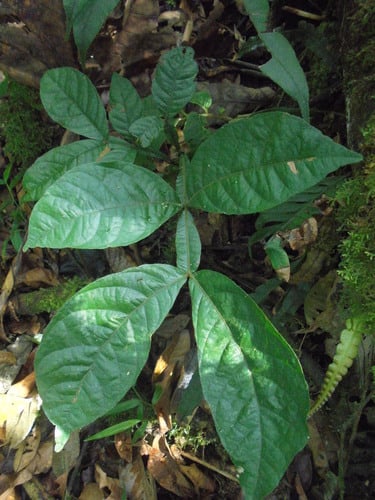
Acacia palustris
Luehm.
Needlewood
iNaturalist· cc-by-nc
(c) @WA_Botanist, some rights reserved (CC BY-NC), uploaded by @WA_Botanist
wikimedia· cc-by-sa
Wikimedia Commons - MargaretRDonald
Summary
Source: WikipediaAcacia palustris, commonly known as needlewood, is a tree or shrub belonging to the genus Acacia and the subgenus Juliflorae that is native to an arid area of western Australia
Description
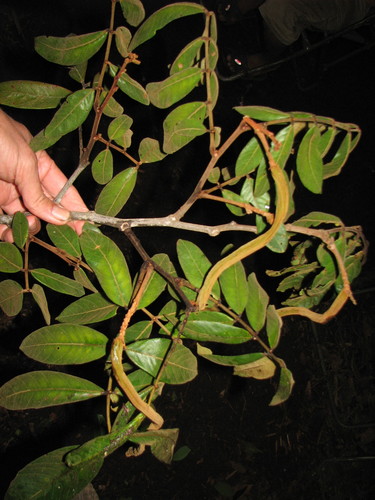
A shrub or small tree. It grows 5 m tall. There are prickles along the stem. The leaves are twice divided and there are 8-18 pairs of pinnae. There are up to 50 pairs of pinnules on each pinnae. The flowers are yellow. They are in large clusters at the ends of branches. The pods are flattened.
Edible Uses
Young pods are cooked and eaten whole, while mature seeds are ground into flour and cooked as damper.
Traditional Uses
The young pods are cooked and eaten whole. The mature seeds are ground into flour then cooked as a damper.
This uses section is brief — help expand it
Distribution
It is a subtropical plant. It grows in Western Australia. It is in open country. It is often along creeks and in swampy places.
Where It Grows
Australia*,
Cultivation
It is grown from seed.
Notes
There are about 1,350 Acacia species. Over 1,000 occur in Australia. Also as Mimosaceae.
References (2)
- Bindon, P., 1996, Useful Bush Plants. Western Australian Museum. p 25
- Paczkowska, G . & Chapman, A.R., 2000, The Western Australian Flora. A Descriptive Catalogue. Western Australian Herbarium. p 318