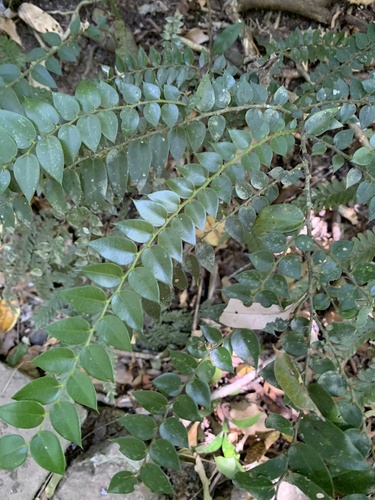
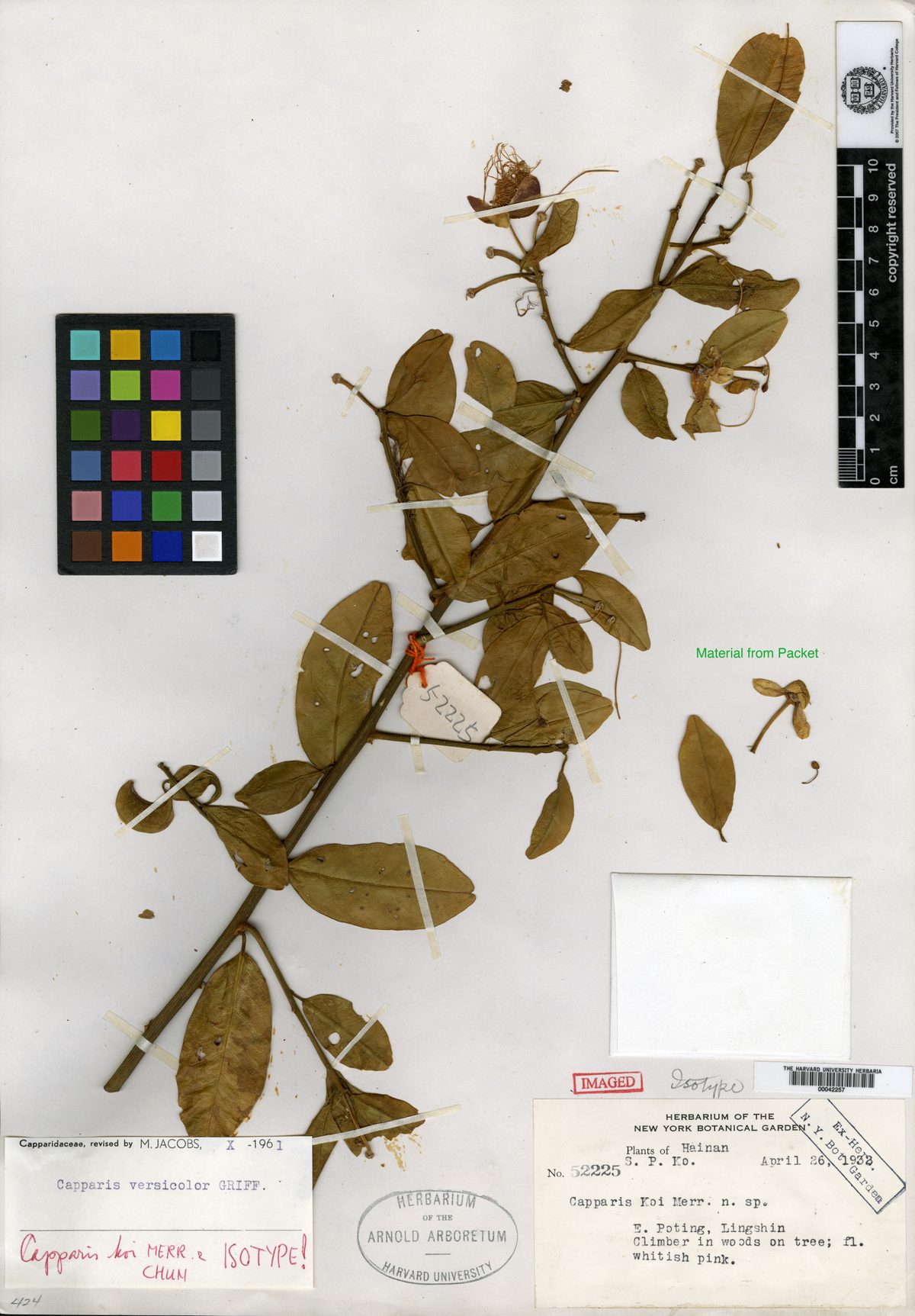
Capparis fascicularis
DC.
Zigzag caper-bush
iNaturalist· cc-by-nc
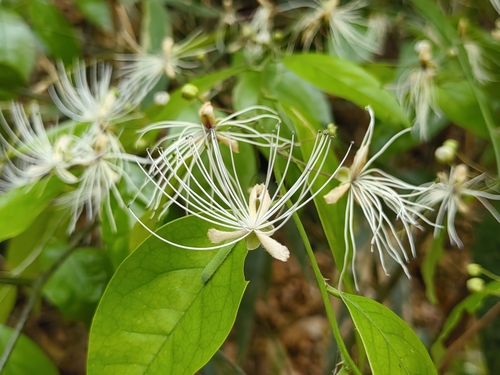
(c) Linda Loffler, some rights reserved (CC BY-NC), uploaded by Linda Loffler
iNaturalist· cc-by
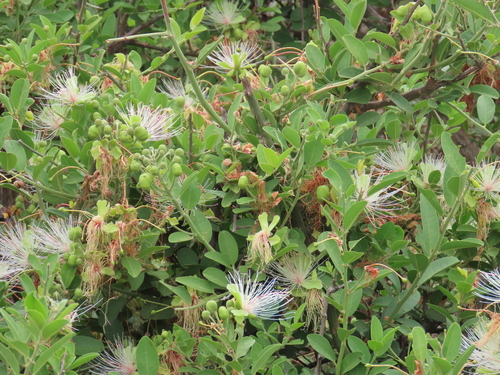
(c) Henry de Lange, some rights reserved (CC BY), uploaded by Henry de Lange
iNaturalist· cc-by-nc
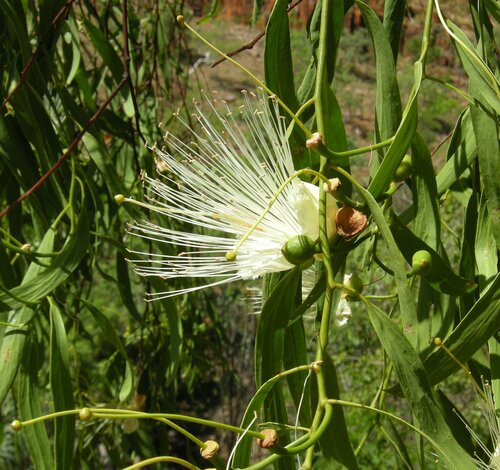
(c) Linda Loffler, some rights reserved (CC BY-NC), uploaded by Linda Loffler
Summary
Source: WikipediaCapparis fascicularis, the zigzag caper-bush, is a plant in the Capparaceae family and is native to Africa.
Description
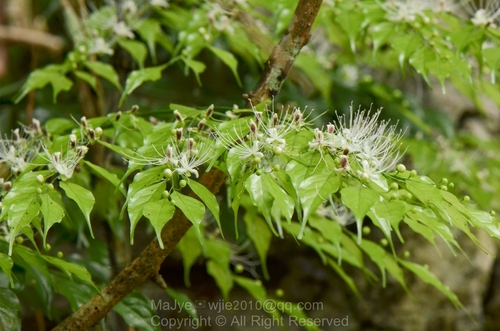
A shrub or small tree. It grows to 7 m high. It can be scrambling. The stem has small hooks. The leaves are narrow and oval. They are 4 cm long by 1.5 cm wide. The flowers are in compact clusters at the ends of branches and in the axils of leaves. The fruit are round and 1.2 cm across. They are purple-black when ripe.
Edible Uses
Immature fruits are used as pickles and chutney, while ripe fruits are eaten as a snack. The leaves are also edible.
Traditional Uses
Immature fruit are used as pickles and chutney. The fruit are also eaten as a snack.
This uses section is brief — help expand it
Distribution
A tropical plant. It grows in savannah woodland. It grows between 600-1,200 m above sea level. It can grow in arid places.
Where It Grows
Africa, Benin, Burkina Faso, Cameroon, Central Africa, Chad, Congo, East Africa, Eswatini, Ethiopia, Gambia, Kenya, Mozambique, Niger, Nigeria, Rwanda, Sahel, Sierra Leone, Somalia, South Africa, Southern Africa, South Sudan, Sudan, Swaziland, Uganda, West Africa, Zimbabwe,
Notes
There are about 250 Capparis species. There are about 50 Capparis species in tropical America.
Synonyms
Also Known As
Goulom ana akoul, Liphambo, Mabusane, Qawisa, Umukurura
References (17)
- Burkill, H. M., 1985, The useful plants of west tropical Africa, Vol. 1. Kew.
- Codjia, J. T. C., et al, 2003, Diversity and local valorisation of vegetal edible products in Benin. Cahiers Agricultures 12:1-12 (As Capparis rothii)
- Dalziel, 1937,
- Glover et al, 1966b,
- Grivetti, L. E., 1980, Agricultural development: present and potential role of edible wild plants. Part 2: Sub-Saharan Africa, Report to the Department of State Agency for International Development. p 44
Show all 17 references Hide references
- Grubben, G. J. H. and Denton, O. A. (eds), 2004, Plant Resources of Tropical Africa 2. Vegetables. PROTA, Wageningen, Netherlands. p 560
- Jardin, C., 1970, List of Foods Used In Africa, FAO Nutrition Information Document Series No 2.p 124
- Lulekal, E., et al, 2011, Wild edible plants in Ethiopia: a review on their potential to combat food insecurity. Afrika Focus - Vol. 24, No 2. pp 71-121
- Mutie, F. M., et al, 2023, Important Medicinal and Food Taxa (Orders and Families) in Kenya, Based on Three Quantitative Approaches. Plants 2023, 12, 1145
- Ojelel, S., et al, 2019, Wild edible plants used by communities in and around selected forest reserves of Teso-Karamoja region, Uganda. Journal of Ethnobiology and Ethnomedicine (2019) 15:3
- Peters, C. R., O'Brien, E. M., and Drummond, R.B., 1992, Edible Wild plants of Sub-saharan Africa. Kew. p 76
- Royal Botanic Gardens, Kew (1999). Survey of Economic Plants for Arid and Semi-Arid Lands (SEPASAL) database. Published on the Internet; http://www.rbgkew.org.uk/ceb/sepasal/internet [Accessed 7th April 2011]
- Ruiters-Welcome, A. K., 2019, Food plants of southern Africa. Ph.D. thesis. Univ. of Johannesburg p 41
- Swaziland's Flora Database http://www.sntc.org.sz/flora
- Vivien, J., & Faure, J. J., 1996, Fruitiers Sauvages d'Afrique. Especes du Cameroun. CTA p 100
- Welcome, A. K. & Van Wyk, B.-E., 2019, An inventory and analysis of the food plants of southern Africa. South African Journal of Botany 122 (2019) 136–179
- World Checklist of Useful Plant Species 2020. Royal Botanic Gardens, Kew